
Peppers with pizzazz


Play
This year's edition of the innovation Ploy Saeng festival is devoted to the chilli
A new exhibition is heating up the sixth floor of downtown shopping mall The Emporium these days as the Thailand Creative and Design Centre plays host to red chilli peppers of every shape and size. Bamboo baskets overflow with these heady spices while the shelves groan under the weight of everything from roasted chilli paste and chilli sauce to capsicum candy and chilli spray.
Found in almost every kitchen in Thailand, the chilli is the theme of this year’s TCDC’s Ploy Saeng festival, an annual event that aims to spark inspiration and business ideas from the success stories of local entrepreneurs and their unique business strategies. Titled “Chilli Business”, the exhibition explores how the chilli is driving forward the Thai food and medicine industries.
“Based on the core concept of ‘create/make/earn’, the Ploy Saeng festival aims to merge creative ideas with business opportunities. Chilli is a sexy topic and has already made its appearance in a variety of interesting products. Owners of start-ups will find business inspiration, opportunities, distribution channels and marketing strategies that will make their brands stand out. The chilli is just an example. The principle can be adapted to other commodities,” says Pichit Virankabutra, TCDC’s exhibition and event director.
From a short video illustrating the chaotic atmosphere of traders selling and buying tons of chilli at Talad Thai – Thailand’s largest wholesale market – we learn that Thailand annually reports more than Bt2.5 billion in chilli exports. Last year Malaysia was the biggest buyer of Thai fresh and chilled peppers, while the Netherlands bought the most Thai dried chilli and the UK was the biggest export market for Thai chilli sauce.
A machine used by researchers and makers of chilli-based products to measure the pungency of chilli peppers and determine their suitability for direct consumption as food or for processing into other products is on display in the show. Varieties that are too hot for human consumption are often used as an ingredient in sore-muscle rubs or pepper sprays.
“To set an international standard, the degree of pungency, which is called the Scoville unit, must be identified. Most chilli varieties are hot, but the degree of pungency depends on the concentration of capsaicin, the substance that causes the heat. After drops of chilli extract are placed on its bio-sensor, the machine takes only two minutes to calculate the pungency in Scoville units and displays the result in graphic form on the built-in touchscreen,” Pichit explains.
The world’s hottest chilli according to 2012 tests by the Guinness World Records is the Carolina Reaper pepper from South Carolina with peak levels of more than 2,200,000 on the Scoville scale. Its extreme pungency makes it a perfect ingredient for sore-muscle rubs and pepper sprays. Thailand’s prik khee noo or bird’s eye chilli is rated about 50,000 to 100,000 on the scale.
The exhibition also examines the stories behind the success of chilli-based food and medicine manufacturers, who incorporate food science technology with creativity to meet the tastes of today’s consumers.
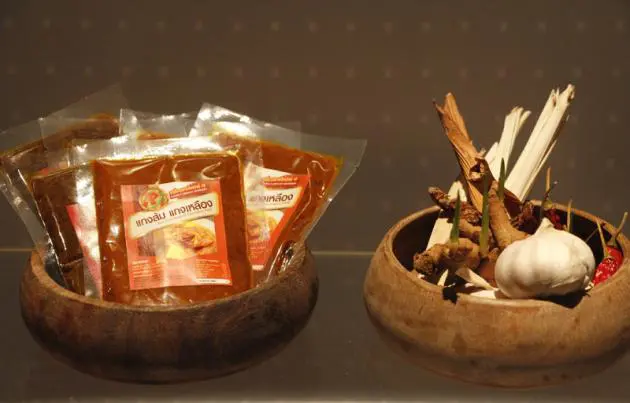
Hand Brand No 1’s peppers and other spiced seasonings are found in almost every Thai home. The seasonings come in powered form and are ready to use, making them an ideal option for those too busy to cook meals for scratch. Tom yum and som tum can be made in minutes, as can green curry and laab.
Chilli in fish sauce is a ubiquitous condiment and current figures show that Thais annually consume about 60 millions bags of fish-and-chilli sauce. However, the usual packaging, a small plastic bag tied with a rubber band, means it loses both flavour and colour in days. Oyster brand invested in research and development and came up with fish sauce and fresh, glossy-skinned chillies that are sterilised and then packed in hygienic, sealed plastic bags to ensure that the product stays fresh for up to one year.
Regular-size packaged chilli dips are often forgotten in the fridge after they are opened so single-serving dips in small, lightweight, easily portable packaging do away with unnecessary waste. Sold in 12-gram packs, Rungcharoen’s mini-sized dips in different flavours meet the needs of today’s consumers.
Capitalising on the popularity of social networks, many chilli entrepreneurs use Instagram, Facebook and Line to promote and sell their products. An example is Perb chilli paste. Initially sold through Facebook and available in five flavours, these pastes target the health-conscious and upscale customers with premium ingredients free of chemical additives.
“Our chilli pastes are made to the original recipe developed by my parents but we’ve tweaked the ingredients a little so they respond to the healthy lifestyle. Our nam prik pao – roasted chilli paste – is cooked without oil and the fragrance and taste come solely from the chilli and the other herbs,” says co-owner Watchara Thammajak. “We use non-toxic and non-chemical raw materials to ensure good quality and are planning to switch to all organic ingredients soon.”
A group of housewives in Chiang Mai’s Pong Yaeng sub-district have come up with a toffee with the unusual flavour of sweet bell pepper. Made by mixing the pepper, salt and sugar and simmering until chewy, it’s already a favourite with those eager to try something new.
Capsaicin is well known for its benefits in relieving muscle pain and improving mental alertness and so the chilli is increasingly being used in herbal balms, topical pain relievers and even an anti-drowsiness oral film.
Thailand’s famed traditional medicine centre, the Chao Phya Abhaibhubejhr hospital, has chilli cream and gel formulated from capsaicin extract to help dilate blood vessels and stimulate nerve endings while Mahidol University’s Faculty of Pharmacy has come up with an anti-drowsiness oral film and chilli spray made from extracts of chilli spur pepper, bird’s eye chilli, and yellow chilli pepper.
Both the spray and dissolvable oral film are said to start working a mere 30 seconds after application and are designed for night-shift workers and those who need an instant alertness boost during the day. Research has shown that moderate amounts of capsaicin from chilli help to safely increase heart rate and blood pressure.
Actor Vorarit Fuangaromya has launched the Gorilla gel – a 2-in-1 herbal balm and inhalant made from pirot chilli extract, which is 50 times hotter than the bird’s eye chilli.
“My brother-in-raw runs a pig food business and three years ago we worked with the Thailand Research Fund and the National Science and Technology Development Agency to study the benefits of the pirot chilli. We found that its extract can be mixed the pig food to promote appetite.
“I expanded the business to include my Gorilla gel, which brings relief from insect bites and itchy skin. It can also be used as an inhalant and we’ve designed the packaging to incorporate both functions. You flick to inhale and turn over for the gel rub. We’re also planning a range of massage oils for yoga practitioners to use before and after practice to stretch the muscles and relive tension,” says Vorarit.
The last zone in the show is dedicated to business start-ups and offers advice on everything from funding sources and product research support through food institutes and standard guarantee stamps required in the food business to related taxes and business models.
HOT STUFF
>>> Ploy Saeng Festival: Chilli Business continues until Friday at Thailand Creative and Design Centre on the sixth floor of the Emporium mall.
>>> It’s open Tuesday to Sunday from 10.30am to 9pm. Admission is free. Call (02) 664 8448 extension 213 or 214 or visit www.TCDC.or.th.
