
Listen to the silent film


Play
Two pianists bring the movies to life at the first silent film festival in Thailand
Silent movies gave way to the talkies the best part of a century ago and today, even with the superb sound and effects that come with modern films, these pictures have a powerful attraction. Remember the recent Oscar-winning success of “The Artist”?
Strictly speaking though, the arresting films of yesterday were never silent. While they lacked a soundtrack of dialogue and synchronised sound, most theatres of the day provided viewers with live music.
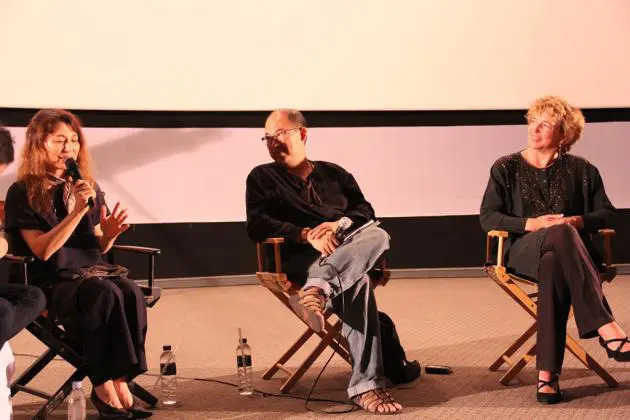
The Thai Film Archive chose to emulate that tradition in the first Silent Film Festival by inviting two well-known silent film accompanists to give the audience vital clues as to the emotions being played on screen.
On Saturday, Maud Nelissen from the Netherlands and Mie Yamashita from Japan sat down to talk about what it means to be a silent film accompanist.
A graduate with a major in piano from the Department of instrumental Music at Musashino Academia, Yamashita worked in an office and played piano at night before discovering she could combine her passion for music and the movies by becoming a silent movie accompanist.
Nelissen, who studied history and music and has composed music for countless silent films, fell in feet first when she agreed to fill in for a sick accompanist at a silent film festival. At first unsure whether she would be able to make a living from the career, she decided to give it a go after meeting Charlie Chaplin's own pianist and arranger Eric James in Italy in 1999. Today, her services are very much in demand by festivals and special events in Europe and North America.
So how do they choose the music?
“I play music that matches the flow of what’s happening on screen,” Yamashita says, adding that preparation is important.
“And I prepare by watching the movie carefully then researching the background to the movie and the social situation in which it was set,” she explains.
Nelissen agrees but says no matter how well she prepares, there is always a need for improvisation as the plot unfolds on screen.
“We tend to watch the movies on DVD so that means we inevitably miss something that only shows up on the big screen, which is where improvising comes in.”
Much depends on the genre, Nelissen adds. Only about 20 per cent preparation can be made for a documentary, which demands a high level of improvisation, while preparing for a comedy requires hours.
“I don’t believe in total improvisation particularly with Chaplin’s movies. For those I prepare up to the last note. He was such a perfectionist that one scene often took 80 to 100 takes. I try and emulate that spirit of perfection,” Nelissen says.
Flexibility in also vital, especially in cases where there is no time to watch the film before the show.
“The three things that are most important to this work are preparation, studying the notes and letting it all go once when the show starts. If you prepare too well your performance will be too intellectual,” she says
Yamashita describes the music accompanist’s job as “acting as a the bridge to connect the audience to the film”.
She also regards the accompanist as the happiest person in the cinema, because he or she can get involved and feel the story through playing the music while the audience just watches and listens.
Yamashita says she likes to pause whenever the characters have dialogue, explaining that silent film screenings in Japan always bring in a narrator or voice actor to tell the story. In the West, however, it is up to the music to describe the scene.
Nelissen tends to be more interpretive, with an easy-going humour and a melancholic and dark side making her piano style very extreme.
“The accompanist should always play music that represents what’s happening on the screen, as not all audience members will have the same emotions,” she says.
“In fact, accompanying a silent film with music is a prime example of non-verbal communication and this is something that comes automatically to children. Kids don’t even need to look at the mouth but can understand the film just through the gestures.”
The man upstairs
_ The Silent Film Festival continues until tomorrow at the Apex cinemas in Siam Square.
_ At 8 tonight at the Lido, Maud Nelissen will accompany the 1933 Japanese drama “The Water Magician”. Tickets are Bt100.
_ The closing film is Alfred Hitchcock’s “The Lodger”, at 8pm tomorrow at the Scala. Trisdee Na Patalung will perform live accompaniment, in collaboration with Somtow Sucharitkul. Tickets are Bt500.
_ For more details, see Facebook.com/silentfilmthailand.
