
Day trips for the tummy


Play
The Yomiuri Shimbun Asia News Network
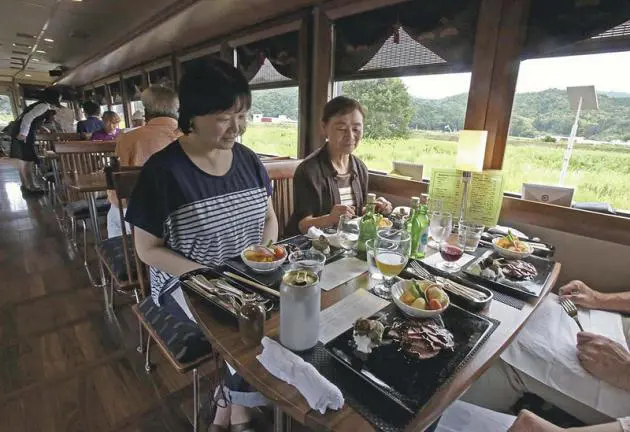
GOURMET SIGHTSEEING TRAINS trundling around Japan are a hot trend, allowing passengers to take in the views while dining on authentic dishes using locally produced ingredients.
Since many of them operate only on weekends or on limited schedules, seats can be difficult to reserve. The concept of dining leisurely while enjoying the scenery from a train window, which has broad appeal, has contributed to a recovery in the declining number of riders on trains.
Shikoku Railway Co began operating the two-car Iyonada Monogatari sightseeing train on July 26. On weekends and national holidays it travels mainly around coastal Ehime Prefecture. With a capacity of 50 passengers, it was remodelled at a cost of 150 million yen (Bt47 million).
On its inauguration day, passengers boarded at Matsuyama Station. “This line hasn’t been profitable, so I hope many people will ride the train and enjoy the splendid landscape,” said Shikoku president Masafumi Izumi.
Dishes served include a salad using locally grown lettuce and tomatoes, breaded fried uchiko pork featuring a local pork brand, and red sea bream, which came from the nearby Seto Inland Sea, steamed in wine.
“I’m looking forward to trying the dishes made with local ingredients,” said Masako Yoneda, 50, a piano teacher in Yufu. “I like the train’s old-fashioned decor, which uses plenty of wood.”
In May Kitakinki Tango Railway Co began operating the Tango Kuromatsu train, another gourmet sightseeing train that plies the 54 kilometres between Ama no Hashidate Station in Kyoto Prefecture and Toyooka Station in Hyogo.
Passengers can dine on a salad of local vegetables and roasted Kyoto beef, among other specialities. The ingredients are partially prepared at gourmet inns in the region and the dishes finished in the train’s own kitchen.
Yukiko Saiga, 73, a homemaker in Yabu, took the train with three of her family members. “I could tell a lot of time and energy went into the dishes. It’s like an upscale restaurant,” she said. “The scenery is usually nothing special, but it seems like a different world to me now.”
Three different Kuromatsu trains specialise in lunches, sweets or, mainly on weekends, locally brewed sake. Although the cost runs from 4,000 to 10,000 yen, they’re so popular that reserving seats can be difficult.
The sightseeing trains are diverse in their food offerings. The Shinano Railway in Karuizawa launched its Rokumon train last month serving local gourmet ham and wines.
Ohmi Railway in Shiga Prefecture is running the Ohmi Biaden-Hoshizora Nama Biru Go (“Ohmi beer train-starry sky draft beer”) train until August 30. Passengers are served frozen beer.
The Tsudoi train operated by Kintetsu Corp is equipped with seats facing windows. Ise ebi lobster soup and other local dishes are served at a counter.
East Japan Railway Co’s Tohoku Emotion train operates between Hachinohe Station in Aomori and Kuji Station in Iwate and provides a dessert buffet and a lunch menu featuring seafood caught off the Sanriku region.
Isumi Railway’s Restaurant Kiha train in Chiba serves Italian dishes, curry and rice and sashimi.
Showa Retoro Biru de Densha (“Showa retro beer and train”), operated by Keihan Electric Railway Co, travels in Shiga and serves a bottomless mug of beer.
A Ressha de Iko (“Take the A Train”), operated by Kyushu Railway, runs in Kumamoto. Passengers are served highballs using locally grown dekopon citrus fruit, to the sounds of jazz music.
According to the Land, Infrastructure, Transport and Tourism Ministry, of 91 firms operating local trains, including semi-private companies, 69 were in the red in fiscal 2012. The poor results were attributed to a decrease of about 20 per cent in ridership caused by a population decline outside of metropolitan areas compared to that of 20 years ago.
Meanwhile, the Kitakinki Tango Railway attracted about 17,000 more passengers in fiscal 2013 by launching two types of sightseeing trains that have elaborately designed interiors.
“The total number of passengers last fiscal year fell slightly from the previous year,” president Kiyokazu Ueda says. “So I hope it will increase this fiscal year with the popularity of gourmet sightseeing trains.”
Few trains operate on local railway lines, making it possible to run trains at slower speeds so passengers can enjoy leisurely dining. Many such routes are in areas rich with nature, a boon for attracting tourists.
“Local railway lines have been shifting from a means of transportation to a sightseeing attraction,” says Yoko Hayano, a research fellow of Japan Tourism Marketing. “Gourmet sightseeing trains are a good way to get people interested in areas along the lines.”
