
Breathing life back into museums


Play
Rirkrit Tiravanija's installation 'Demo Station No 5' becomes an interactive cultural stage at Leeum
Thai artist Rirkrit Tiravanija had long made a habit of breaking typical museum stereotypes.
He cooked and served Thai curry to visitors at a gallery in New York in the early 1990s and in 2005 turned an exhibition space into a live radio broadcasting studio at the Guggenheim Museum. He set up a bookstore at the 2009 Venice Biennale and a ping-pong table at the 2012 Gwangju Biennale.
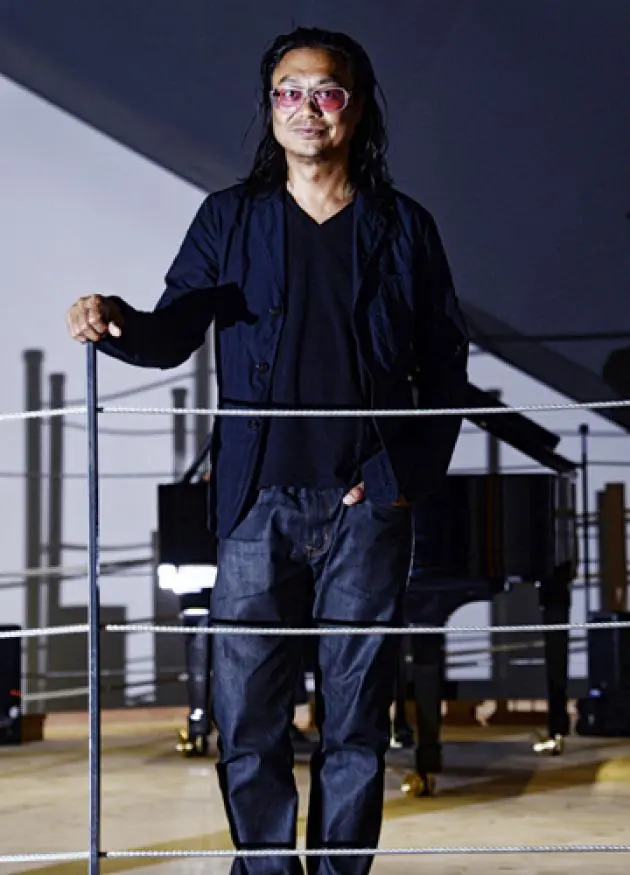
Now the artist is presenting another public-oriented work, “Demo Station No 5”, inviting visitors people to watch and participate in cultural activities as part of the 10th anniversary exhibition of the Leeum Samsung Museum of Art.
A “contemporary recreation” of Friedrich Kiesler’s “Space Stage” from 1924, Rirkrit, 53, has reinvented it as an “open station” where visitors can watch performances, interact with each other or just relax.
“I want people to move around like they are in their daily life. Part of my interest is always to break down the distance between what we think of as art or high art and what we do in our daily life,” he says.
The two-storey wooden stage serves as the venue for fashion shows, concerts and performances – unusual events for a quiet museum. There will be concerts of classical music, Korean traditional music and alternative music, with performances by professional dancers. At the same time, the audience can use it as their own playground, their own stage for piano performances, and a classroom, where they can learn how to play different drums from around the world.
“It’s a platform for people to demonstrate something. It’s about showing your ideas as part of the exchange,” Tiravanija says of his “Demo Station No 5”, the fifth project in his series, which started in 2005.
The artist, who works in the United States, Germany and Thailand, says his work is about aspects of people’s lives to which others pay little attention.
“I’ve never been interested in the conventional approach of displaying work in a museum though. My aim was to breathe life back into galleries.
“When we come to a museum, we expect there’s some kind of meaning or information to learn from displays. We only read and look at what we are told. But we are not really having an experience,” he says.
“I used food a lot in my previous works because it’s something that we all know and understand. It wasn’t about the food, but about people being together in the same place,” he explains.
In recent years, he’s turned to making films, with his first 150-minute feature focusing on a rice farmer in Chiang Mai. Rirkrit encourages the viewers to find meaning and value in the lives of these people from different echelons of society.
“These are the kinds of people on the periphery, not someone we focus on every day. But they are important to us. They are poets and artists whose lives we don’t pay attention to. We’re interested in someone like Angelina Jolie, but I think it’s important we see both,” he says.
RAMP IT UP
“Demo Station No 5” is at the Leeum Samsung Museum of Art until December 21. Find out more at www.Leeum.SamsungFoundation.org
