
Shed your cellulite, get in shape


Play
The recently ended holiday season was a time of dressing up, letting loose and, for many, overindulging in both food and drink.
But now 2015 is here and what better way to celebrate the New Year than by doing something about that unsightly cellulite.
If your skin looks like cottage cheese or an orange peel, you probably have cellulite, fat deposits just below the surface of your skin. Usually seen on hips, thighs and buttocks, cellulite occurs when underlying fat deposits push through layers of collagen fibres or tissue under the skin and create a dimpled or bumpy appearance. The latest body imaging technology shows that cellulite is caused by fat deposits sitting between collagen fibres. However, quite why the body packages our fat lobules differently and more superficially in some areas is not yet clear. Most overweight people have cellulite but it is also present in some underweight people.
What causes cellulite?
Hormones, genetics, diet, smoking, a sedentary lifestyle and tight underwear can all contribute to causing cellulite. The female hormone oestrogen is believed to play a central role in the formation of cellulite because cellulite occurs more frequently in women and specifically in the locations of fat deposits caused by oestrogen, that is, the buttocks, hips and thighs. A predisposition to cellulite is believed to be passed down in the genes. Other genetic factors that contribute to cellulite include low fat burning, shallow fat deposits and poor blood circulation.
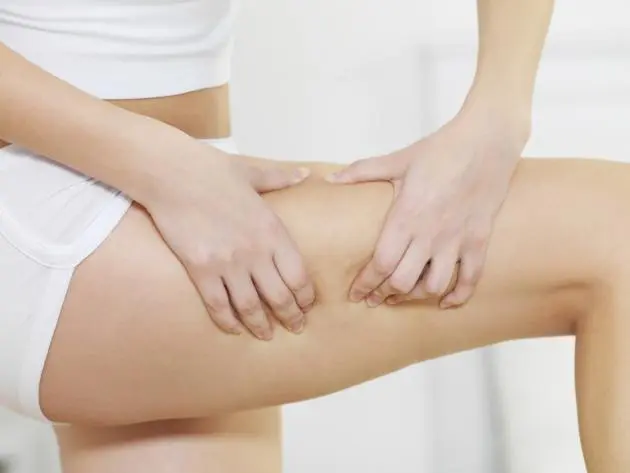
You can do a cellulite self-examination to check the severity of your problem. If a pinch test reveals the appearance of the orange peel effect, you have a mild problem. If orange peel dimpling appears when standing up, the problem is moderate. It is classified as severe if the orange peel dimpling appears at all times.
It is not possible to prevent cellulite, but you can certainly manage the problem with a healthy lifestyle, including eating a healthy diet of vegetables, fruits and high-fibre foods; drinking a lot of water; engaging in physical activities, such as aerobics or yoga. The first step to achieving these results is to determine your ideal healthy weight; the most effective means of checking this is to calculate your Body Mass Index (BMI). If your BMI indicates that you are overweight, then losing weight is also very important. Although cellulite will not go away completely just by losing weight, it does help in its treatment.
Cellulite is more than just a cosmetic problem, it is a marker of poor blood circulation that could result in a toxic build-up. There are several ways to treat cellulite, depending on the severity of your condition and other factors; lipomassage, ultrasonography and carboxy are the treatment options.
Lipomassage or Endermologie is a stimulation technique using motorised rolls to release localised fat and increase blood circulation. During treatment, the patients wear a nylon-type body suit to prevent skin irritation and increase their comfort. Patients usually start seeing positive results after 5-6 treatments. It is recommended that patients receive this treatment 1-2 times a week. Radiofrequency and ultrasonograpy use laser, radiofrequency or ultrasound systems to treat cellulite under the skin. The treatments do not cause any pain and patients will experience a warm feeling and some slight heat in the treated area. Carboxy therapy involves the injection of carbon dioxide under the skin. Although this treatment provides quick results, some patients are put off by the injection and needle. However, carboxy therapy uses a very tiny needle to inject carbon dioxide. This same tiny needle is used to treat acne. Carbon dioxide is also widely used in endoscopy treatments due to its rapid absorption and excretion. Carbon dioxide is a natural gas that exists in the body and is completely harmless, although patients may experience a slight burning sensation as the gas travels under the skin. This technique helps release localised fat under the skin and increase blood circulation.
Many other treatments are available that are dangerous and can prove counterproductive, such as liposuction. Liposuction or fat removal is not recommended for cellulite treatment because it may actually increase the dimpled appearance of the skin. However, before any treatment, please seek professional medical attention to determine the best treatment option for your skin condition.
Dr Waraporn Boonpramook is a Dermatologist and Skin Laser Specialist at Samitivej Sukhumvit Hospital. For information call the Samitivej Esthetics Institute (SEI) at (02) 711 8519.
