
Sometimes one test isn't enough


Play
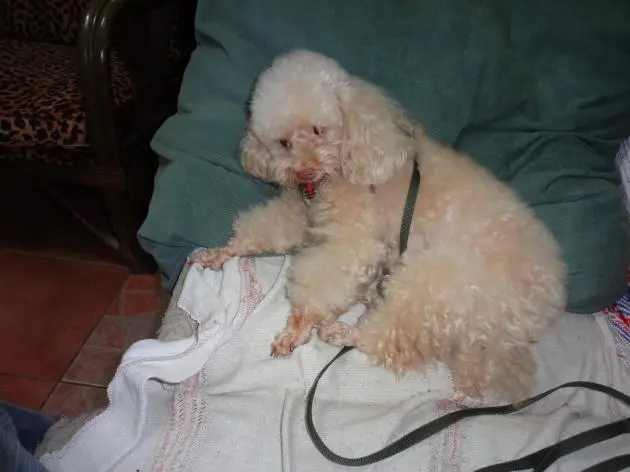
Advised by the vet to get more exercise, Wan-Wan is thoroughly enjoyed her new walking regime
MY THANKS to readers who have expressed their concern about my poodle pup Wan-Wan, who, I mentioned last week, has problems not only with the ligaments in her back legs, but also her liver and now the cataracts in her eyes.
“It’s hard for me to believe the dog’s eight years old,” says one reader. “I recall what you wrote when you first brought her home. She was what – three, four months old then?”
What a charming reader, to remember a column from so many years ago! It’s hard for me, too, to think of my dog as anything but a puppy, but there we are. Any living thing grows old, except some movie stars.
I’m happy to say that Wan’s increased daily exercise is already showing results. She’s so much happier than she has been. Such an active little dog doesn’t enjoy inactivity.
I still report to my regular vet. It was she who told me to be careful about giving the dog too much exercise. Her fatty liver can drain energy very fast, putting a lot of strain on the other organs in her body.
Both cats and dogs (and even people) can suffer from fatty liver disease. That is, there’s too much fat in the liver cells, preventing the liver from cleaning the bloodstream so that toxins accumulate inside the body, thereby causing further complications.
It may be found by itself as the primary disease or as a secondary disease, caused by kidney disease, starvation, obesity and cancer.
If your dog suffers from fatty liver disease, you might see a loss of appetite, rapid weight loss, jaundice (yellow pigment), vomiting, lots of salivation and diarrhoea or constipation.
The vet suspects that Wan has fatty liver disease by looking at the ultrasound she’s been having several times a year. In this way, he’s been tracking the problem, and now he’s grown so concerned that he’s recommended a biopsy.
With a biopsy, a tiny piece of the liver is removed for further examination. This procedure is invasive, that is, it requires going inside the body, but, on the other hand, it’s supposed to be very safe. The vet reassures me that biopsy procedures are being constantly improved.
“There’s always a possibility that something might go wrong, like internal bleeding,” he says, “but that’s very rare.”
Based only on the ultrasound, that fatty liver problem is very troubling, but my own vet is reluctant to order the biopsy. She’s looked at two other tests as well. Wan’s blood test wouldn’t specifically point to fatty liver disease, but it would indicate if her liver weren’t functioning properly. Her blood test, though, doesn’t show any liver problems.
The other test is even more basic. The vet simply looks at Wan and checks her eyes and gums. With fatty liver disease, Wan’s eyes would show yellow, as in jaundice, but even with the beginnings of cataracts, her eyes are very clear and bright. If she had liver problems, you wouldn’t see any white in her eyes, just yellow.
Besides, there’s her need for activity. If she had liver problems, she’d tire too easily for even walks of 20 or 30 minutes. She’s a good dog; she’ll wait patiently for me while I work at the computer, but the minute I take out her leash, she’s dancing around. She wants to get out, to visit her favourite trees, telephone poles and car tyres.
She wants to meet people who enjoy telling a tiny dog that she’s cute. In the end, the opportunity to meet, on her walks, a whole new bunch of admirers makes Wan an extremely happy dog.
As far as I can see, keeping the doggie happy is a main part of keeping her healthy, as is true for us all, doggies or not.
