
In step with 'Stem'


Play
Unesco hosts a discussion to how to coax more Asian women into the scientific field
In many parts of the world and particularly in Asia, men still dominate the worlds of science, technology, engineering and mathematics or Stem, as the four are collectively known. What factors might be causing the low participation of women in these fields and what can be done attract more girls and women into Stem in Asia and beyond?
Leading Asian women will share their thoughts on these complex factors tonight at an event to launch of Unesco’s new report on “A Complex Formula: Girls and Women in Science, Technology, Engineering and Mathematics in Asia”.
Hosted by Unesco Bangkok, the panel discussion is being held to mark International Women’s Day 2015, which fell yesterday, and gets underway at 6pm at Science Centre for Education Exhibition Hall and Planetarium on Sukhumvit Road.
Unesco Bangkok director Gwang-Jo Kim and Science Centre director Suranan Supawankit will open the launch ceremony, which will be followed by a video screening of the key messages of the report and the panel discussion.
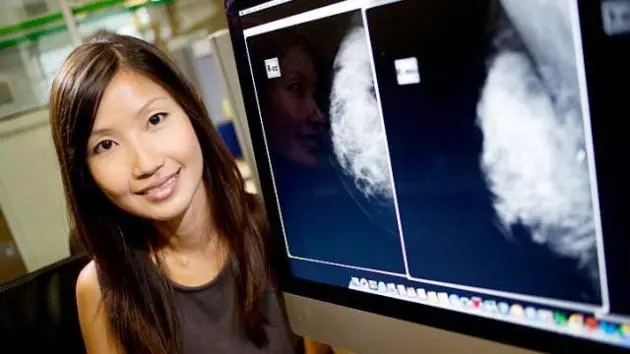
Singaporean breast cancer researcher Dr Li Jingmei, the 2014 winner of the Unesco-L’Oreal Women in Science International Fellowship and a post-doctoral researcher in human genetics at the Genome Institute of Singapore, will share her latest research.
Pornthip Kongchun, head of marketing at Google Thailand, will demonstrate how technology affects every aspects of our lives while new mother, Australian Deanne Renting, a senior production engineer at Chevron Thailand Exploration and Production, will offer a unique perspective on balancing her work in Stem |in Asia with family life.
Japan’s second female astronaut Naoko Yamazaki is unable to be physically present at the event, but will share her experience on video.
The new report examines a wide range of issues ranging from gender differences in learning achievement in mathematics and science, participation in higher education as well as educational, psychosocial and labour market factors, all of which can influence girls’ and women’s attitudes towards choosing the Stem fields as a career.
The world faces a multitude of challenges including climate change, global health epidemics, demographic changes, pressures from rapid technological advances and unprecedented inequality. While increased capacity and technical know-how are required to find new solutions to these challenges, women continue to remain in the minority of Stem professionals worldwide.
This report focuses on the findings of a regional desk study, with research conducted in Cambodia, Indonesia, Malaysia, Mongolia, Nepal, the Republic of Korea and Vietnam. Along with these findings, the report also provides reflections and conclusions for further study and policy formulation in Asia and beyond.
It’s the second in a series of studies in a three-year research project conducted by the Unesco Bangkok in collaboration with the Korean Women’s Development Institute (KWDI), which aims to explore issues of gender, learning achievement and transition to the labour market.
Interested parties are invited to discuss “A Complex Formula” on social media using the hashtag #STEMWomenAsia.
