
Documentaries ordered


Play
Salaya Doc is back for a fifth edition, with award-winning entries from across Southeast Asia
WITH A FOCUS on Southeast Asia, as well as filmmaking and cultural preservation, the Salaya International Documentary Film Festival returns for its fifth edition next weekend at the Thai Film Archive in Salaya, Nakhon Pathom, and the following week at the Bangkok Art and Culture Centre.
The fest opens on a sombre note with “The Look of Silence”, a continuing examination of Indonesian genocide from Joshua Oppenheimer. Following up his Oscar-nominated “The Act of Killing”, which rounded up the lethal men behind Indonesia’s anti-communist purges of the 1960s, “The Look of Silence” centres on an optometrist who uncovers the identity of the men who killed his brother. Winner of the Venice fest’s grand jury prize and awards at many other festivals, “The Look of Silence” has been much acclaimed, and has even been made required viewing for Indonesian military troops.
The lighter side of life comes into focus in the closing entry, “Y/Our Music”, which looks at unusual figures at the fringes of Thailand’s music scene. Directed by Waraluck “Art” Hiransrettawat Every and David Reeve, “Y/Our Music” journeys through the Isaan countryside and hidden pockets of Bangkok to survey an array of musicians, from the amateur maker of bamboo saxophones to veteran performers of traditional songs. The independently produced documentary premiered at last year’s Busan fest, and this week makes its North American premiere at the music-leaning South by Southwest Festival in Austin, Texas.
Four of the region’s top filmmakers are profiled in “Southeast Asian Cinema – When the Rooster Crows”. Intrigued by Thai director Apichatpong Weerasethakul’s winning of the top-prize Palme d’Or at the Cannes Film Festival in 2010 for “Uncle Boonmee Who Can Recall His Past Lives”, Italian director Leonardo Cinieri Lombroso wanted to find out more about Southeast Asia’s cinema talents. He picked four: Cannes-winning best director Brillante Mendoza from the Philippines, Singapore’s Eric Khoo, Indonesia’s Garin Nugroho and Thai auteur Pen-ek Ratanaruang. It is generously sprinkled with clips from all the directors’ films, and has interviews with producers, critics and behind-the-scenes talents.
And while Apichatpong himself doesn’t appear in “Rooster”, he’s in the bouquet of “Flowers of Taipei”, which turns the cameras on the influential stalwarts of Taiwanese cinema, among them Edward Yang and Hou Hsiao-hsien, and how they aided Taiwan’s transformation from a hub of cheap plastics manufacturing to a cultural and technological powerhouse. Along with Apichatpong repeating his mantra of “film is memory”, others interviewed include Kiyoshi Kurosawa, Hirokazu Kore-eda, Jia Zhangke, Wang Bing and Ai Weiwei, who reflect on how the cinema of Taiwan has shaped their work.
A century of romance in films is examined in “Love is All: 100 Years of Love and Courtship”, which brings together rare footage from the British Film Institute and Yorkshire Film Archive, from the very first kisses ever caught on film, through the disruption of war, to the birth of youth culture, gay liberation and free love. Acclaimed documentarian Kim Longinotto directs, and Richard Hawley, formerly of the British rock band Pulp, provides the soundtrack.
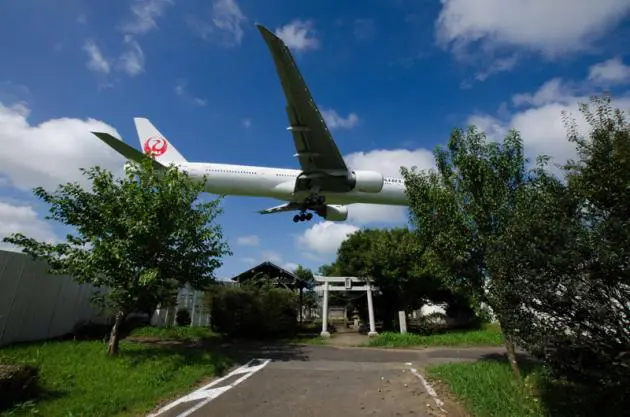
Other special screenings include “No Word for Worry”, Norwegian director Runar Jarle Wiik’s look at the culture of Moken “sea gypsies” in Myanmar; “The Wages of Resistance: Narita Stories”, which chronicles the continuing grassroots protests of farmers who have opposed Tokyo’s Narita International Airport since even before it was built in the 1960s; and “National Gallery”, a behind-the-scenes look at the London museum by the esteemed 85-year-old “institutional” documentarian, Frederick Wiseman.
The centrepiece of the Salaya International Documentary Film Festival is the Asean competition, which this year includes a mix of shorts and features from Cambodia, Indonesia, Myanmar, Singapore, Thailand and Vietnam.
Cambodian filmmaker Rithy Panh, whose Oscar-nominated “The Missing Picture” screened in Salaya last year, produces “The Storm Makers”, the story of Aya, a young woman who at age 16 was sold into work as a maid in Malaysia, where she was exploited and beaten for two years without receiving any pay. “I should have died over there”, she says. French-Cambodian director Guillaume Suon then has a chat with Pou Houy, the notorious head of a recruiting agency who shamelessly admits he doesn’t care what happens to the women he hires, and that he’s only interested in profit.
The plight of Indonesian women is examined in “Die Before Blossom”, director Ariani Djalal’s observation of modern middle-class Muslim girls. It focuses on two families during a decisive period of their daughters’ school careers in Yogyakarta, just as public education in Indonesia is coming under pressure to include more Islamic teachings in its formerly secular curriculum.
Myanmar’s “cult of the nat” – spirit worship – is the subject of the 22-minute “Lady of the Lake” by Yangon Film School student Zaw Naing Oo. It’s set in a village on Moe Yun Gyi Lake, in the country’s southcentral Bago Region, where belief in the supernatural pervades.
Other old ways are found in “Echoes from the Hill”, a 19-minute look at a Karen village in northern Thailand, inhabited by the “Pgaz K’Nyau” – simple humans – who have shunned such modern conveniences as electricity and highways. Their sacred belief is to remain in harmony with nature, even as they come into conflict with the Thai government’s attempts to build a dam and make their ancestral forest lands a national park. Jirudtikal Prasonchoom and Pasit Tandaechanurat, students King Mongkut’s Institute of Technology Ladkrabang direct.
More traditions are imperiled in “Madam Phung’s Last Journey”, which follows ageing drag queens as they lead their transgender carnival troupe around Vietnam. The debut feature from Ho Chi Minh City Theatre and Film School graduate Nguyen Thi Tham, it’s a glimpse at folks at the fringes of Vietnamese society, who have no other ways to earn their living. So they shake their hips to sell lottery tickets, operate carnival games and children’s rides and perform in cabaret shows, at first fascinating the locals until later in the evening when things turn ugly and the troupe is run out of town.
And from Singapore comes “03-Flats”, which deals with the city-state’s public-housing programme. Directed by Lei Yuan Bin, the feature-length documentary seeks to dispel the dull and drab image of public housing with help from three single women who have made their flats into spaces that can truly be called homes.
SALAYA BOUND
>>> The fifth Salaya International Documentary Film Festival runs from March 21 to 28 at the Thai Film Archive in Salaya, Nakhon Pathom and from March 24 to 27 at the Bangkok Art and Culture Centre’s fifth-floor auditorium.
>>> For more details, check www.Fapot.org or www.Facebook.com/SalayaDoc.
