
Massages the sense


Play
How everyday noise videos are helping insomniacs sleep
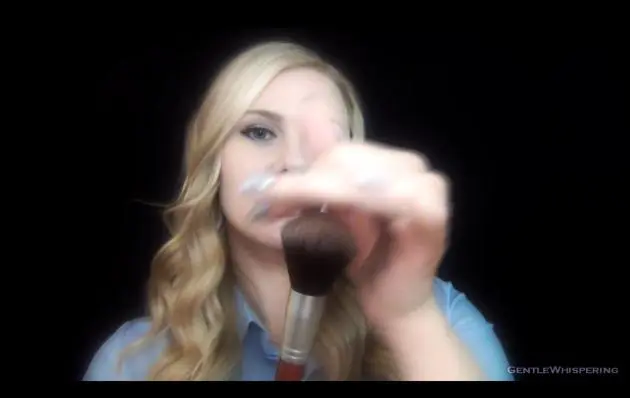
Millions watch on YouTube as Maria folds towels, flips through a magazine or gently strokes a hairbrush.
But they’re not really watching the young blonde Russian - they’re listening to her soft, whispering voice and delicate movements in an effort to relax or find sleep.
Fans have compared the recent Internet sensation, Autonomous Sensory Meridian Response (ASMR), to getting a head massage or even dubbed the result a “brain orgasm.”
Usually it begins with a pleasurable tingling in the scalp, which spreads down the spine and washes through the rest of the body.
But those who have experienced it resolutely reject the idea that it is a sexual experience.
“These videos offer viewers a sort of therapy,” says Dmitri, a 40-year-old Australian who publishes ASMR videos and does not want to give his surname.
“It’s not a replacement for a visit to the doctor, but when you put your headphones on and close your eyes these videos can be very restorative.”
There are no known health risks to the phenomenon.
As you listen, the brain reacts to certain sounds, such as the rustling of newspapers or wrapping paper, US neurologist Steven Novella explains on his blog.
Gentle tapping, flowing water, whispering and watching another person diligently complete a task can trigger the pleasurable feelings.
“These beautiful little things that we don’t pay attention to” can make “the most amazing” sounds, 28-year-old Maria, who lives in the US state of Maryland, told the Washington Post.
One of her videos, showing her running her fingers over a hairbrush, pretending to massage her viewer’s shoulders and blowing incense, has been viewed almost 10 million times.
Novella writes on his blog: “They [the triggers] all seem to engage the same networks of the brain – that part of us that interacts carefully and thoughtfully with our environment or with other people. There is something calmly satisfying about such things.”
Not everybody appears to be receptive to ASMR, but those who are alk about it with enthusiasm.
“It’s changed my life,” one user commented on one of Maria’s videos. Another describes how well he has been able to sleep since discovering ASMR.
Dmitri, better known to his followers as Massage ASMR from the name of his YouTube channel, has had similarly positive reactions.
“I’ve got lots of messages from people who say my videos have helped them,” he says,
“People who have insomnia are in a hyper state of arousal,” the New York Times quoted Carl W Brazil, a sleep disorders expert at Colombia University as saying.
“Behavioural treatments – guided imagery, progressive relaxation, hypnosis and meditation – are meant to try to trick your unconscious into doing what you want it to do. ASMR videos seem to be a variation on finding ways to shut your brain down.”
ASMR star Maria immediately read the New York Times article to her 370,000 followers – in a soft voice and with plenty of rustling of course.
Her YouTube channel Gentle Whispering is intended to be a “secret island of relaxation and peace”.
It’s often pretty young women like her who use role play to trigger ASMR in their viewers, for example by pretending to be a hairdresser or a masseuse.
They speak smilingly into the camera as if to their best friend.
Neurologists, psychologists and sleep researchers still have no definitive answer as to what causes ASMR and if it even exists, though Novella believes that it does.
“This is just another example of how our brains are fantastically complex and weird,” he writes. “How else can you explain the existence of videos of whispering Latin and wrapping paper noise on YouTube.”
- ASMR explanatory video by Maria (https://www.youtube.com/watch?v=Kb27NHO_ubg)
- Maria’s YouTube channel (https://www.youtube.com/user/GentleWhispering)
- Maria on Facebook (https://www.facebook.com/pages/Gentlewhispering/252733744855198)
- Dmitri’s YouTube channel (https://www.youtube.com/user/MassageASMR)
