
"Ode to My Father" stirs nostalgia, controversy
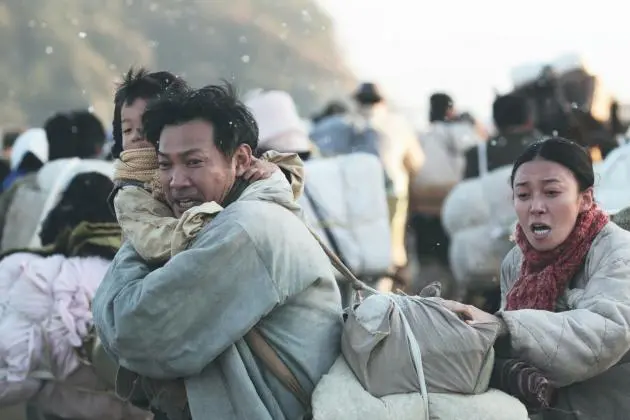


Spanning four tumultuous decades, the drama is South Korea's no 2 movie of all time
A SOUTH KOREAN historical drama that delves into the repercussions of the Korean War and the generation that fought through the period took local box office by storm this year, amid political controversy surrounding the era.
“Ode to My Father”, directed by Yoon Je-kyoon (“Haeundae”), ruled the local box office for several consecutive weeks this year, and became South Korea’s second highest-grossing film of all time, with 14.2 million admissions.
The 126-minute film is the story of Deok-soo, a man who lived through through the country’s tumultuous period from the 1950s to the 1980s.
When the Korean War breaks out, Deok-soo, played by veteran actor Hwang Jung-min (“New World”, “You are My Sunshine”), is separated from his younger sister and his father and becomes the breadwinner of the family. Even at a young age, he dares to take all kinds of difficult and odd jobs in order to provide for his mother and other siblings in Busan, where the family fled to from North Korea.
In search of opportunities, he traverses the globe, including working as a migrant coal mine worker in Germany. There where he meets South Korean nurse Young-ja, played by “Lost” star Kim Yun-jin, and they get married.
The heartwarming film follows Deok-soo’s journey of five decades, sacrificing his youth and dreams to support his family. In doing so, he stands as witness to some of the most important events in modern Korean history, including the Korean War, the Vietnam War and the reunion of separated family members in the 1980s.
The movie was for director Yoon a personal tribute to his father.
“My father passed away when I was in college and I didn’t have a chance to say thank you,” said Yoon at the press conference before its premiere in November. “I hope the film serves as the channel for communication between the old and young generation.”
He used his parents’ real names for the two lead roles: Deok-soo and Young-ja.
The film’s popularity was slower than expected when it premiered in mid-December.
The buzz started when some film pundits dubbed it as a “conservative” flick for emphasising the sacrifices of older generations and justifying nationalism, and President Park Geun-hye used a scene from the movie to call on Korean people to show more patriotism.
Park is a conservative leader whose rise in politics was greatly aided by nostalgia for old days as her father – military strongman Park Chung-hee – led the country’s rise from postwar poverty. The late Park ruled the country from 1961 until his assassination in 1979.
Citing a scene in the film in which the husband and wife suddenly halt an argument and pay a hand salute to the national flag when they hear the national anthem playing, President Park emphasised the need for patriotism in order for South Korea to overcome national adversity.
Many in the political circles watched the film, including Representative Kim Moo-sung, chairman of the conservative ruling Saenuri Party, and Representative Moon Jae-in, the liberal opposition New Politics Alliance for Democracy’s flag-bearer in the 2012 presidential election.
“There were scenes in the film that emphasized patriotism, but that was the reality of that time period,” Moon told reporters after watching the film.
“It is unreasonable to say that the film is conservative,” said the liberal lawmaker.
For Shin Tae-wook, a 32-year office worker, the film was a moving drama, regardless of the controversy. “It was an opportunity to see what my parents and grandparents had to go through in the past. I am very grateful for that,” he said.
Another moviegoer in her 70s said: “It brought back memories of the past. They were hard times, but without it, Korea won’t be the same country as now.”
She came to watch the film with her friends after her daughter recommended it to her, she said.
The film’s popularity extended to Busan, as many people are flocking to the southern port city to see different locations featured in the movie, especially Gukje Market, which is the Korean title of the film. The largest traditional market opened in 1946 and served as the place for war refugees to set up stalls in order to make a living, just like Deok-soo in the film.
