
Animals and humans ruin a Happy New Year


Play
Songkran water throwing leads to a rearrangement of walking schedules and a nasty fight
WHO WOULD have expected that last week’s Songkran festivities have taught us lessons in child-rearing and time-sharing?
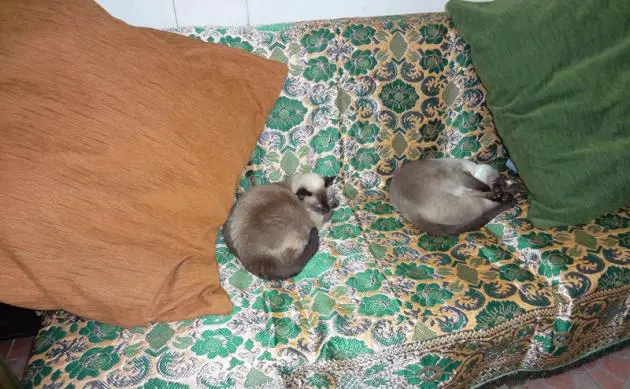
For anyone living in a multi-pet household, time-sharing is not new. My cat-herd time-shares every day, having worked out who sleeps where at what time.
Although Wan-Wan, my poodle pup, owns several properties in the house – and she doesn’t share them – she won’t disturb any cat who’s sleeping in one of the cat-proper?ties.
It doesn’t always work out. One cat always seems to want what another has, but on the whole, this situation seems rather civilised, a silent agreement between my ani?mals to live in harmony.
In the human community, though, time-sharing has taken much longer. It’s taken months for the humans to work out when to walk their dogs. Now owners usual?ly take their smaller dogs out in the early morning and the early evening. Owners with larger dogs that are much more difficult to control must wait until the smaller dogs are safe?ly inside.
For the past few months, this arrangement has worked well – until Songkran.
Okay. It’s fun to throw water at anything that moves, but if you aim a water gun at my little dog, she’ll be terrified. In addition, if you think people will be kind to a tiny, helpless animal, you’re mistaken. Children can be the worse.
There’s one little girl who thinks it’s fun to run up behind my dog and slap her on her backside. The slap is very light, but the dog doesn’t expect it. She jumps in fright and pulls away. I look at the child’s mother, who’s standing nearby. The mother does?n’t say anything, not to me, nor to the dog, nor even to her kid.
I have the feeling that she knows her daughter shouldn’t frighten the dog, but she’s a proud mother, and she doesn’t want to reprimand her child, especially in front of me. I sup?pose for her, her daughter is perfect, no matter how unkind the kid is.
It gets much worse at Songkran, when people are loaded with water guns and buckets full of water.
For protection, I take her for her walk in the early morning instead of the early evening. At that time of day, people are not yet celebrating the holiday, and the dog will be safer.
On the walk, we meet other dog-owners who have also changed to the early morning during Songkran to walk their dogs. No one wants their dog to be frightened, especially two of Wan’s friends, a poodle a bit larg?er than she is and an elderly beagle, both proudly owned by a couple who live near us.
Time-sharing, though, has been entirely forgotten. As Wan and I return home, we hear terrible screams. I leave Wan in the patio and run outside.
It’s Mee, the part-chow from next door. The powerful dog, who usual?ly has her walk late at night after the other dogs, has also changed to a morning walk to avoid the Songkran water.
Now, she’s pulled away from Khun J, her owner, and attacked the beagle. The old dog is completely helpless as Mee slashes his neck and shoulders. Blood pours all over the place.
J finally drags Mee into her patio. While the couple rushes their dog to their car to take him to the vet’s, J shouts at them: “Why didn’t you protect your dog when you saw Mee? It’s all your fault.”
In fact, J is usually kind-hearted and understanding, but Mee is her daughter, a perfect daughter, even though she’s hurt another dog and probably harmed community rela?tions.
Fortunately, the beagle survives. Now he’s even able to walk, perhaps the best news for a new year with problems between animals and between people.
