
An unexpected death


Play
Thep and the rest of the family mourn Thong
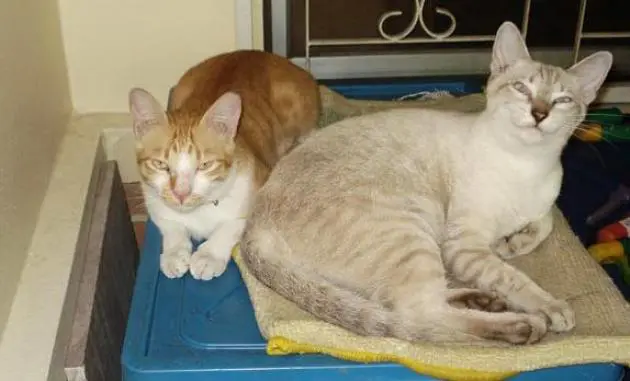
IN MY HOUSEHOLD, I’ve joked that Thep and Thong, the two soi cats who’ve joined us, have used up more than a cat’s nine lives, especially Thong.
He’s certainly a pretty cat, with greenish-blue eyes and cream and grey stripes. He also has a gentle personality, happy to have enough food and a lap to sleep in.
He’s so different from Thep, his best friend. Thep fears everyone except me, and even though he likes coming into the house for a meal and a catnap, he grows nervous if he stays inside too long.
The two boys are extremely close. They greet each other after a long day patrolling the soi. They play together. They even have disagreements, yelling matches much like what happens in any family.
Apart from some injuries from catfights, Thep can take care of himself, but Thong has suffered from bad luck all his life. He really is one clumsy cat. He’s fallen off trees and fences and down stairs. He’s suffered insect bites, as well as bumps, bruises, punctures, and abscesses, and every time, even after spending weeks at the clinic, he’s bounced back, happy to be home where food, friends and freedom wait for him.
So when he has a bad reaction from his annual vaccinations, I’m worried, of course, but not extremely concerned. Shots to counteract his fever, rash and vomiting help almost immediately.
When the symptoms return a few hours later, though, my worry increases. Back at the clinic, he receives additional medication, which helps, but not completely. The fever and the rash remain.
Then, he stops eating. The vets begin to suspect other problems, apart from the reaction to the vaccination.
I’m extremely reluctant to blame the vaccination he had. Vaccinations are so very important to the well-being of your pets –and to you. Even if you wander around just one wat, you can see animals suffering from the results of not having been vaccinated against communicable diseases.
In Thailand, where rabies is found throughout the country, even in Bangkok, protection of the human community is a major concern. In your own homes, vaccinating your pets provides a major protection for you and your children as well as for the animals that have gained a place in your hearts.
Yet here is poor Thong, suffering from the results of a vaccination.
How is it possible that a healthy young cat is suddenly so sick?
I don’t know.
At first, the vets at the clinic are not overly concerned. As a symptom arises, they treat it with all the knowledge and experience they have.
At one point, they even expect Thong to recover enough to come home the next day.
When Thong stays at the clinic, Thep usually has his own nervous breakdown at home. He constantly searches every floor looking for his friend, calling for him piteously. He also follows me around, yelling at me as in, “Where is he? Where is he?”
At first, this time is no different. Thep searches the house for his friend, but after a few days, he stops looking.
He still comes in for a meal and a catnap. When it rains, he sleeps in my bedroom. When he’s in the house, he stays close to me, even climbing into my lap to sleep.
I suppose he knows before I do. Thong is not coming home. The clinic calls to tell me he died the night before.
The vets are upset. They don’t understand what happened. Thong’s poor body is sent to the lab for a post-mortem, which will take a week or so. We may have some answers then.
At home, Thep crawls into my lap for comfort. We both miss a wonderful friend who has left us too soon.
