
A single step TO FAME


Now 10 years old, the video-sharing website YouTube continues to grow. We talk to one of the founders.
TEN YEARS AGO, it took a great deal of luck as well as a decent agent to be discovered and become a star. The came YouTube and today stardom is just a few clicks away.
Set up a decade ago on the concept “broadcast yourself”, the California-based video sharing website has significantly impacted today’s global pop culture, creating instant Internet celebrities and promoting musical performers of all genres. Singers like Justin Bieber, Austin Mahone, Colbie Caillat and Cody Simpson are just a few of the best-selling artists discovered on YouTube and programmes without the funding to air on TV networks are thriving on YouTube with billions of viewers. In marketing and advertising terms, bands have shifted from traditional media to connect with their target audience on YouTube.
The website has also become an international “electronic town hall” where people from around the world connect, comment and share their thoughts on literally everything, forming a trans-cultural and trans-generational global community that is constantly evolving.
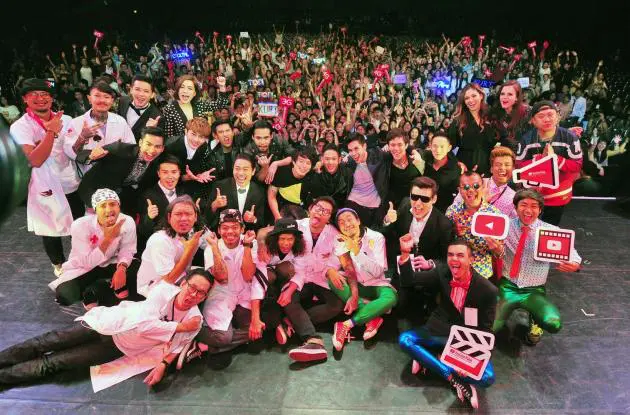
Last year, YouTube branched out to Thailand as part of its localisation strategy plan and last month, YouTube Thailand celebrated both the launch and its first anniversary with the extravagant YouTube Fan Fest event, which saw local and international YouTubers leaving the screen to mingle with fans.
We had a chat with David Powell, one of the co-founders and director of APAC Online Partnership and Global Communities, about YouTube’s role in shaping the past and the future.
How did it all start?
YouTube started in 2005. Blogging had just become the rage and everyone was using it to broadcast themselves. We wanted to give a space for people to share what they loved with the world. The first video on YouTube was a picture of the founder at the zoo, and he was just showing a video of an elephant. That led to people sharing everything from funny kid and animal videos to amazing channels and educational subjects. Local schools uploaded 10,000 videos teaching people everything from English to algebra. YouTube has become a very broad and diverse platform and has changed how people consume and purchase.
Why did you need to set up YouTube Thailand?
We have to localise both from an operational perspective as well as compliance perspective, which means we have to make sure everything complies with the law here in order to run YouTube as a business. So far we’ve had amazing success in Thailand and we’re very surprised how well YouTube was received here. We launched YouTube Thailand in parallel with the YouTube partner program, which allows creators to monetise content. Partners and content creators become part of this program and they can run ads in their videos. The creators choose how they are going to monetise their videos. They can choose to have no ads, pre-roll ads, skipable or non-skipable ads. They also can choose the format of the ads, depending on what works and does not work for their own audience.
What YouTube started out, did you expect it to become this influential?
I don’t think anybody expected YouTube to become what it is today. It has defined the trend of pop culture. David Letterman, host of one of the most successful shows in America, “The Late Show with David Letterman”, is retiring because he can’t keep up with the viral hits from his competitors that are posted on YouTube. At the same time, Jimmy Fallon and Jimmy Kimmel are using YouTube to test what resonates with the audience. Ratings show how many people tune in to watch the show, but YouTube shows how people like it, dislike it, react to it and share it. With this insightful information, they can figure out what resonates and repeat.
The program has also changed how brands utilise YouTube in terms of advertising and marketing. They’re trying to understand how to use it because they’re used to the simple, traditional way where you take a product and make a commercial about it. But with YouTube, which is all about authenticity, people want to know more about the brand, both the good parts and the bad, and how it is embedded in your life. YouTube helps you connect to audiences and audiences expect you to give them all the information.
What do you think makes YouTube such a big success?
The platform is truly global with 80 per cent of viewers coming from outside the States. Since we partnered with Google in 2006, we’ve been working constantly to make sure we provide the best platform possible for every country. Look at what we’ve done in Asia. We launched in Singapore in 2011 then went to Malaysia and Indonesia in 2012, so we’re slowly building up the platform from the engineering perspective. We only properly launched YouTube Thailand last year and we immediately knew how much creativity there was here. We’ve seen 50-per-cent growth in content uploaders in Thailand. Thais love YouTube and YouTube uploaders, so it’s important for us to make sure we offer the best possible product to accommodate that and have the best resources and platforms for them to be successful.
The most viewed video on YouTube is “Gangnam Style”, which isn’t even in English. That’s the beauty of YouTube’s demographic nature. We don’t decide what people watch; the audience decides what they want to watch, to like and to share. That non-English video still gets a million views a day. For Psy to have to same success if he were only on a Seoul-based platform, he would need to have every man, woman and child in Korea watch this video 45 times.
In this era of information overload, how do you keep YouTube clean and appropriate?
We have a community guideline that says what’s acceptable and what is not. We have a very, very active community. People who watch YouTube love YouTube, and they want YouTube to be the happy, fun, quirky and safe place as it is. When something gets uploaded that violates that guideline, it is immediately flagged and we have a team to look at it. We have 300 hours of content uploaded every minute. We don’t screen the content as it is uploaded, but with our community as actively engaged as it is, things that are inappropriate get flagged and taken down very quickly.
Could YouTube kill TV stars?
Variety did an article on the most influential people for teenagers, and the top five were all YouTubers. They beat some really big names including Katy Perry and several others. The difference between traditional stars and these new generation stars is the number of power brokers between the fans and the stars. If you want to meet Tom Cruise, you have to join some kind of competition and if you’re super lucky you might get to reach him. YouTube stars get tweets from their fans and make a video to respond. The fans feel that they’re having a genuine and authentic relationship with them. There’s no gap, and those artificial barriers don’t exist anymore. The definition of celebrity has changed too. We’re no longer in a world with limited channels. People choose who to follow, what to broadcast and what gets funded, not the other way around.
What does the future look like for YouTube?
It is a super-exciting time at YouTube. It’s interesting to see brands wanting to get engaged. The line between traditional and online media will start to blur. At first it will be viewed it as a competition, but then they will start to merge. Content creators will become more mature,
and they’ll figure out a better way to connect to their audience, based on the not-so-great as well as some amazing examples of brand integration.
On the Web:
CreatorAcademy.WithGoogle.com/Page/Education
