
Literary genius in Cyberspace


Play
Chinese webwriters are making a small fortune as TV and movie companies snap up their novels
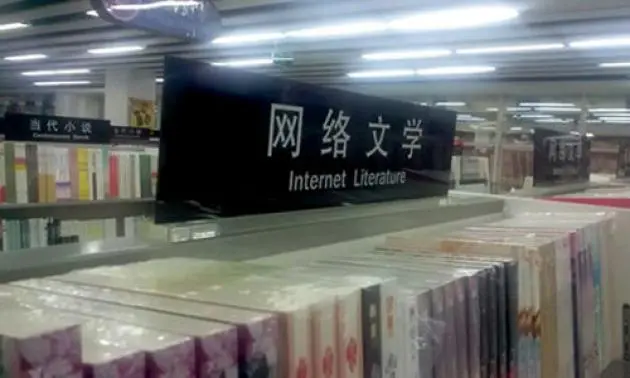
Over the past 10 years, Chinese Internet literature has grown at an impressive rate. With ever more such novels adapted to film and television drama, web-writers have finally reached their “golden age”. Some earn more than 10 million yuan (Bt54 million) annually.
According to a survey by Beijing-based newspaper Jinghua Times, Internet literature websites offer writers a lower access threshold, while writers themselves have more channels to publish their works and earn more.
Between this year and next more than 30 movies or TV dramas adapted from Internet literature will be released. Meanwhile, large Internet literature groups are being set up one after another and traditional Chinese Internet giants such as Tencent.com are taking the literature to new heights.
Web-writers initially published their work on online forums. Bu Feiyan, a web-writer as well as a Chinese literature lecturer at Renmin University of China, admits that she was writing for fun when she started on Tianya.cn, the largest Internet forum in China.
“I was just a college student back in 2002. I had a wuxia (martial arts) story in my mind, but none of my classmates wanted to hear it, so I decided to write it on the Internet. I was surprised that so many people liked my work. About four months later, a publisher left a message on my blog and asked if I wanted to publish my work,” she says. Bu has published 25 books so far. Most were serialised on an Internet literature website where people can read them after payment. Since early this year she has been working as a screenwriter for an Internet drama.
“The Internet has changed my life. Before, my works attracted attention from publishers, while now they earn rewards from my fans. Web-writers have more chances to become rich. All they need is talent, effort and fans,” she says.
Fans are really important to web-writers. According to the new remuneration system of China Reading Limited, the biggest Internet literature website in China, web-writers can receive up to 50 per cent of the subscription.
Almost all Internet literature websites include a reward function. Readers can award the web-writer money or props that can be “exchanged” for money.
Some sites encourage a “fans’ economy”. They publish monthly charts of popular web-writers determined by votes from readers. However, readers must pay to vote, and the more they pay, the higher rank their favourite writer will get.
There are millions of web-writers in China. They can be divided into five levels based on income and number of fans. The lowest level is the ordinary writer, also known as “poor guy”. Their fans are limited, while their works seldom get recommended. Normally, their annual income is around 1,000 yuan.
Xiaoshen (low rank god) class writers have more than 100,000 fans with an annual salary of more than 100,000 yuan. Generally, they are the foundation of a literary website.
Zhongshen (middle class god) class writers earn more than 500,000 yuan per year and have hundreds of thousands fans.
The annual salary for dashen (super god) class writers is more than 1 million yuan. The number of their fans is always higher than 1 million as well.
There are around 20-30 top web-writers in China. They are called platinum authours or zhigaoshen (the Supreme God) class writers. According to the 2014 Chinese web-writers’ list, Tangjiasanshao, who ranks first, earns 50 million yuan annually from royalties, while the second and third on the list both earn more than 25 million yuan.
IP (intellectual property) or qualified contents has become the direct driving force of the Chinese Internet in recent years. The concept of IP upgraded the business mode of Internet literature websites from single paid readings into an industrialised operation.
Popular network novels are welcomed in the film, TV drama, and animation and game industry. Up to the end of last year, different companies had bought the copyright to 114 network novels. Among them, 90 works will be adapted into TV dramas, while others will be adapted into movies. Giant Interactive Group Inc, a Chinese online game company, has bought 40 copyrights to network novels as reserved contents.
However, piracy and plagiarism have become a danger for web-writers. Some readers pay to read the works but then share them with other Internet users for free. Some writers “imitate” the plot in ordinary writers’ works or mix different novel elements together into their own works.
According to Maoni, a platinum author, web-writers should spend more time studying rather than instead of making money through cheating.
“So many people are engaged in online writing, but only a few do a good job. If you want to be a top commercial writer, you need talent as well as diligence. There is no shortcut to fame and fortune,” he says.
