
Remembering women's resilience


Play
South Korea's first genderthemed library archives major events of women's rights movement
In 2001, seven years before South Korea’s abolishment of the male-dominated family registration system took effect, novelist Gong Ji-young wrote an angry column for a local daily for the sake of her children. Before the abolishment of the system, women were not allowed to register their children under their own family name, as the law stipulated that all individuals must be registered under their biological father’s name only. This meant the children’s names could not be changed even if their mother was remarried after being divorced or widowed.
Gong, who was married to her third husband at the time, had two children from her previous marriages. Because of the old registration system, she could not re-register them under her or her new spouse’s name. This meant the children could not be added as dependants to their stepfather’s health insurance plan. They ended up having different last names, exposing them to further social stigma.
“I even thought about fabricating new birth certificates (for my children),” Gong wrote in her column, demanding change.
Some 14 years later, Gong’s experience – along with those of many other women who suffered under the system – has been archived at Yeogi, the first-ever gender-themed library in Korea.
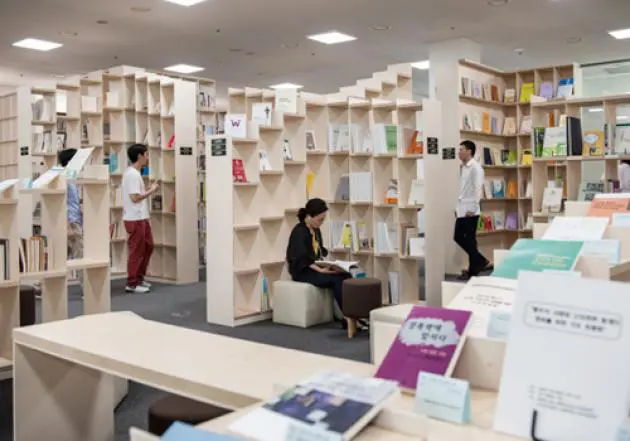
Located in Daebang-dong, southwest Seoul, the 857-square-metre property houses some 10,000 books on gender equality policies and the women’s rights movement in Korea, including documents related to the monumental abolishment of the family registration system, which was announced in 2005 and took effect in 2008.
“There is something empowering about remembering,” says lawyer Kang Kum-sil, minister of justice between 2003 and 2004. Her academic paper, published in 2000 about the flaws of the old family registration system, triggered public debate that eventually led to its abolishment.
“We have to remember that the abolishment was the result of some 50 years of work. The issue was brought up for the first time even before I was born. I was born in 1957, and it was in 1952 that Lee Tae-young, the first female lawyer in Korea, spoke out about the need to change the family registration system.
Public perception to the change wasn’t always favourable in the early 2000s. Kang had to endure being cursed in public by those who opposed the system’s abolishment . Many critics of women’s rights activists claimed they were “encouraging divorce and family disintegration” by trying to get rid of the tradition reflected in the system.
Among the prominent guests who attended the opening ceremony of the library on (July 14) was Lee Hee-ho, 92, one of Korea’s earliest women’s rights activists and the widow of late President Kim Dae-jung. One of her best-known activities includes the 1959 public campaign called “Let’s get marriage certificates.”
At the time, most Koreans weren’t familiar with the idea of marriage certificates, and many “married” women weren’t even aware of the existence of the legal practice. Many women ended up being kicked out of the house and even forced to leave their children after years of marriage, after their unfaithful husbands’ mistresses registered themselves as legal wives. The library also houses documents related to Korea’s landmark court cases in women’s rights, including the nation’s first sexual harassment case, which was brought against a chemistry professor at Seoul National University in 1993.
“I wanted this place to be a museum, an art gallery and a library at the same time,” says Kang Ye-rin, the architect who designed the library.
“One can create a room by connecting the bookshelves, while the shelves can be also used as desks. This represents the history of women’s rights movement, which has been accumulated in different forms and places.” For Kim Kwang-yee, who currently heads an NGO advocating for the rights of women with disabilities, inclusiveness is what she wants to see most at Yeogi.
She donated to the library a number of personal documents related to an international event she attended with 600 other women with disabilities from around the world in Washington, in 1997.
“It was a one-time event organised by an American woman with disabilities who was working for her government at the time. It was a life-changing experience for me as I had been struggling to get a job. No company would accommodate a disabled person’s unique needs in their working environment in the ‘80s and ‘90s. Meeting these women made me realise how important solidarity is and sort of gave me a sense of purpose in life.”
Kim stresses that Korea still has a long way to go to achieve gender equality, and the key to bringing significant changes is social policies based on inclusiveness and respect for diversity.
“We want to be included in the definition of women, rather than separately categorised as women with disabilities,” she says. “I want to see books about us included in all sections of the library, rather than seeing them placed in a |small, separate section. We want ourselves and our stories to be |seen as much as possible.”
