
A matter of opinion


Play
Does a bite from a cat who has been regularly vaccinated and never goes outside require the human victim to get a rabies shot?
THE PHYSICIAN is quite upset with me. Although he speaks quietly, his voice is stern as he repeats his question:
“Do you still refuse to follow my advice?”
For me, you don’t ignore what a doctor says, unless you have very good reasons. In this case, I believe I do.
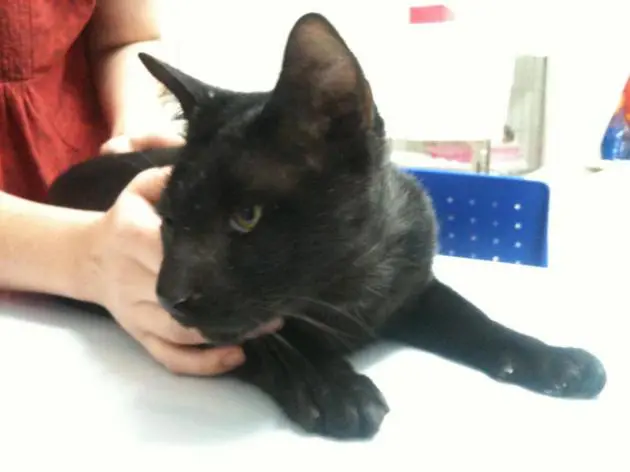
Earlier in the day, Manohra bit me on the hand. This cat has behavioural issues with almost everyone, except my poodle, Wan-Wan. Because she was separated from her mother when she was less than three weeks old, she never had a chance to learn how to behave like a cat.
Living a life alternating between extreme aggressiveness and extreme fear, she also alternates between being friendly and loving and attacking any other cat around, especially brat-cat Yoyo.
This morning she wouldn’t leave Yoyo alone. She yelled at him, she screamed at him, she even tried to attack him.
Yoyo didn’t want to fight. His shoulders dropped, he even looked away, but Manohra wouldn’t stop the noise and the threats.
Finally, I picked her up, intending to move her away from the boy.
Manohra let out a growl and sank a tooth into my hand.
This cat bites and scratches a lot. Most of the time the injuries are minor. I just make sure that I clean the injury carefully and apply Betadine.
The bite Manohra gave me this morning was not minor. The pain told me immediately I was going to need medical help and probably antibiotics, even though it was only one little puncture wound.
Because of prior appointments, I couldn’t go to the hospital immediately, and by the evening, my hand had swelled up painfully.
Now, as soon as the doctor sees the hand and hears what happened, he says, “You’ll need an injection against rabies.”
You don’t play around with rabies (or hydrophobia). If you’ve been bitten by a rabid animal and then decide to wait to see if any symptoms appear, you’re already dead. The best (and only) way to avoid death is to receive the anti-rabies treatment before the symptoms appear.
The point is that I know Manohra is not rabid, for three reasons.
First, she receives her rabies vaccination every year. In other countries, vets recommend that your cat or dog should be vaccinated every three years, but because rabies is found throughout Thailand, even in Bangkok, the annual vaccination is recommended.
econd, Manohra never goes outside. I keep all my animals inside the house, even the dog, except for soi cat Thep. By itself, the vaccination is not guaranteed 100-per-cent effective, but if your pet never comes into contact with potentially infected animals, the chance of infection is reduced considerably.
Third, I know why Manohra bit me, and it wasn’t because she’s sick. The term is “displacement”. She really wanted to bite Yoyo, but when I picked her up and moved her away from the boy, she couldn’t bite him, but my hand was, well, handier. For one brief moment, she must have thought she was ripping Yoyo apart.
Thus I decide not to have the anti-rabies injection, against the doctor’s advice. Why have an injection when it’s not necessary?
Later, when I check with vets and animal-rescuers, I receive some advice I didn’t expect. One vet, who knows Manohra well, agrees with my decision. The animal-rescuers I speak to do not.
“You just don’t know,” one animal-rescuer tells me. “Even if Manohra is vaccinated and doesn’t come into contact with infected animals, you can’t be sure. You shouldn’t take any chance with rabies.”
She adds, “The vaccination won’t do any harm, and at least you’ll be 100-per-cent safe.”
In the end, safety and well-being are the most important points, aren’t they?
