
Graduates in wine with honours


Play
Bangkok aficionados hone their knowledge with an evening at the "Wolf Blass Academy"
Wolf Blass has had a presence in Thailand for over 20 years, but only last week did the Australian winery treat local connoisseurs to a “Wolf Blass Academy” – an evening of tastings and tips that was, by all accounts, well worth the wait.
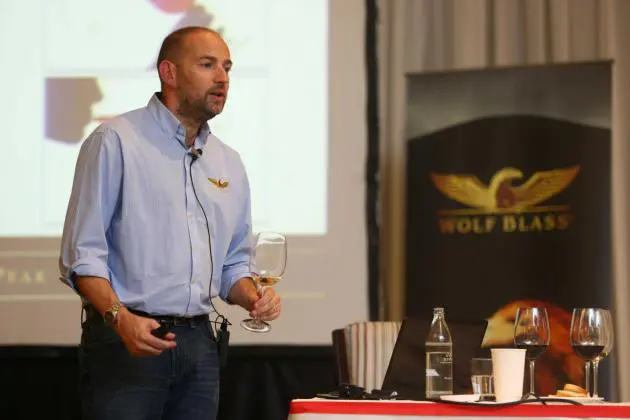
The firm’s head winemaker, Stuart Rusted, led the appreciative crowd at the Dusit Thani Bangkok through a course on its labels, pointers on how to taste wine, what to look for when buying wine and, most interestingly, how to actually describe wine.
“The Wolf Blass Academy began about a decade ago,” said Rusted, a Briton. “As we travelled around the world promoting our wines, we recognised that we had a responsibility to educate people about Australia and the wines made there. This is a programme that offers a fantastic overview of our industry – how wine is made, how to taste it and how to serve it, and the relationship between food and wine. And we have a lot of fun along the way.” Rusted noted that Thailand is “a developing market with strong growth potential” and said its turn for an Academy session was long overdue.
When sampling wine, he suggested tipping the glass slightly against a white or otherwise pale background to determine the colour. Simply raising the glass high and looking up through the bottom isn’t as effective because you only see the darker tones.
Wine is “nosed” by inhaling lightly at the brim, the expert explained. Close your eyes and try to “make a connection” between the wine’s own fragrance and the smell of something else you’ve encountered before.
“When people say they don’t smell anything, that’s not true: They do, but they don’t know how to describe it. The reference points come from your own life experiences – what you’ve tasted and drunk before. The more varied the kinds of food you’ve tasted and the better chance you have at describing the wine specifically.
“Don’t be intimidated when a sommelier notices the scent of blackcurrants or violets. It’s probably because you don’t know what blackcurrants taste like or what violets smell like. Try to build your own vocabulary based on what you do know, and it can very much vary. And remember, there is no right or wrong when it comes to describing wine.”
There are, however, several key words you can use to sound a bit more knowledgeable. For a Chardonnay, the world’s most diversely planted white-wine grape, fruit like lemon, apple, pear, peach and fig are apt to be mentioned in describing the nose. The flavours are typically oak (from the ageing casks), butter, vanilla and caramelised sugar, and possibly even pie crust.
As an example, Wolf Blass Yellow Label Chardonnay 2013 is described of having “summer fruit flavours, oak character, with a soft and creamy texture”.
If you want to sound like an expert on Shiraz, rave about the odour of plum, liquorice, cinnamon, black pepper, dark berries, mulberry or coffee, and don’t forget to say “earthy” as well. The same vocabulary applies to Cabernet Sauvignon with the addition of “vegetative, herbaceous, perfumed, prune-y and leafy”.
Wolf Blass Yellow Label Shiraz 2013 is smooth and fruity, for instance, while Yellow Label Cabernet Sauvignon 2012 is sweet and spicy, with leafy notes and a rich, inviting aroma.
Rusted stressed that, regardless of the grape used, a good wine should have harmony in the flavours, “length” – as when the taste lingers longer in the mouth – intensity of character and complexity in dimension.
Wolf Blass Wines was founded in 1966 in a humble tin shed in South Australia. Today it’s one of the world’s most successful and awarded wineries, exported to 50 countries. The Yellow Label at the heart of the operation has been recognised for exceptional quality for more than 40 years.
Find out more about at www.WolfBlass.com.
