
Lost in transaction
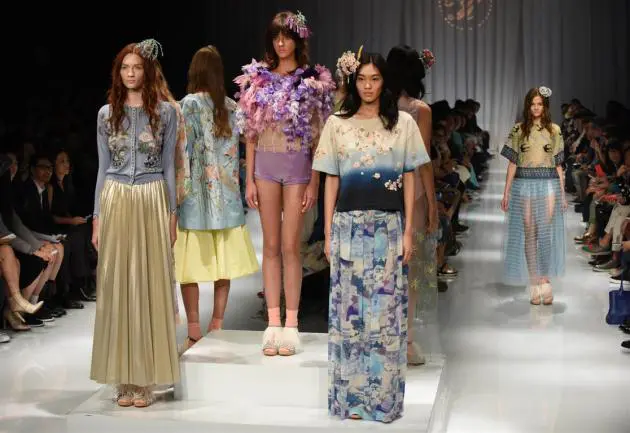


Tokyo Fashion Week gets underway and once again local designer are noticeable by their absence
TOKYO FASHION WEEK opened Monday with a show by a Studio 2S designer, an arrangement observers say underlines the absence of local labels on the world stage despite Japan’s reputation for the edgiest streetwear.
More than 50 fashion houses are exhibiting their collections at this year’s event, casting a spotlight on designers working with materials ranging from denim to hand-woven silk.
“There is no shortage of design talent in Japan,” says Akiko Shinoda, director of international affairs at Japan Fashion Week Organisation, which is responsible for the event.
“Unfortunately many designers and textile houses are still quite unknown outside Japan, (so) we need to promote them,” Shinoda adds. At times Tokyo’s pavements feel like their own catwalks, with youngsters sporting an array of weird and wonderful ensembles.
Beanie hats worn high on girls’ heads seem to be everywhere this autumn, even with the mercury still in the mid twenties.
But while Tokyo’s fashionistas are applauded by bloggers and columnists worldwide for their daring and sophistication, the wealth of street style inspiration hasn’t translated into big business – for Japanese designers anyway.
Frenchman Loic Bizel was among the first style hunters to cash in on Tokyo’s unique status as a laboratory of trends back in 2001.
“This city is so ahead of the curve when it comes to fashion, trends begin here and then months later, maybe even a year later, they go global”, Bizel says.
The Tokyo-based trend-spotter plays a key role in this process.
For anywhere between $700-$1,200 a day (Bt25,000 to Bt42,500) he takes clients representing retail giants like H&M, Nordstrom and Zara on a tour of Tokyo’s most edgy boutiques, tucked away along quiet side lanes and often known only to fashion insiders.
Bizel’s clients pay big bucks to his company, Tokyo Fashion Tour, to scout inspiration.
“In one case, we had buyers from Primark who must have bought some $20,000 worth of samples in a single day, in the end they had to buy extra suitcases to carry all the stuff,” Bizel says.
All too often trend-setting designs from boutique Tokyo shops are adapted or even copied outright, particularly by Chinese manufacturers, for a fraction of the original cost.
“Most Japanese designers work on a small scale, they don’t have patent protection or legal teams who can fight back so it’s easy for big brands to copy their designs and make money from it.”
Industry veterans like Shinoda acknowledge the severity of the situation and say they are pushing local designers to secure their trademarks and protect their labels against fraud.
“Unfortunately we see many instances of our designers’ logos being copied and trademarks being registered by companies in China,” she says.
“We have to find a solution.”
Tokyo fashion week kicked off with a nod to American classics by US designer, Todd Snyder, whose pin-striped shirts, cotton shorts and sweatshirts wouldn’t have looked out of place on a college campus.
Linen suits and brogues made an appearance, as did a surfboard to suggest that life wasn’t all work and no play for Snyder’s male and female models, many of whom were of Japanese origin and whose ages ranged from 19 all the way up to 60-years-old.
In contrast, the models featured in Japanese label Keisukeyoshida’s show looked like they cut class to turn up at the runway, with girls dressed in pleated miniskirts and ankle socks, while one male stomped down the catwalk in a pair of pants vertically slit to reveal a pair of leopard-print boxer shorts.
Japanese designer Soshi Otsuki’s show featured men dressed in culottes and silk shorts layered over pants in a largely monochrome collection.
Traditionally Japanese designers – with notable exceptions like Issey Miyake, Kenzo and Comme des Gargons’ Rei Kawakubo – have not paid much attention to overseas markets.
“For a long time... the fashion industry in Japan did consistent and sufficient business solely in the domestic market, so there was no need (to pursue) international markets,” says Izumi Miyachi, deputy managing editor of Yomiuri Shimbun newspaper.
The country’s chronic birth rate drop however has prompted a slowdown in domestic consumption, Miyachi says.
Some Japanese designers with global ambitions – from legends like Yohji Yamamoto to thriving new label, Sacai – prefer to stage shows in Paris instead of Tokyo.
But that doesn’t worry the organisers of Tokyo fashion week.
“We can’t compete with Paris, Milan or New York,” Shinoda says.
“But what we can do is provide a platform for young designers who are starting their careers.”
