
It's all in the design


Play
A Thai architect is recognised for Asia's best building of the year
ASIAN ARCHITECTS converged on Ayutthaya recently for the 36th Arcasia Council Meeting where they discussed the challenges of incorporating traditional designs of the past with contemporary architecture. This year’s theme of the conference was “The Future of the Past”, denoting a trend in which architects in Asia are drawing their inspiration from notable historical buildings.
The highlight was the presentation of the Arcasia Awards that recognise exemplary designs by Asian architects. The awards-presentation ceremony was held in the grounds of Wat Chaiwatthanaram, Ayutthaya.
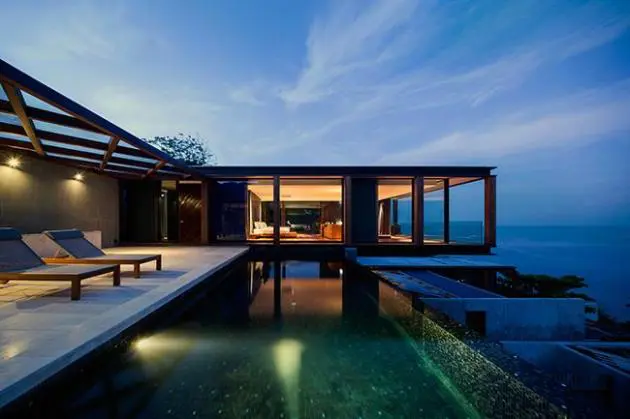
Acclaimed Thai architect Duangrit Bunnag won “Asia’s Best Building of the Year” for his design of the Naka Phuket.
“I am very glad to have won both a gold and ‘Best Building of the Year’ prize. I feel honoured and proud of the awards. This is the first time I’ve won ‘Asia’s Best Building of the Year’, which is considered the overall winner at the Arcasia Awards. I won two golds on two separate occasions a few years ago. Members of the jury showed good judgement. This is essentially the best award of the region in architecture,” Duangrit told The Sunday Nation.
The Thai architect’s design of the Naka Phuket also scooped up a gold in the Resort Building category.
The design of the Naka Phuket was driven by its unusual geography – a steep mountainside that extends all the way to a valley-enclosed beach. The architect designed the 94 “hanging villas” with “floating bedrooms”, the key visual concept of the project, right on the slope.
Each unit is fully separate with a good ocean view. The construction of the elaborate villa structures on a sloping hill required high integrity in design and workmanship to accomplish.
“The challenge lay in how to build a resort on this site. I intended to design the rooms to look like they actually stick out from the hillside and overlook the sea. When you stay in the room, it feels like you’re sleeping in mid-air. It gives you a sense of tranquillity yet excitement,” says Duangrit.
The Arcasia Award for Architecture is Asia’s most prestigious architecture accolade and acknowledges exemplary work done by architects working in the region. It encourages the sustenance of the Asian spirit, the development and improvement of the Asian built environment and enhancement of the awareness of the role of architecture and architects in the socio-economic and cultural life of Asian countries.
“By winning ‘Asia’s Best Building of the Year’, Thailand looks set to lead Asia in architecture. Thanks to his victory, Duangrit has set a new benchmark for Asian architects,” says Arcasia president Sathirut “Nui “Tandanand.
Duangrit’s triumph illustrates how the talent of Thai architects is enjoying wider recognition. In Asia, for instance, they are much sought after. Sathirut says Thai architects set themselves apart by integrating traditional Thai design elements from the past into modern architecture.
“Take Duangrit’s Naka resort design, for instance. It looks very modern, but if you see the resort for yourself, you’ll notice that there are some Thai elements in it. Lately I have seen many Thai architects incorporating elements of Thainess into their designs. That’s why Thai architects are enjoying growing recognition overseas. It’s because their modern designs have Thai roots, which helps set their designs apart,” he says.
Residential and resort designs inspired by historical structures or traditional architectural wisdom are gaining momentum. And it is this aspect of modern architecture that Sathirut wanted to promote through the 36th Arcasia Council Meeting in Ayutthaya, Thailand’s former capital.
“We want architects to use architectural models of the past for creating modern designs. The past is a rich source of inspiration. Architects who keep moving forward must not forget the past, or their roots and cultural heritage. The real challenge is how they can translate architectural concepts of the past into concrete modern designs. Site planning, designs and the atmosphere of historical structures from temples to palaces can make your designs stand out. Our future has to be connected with the past,” says Sathirut.
Modern architecture is no longer about the future, but about how well an architect can use the wisdom of the architecture of the past to create something new and interesting. Thailand has a rich pool of talent in architecture simply because Thailand has a long and rich history. This Thainess is being expressed through housing and resort design, Sathirut asserts.
“We must do our best to preserve our cultural heritage and Thainess. This is what gives us a sense of unique architectural identity,” he says.
Winners of this year’s Arcasia Awards
CATEGORY A: RESIDENTIAL PROJECTS
Category A-1 SINGLE FAMILY RESIDENTIAL PROJECTS
Honourable Mention award: Termitary House by Tran Thi Ngu Ngon and Nguyen Hai Long
Gold award: Boundary House by Yasuhiro Yamashita and Atelier Tekuto
Category A-2: MULTIPLE FAMILY RESIDENTIAL COMPLEXES
1st mention award: South 50-53 Apartment by Mohammad Rafiq Azamzam
2nd mention award: The Green Collection by RT+Q Architects Pte. Ltd
No gold award winner
Honourable Mention: Urban Suites by Kerry Hill Architects Pte Ltd
CATEGORY B: PUBLIC AMENITY BUILDINGS
Category B-1 PUBLIC AMENITY: COMMERCIAL BUILDINGS
1st mention award: Sandcrawler by Aedas (Hong Kong)
2nd mention award: PJ Trade Centre by Yelillarasan Subramaniam
Honourable Mention: Phoenix Centre by Shao Weiping
Category B-2 PUBLIC AMENITY: RESORT BUILDING
Honourable Mention: Kontum Indochine Cafe by Vo Trong Nghia and Dau Nhat Quang
Gold: The Naka Phuket by Duangrit Bunnag
Category B-3 PUBLIC AMENITY: SOCIAL/INSTITUTIONAL BUILDINGS
Gold: Beichuan National Earthquake memorial by Cai Yongjie
Category B-4 SPECIALIZED BUILDINGS
Mention award: Stadium and gymnasium of Dalian Sport Centre by Chu Xiao.
Honourable Mention: AI Shaqab Equestrian Performance Arena by Leigh and Orange Ltd
Gold: Shenzhen Bao’an International Airport Terminal 13 by Fuksas and Ma Long
CATEGORY C: INDUSTRIAL BUILDINGS
Honourable Mention: Aimer Fashion Factory by BinkeLenhardt and Dong Hao
Gold: YTL Communications Centre II by Tan Eng Keong
CATEGORY D: CONSERVATION PROJECT
Honourable Mention: Renovation of Origin Design Studio by Zhang Ming, Zhang Zi and the Original Design team
Gold: Restoration and Regeneration of Sangzhutse Fortress by Chang Qing, Ding Jiemin and Hua Yin
CATEGORY E: SOCIAL RESPONSIBLE ARCHITECTURE
Mention award: Rishipara Mandir Paathshaala by Shareq Rauf Chowdhury
Honourable Mention: Regeneration of Copper Mine Industry Area, Chuzhou China by Duan Jin, Qi Zhang and Ming Yin
Gold: BES Pavilion by Doan Thanh Ha and Tran Ngoc Phuong
CATEGORY F: SUSTAINABILITY
1st Honourable Mention: ZCB, CIC Zero Carbon Building by Ronald Lu and Partners
2nd Honourable Mention: NaviStruct House 2 by Sekiya Masato.
Gold: Binh Thanh House by Vo TrongNghia, Shunri Nisizawa and Daisuke Sanuki.
