
How hotels shaped the new China


Play
A Beijing exhibition casts an informative spotlight on reform-era landmarks
High-rise buildings that dominate the skylines of major Chinese cities such as Beijing, Shanghai and Guangzhou include well-designed luxury hotels that passers-by take for granted. But, to Cole Roskam, these skyscrapers’ emergence in the 1970s and ’80s signalled the arrival of international hotels that helped China connect with the world.
The associate professor of architectural history at the University of Hong Kong says the hotel skyscrapers represent physical evidence of China’s reform and opening-up.
Roskam’s interest in China’s foreign-based hotels from that era isn’t only academic. He’s now co-hosting the exhibition “Accommodating Reform: International Hotels and Architecture in China, 1978-1990” at the Ullens Centre for Contemporary Art in Beijing through October 23.
The exhibition reviews the birth of seven landmark hotels – some among the earliest Sino-foreign ventures established at the start of reforms. They stand as examples of the phenomenal development of five-star hotels to accommodate increasing foreign visitors for tourism and business in China in the ’70s and ’80s.
Photos, building models and documents offer a behind-the-scenes look at their cultural, economic and political relevance.
The show focuses on the Jianguo, Great Wall and Fragrant Hill hotels and the east wing of Beijing Hotel, but others examined include the Shanghai Centre, the Jinling Hotel in Nanjing and the White Swan Hotel in Guangzhou.
“In general they present a nice array of buildings in different cities designed by different architects,” says Roskam.
He says famous foreign architects designed many such hotels in reform-era cities as monumental buildings, introducing the concept of modern architecture to China.
Chinese architect Zhang Bo designed the Beijing Hotel’s east wing in 1974 with a grid facade and balconies overlooking Chang’an Avenue.
Renowned Chinese-American architect Ieoh Ming Pei drew on his childhood memories of the elegant gardens of Suzhou in Jiangsu province in designing the Fragrant Hill Hotel, which blends with surrounding Fragrant Hills Park in northwest Beijing.
Roskam says glass-curtain walls first appeared in China at these hotels. Amenities like TV sets, air-conditioning and elevators influenced the country’s industrial development later.
Symbolising China’s opening-up to the world, the hotels for the first time had foreign restaurants, bars and discos. They also hosted cross-cultural activities and accommodated foreign celebrities and dignitaries.
The Jianguo Hotel attracted customers with Beijing’s first French restaurant, Justine’s. Many foreign banking officials resided its first-floor rooms, earning it the nickname “the Wall Street of Beijing”.
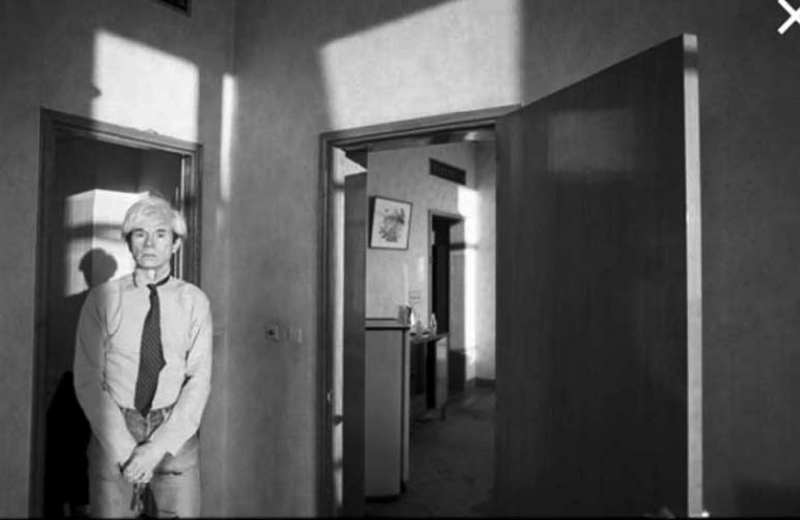
American cultural icon Andy Warhol and his photographer friend Christopher Makos stayed at the Beijing Hotel while touring the country in 1982. Photos taken during their visit, capturing the interior decor of that hotel and the Fragrant Hill Hotel, are also displayed in the exhibition.
In 1981 the Beijing Hotel hosted the country’s first public fashion show since the 1949 communist take-over. It was staged by Italian-born French fashion designer Pierre Cardin, who was among the first foreign businesspeople to land in the country, in 1978. A dress modelled at the show is displayed, along with a photo taken by Chinese-American photojournalist Liu Heung Shing of Cardin at the opening of Maxim’s Beijing restaurant in 1983.
Another American pop artist, Robert Rauschenberg, stayed at the Great Wall Hotel in 1985 during his retrospective at the National Art Museum. His second solo exhibition, “Rauschenberg in China”, is now underway at the UCCA.
Roskam says many Chinese have fond memories of the hotels. When he interviewed people who’d worked in them or lived nearby, most spoke of how “groundbreaking” the hotels were.
“The hotels are valuable reminders of how important tourism and foreign businesses were to China’s economy after 1978,” he says. “They’re also vital reminders of how quickly China has developed.”
