
Keeping the noise down
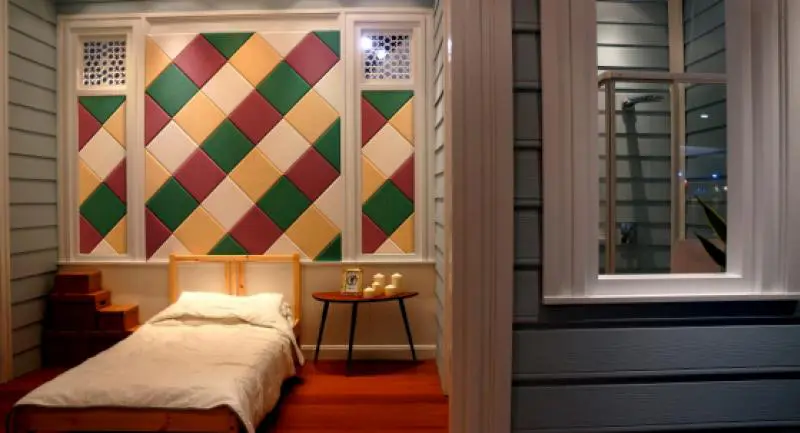


SCG comes up with soundproofing insulation that also looks great
NOISE DISTURBANCE, either from household members or outside, is one of the topmost problems experienced by home residents. To meet the needs of modern-day living in limited space, SCG has come up with a sound-protection insulation that can block outside noises entering the house and keep interior sound inside.
The sound absorption insulation can be installed within the wall stud during construction or, in the case of older houses, inserted inside through a cut. It also adds visual appeal to the wall, thanks to innovative moulding into rectangular, triangular and hexagonal panels with a colourful fabric covering. It is simply installed too by applying liquid nails on the back before attaching it to the wall panel.
“Even though noise disturbance seems trifling, it can be a long-term threat to common happiness of multi-member households. In addition, although noise levels in residential areas are usually lower than the health-damaging level of 85 decibels, they can be emotionally disturbing because our sense of hearing tends to perceive sounds with an emotional approach rather than by measuring their values,” says SCG architect Tosapol Pongkiatchai.
Tranquillity is particularly important in the bedroom. According to Tosapol, sound-protection insulation should be installed together with the wall stud on the sides adjacent to other rooms. To reduce reflection of sounds from opposite sources, install sound-absorption insulation on the wall at the head of the bed. This can also be done in such a way as to add a new decorative edge to the bedroom, such as by using square panels of sound-absorption insulation in alternating colours in a stylish arrangement. The best colours for a bedroom are light and relaxing, such as white, off-white and light brown.
The living room tends to be louder space than a bedroom as it is where household members spend time together watching TV, listening to music or engaging in noisier activities. Here sound-protection insulation should be installed together with the wall stud. In addition, fixing sound-absorption insulation on about 35 per cent of the wall surface on all four sides will dampen sounds in the room and lessen their penetration outside. Warm and visually comforting shades are ideal.
Lastly, an entertainment room, such as music rehearsal room, karaoke room or home theatre, is similar to a living room in terms of family function. However, its sound intensity is higher so it needs better soundproof performance, both to avoid disturbing nearby spaces and to cut sound interference from outside. In addition to installing sound-protection insulation in the wall stud, the wall on all four sides should be cladded with sound-absorption insulation. Its design and arrangement should also serve the purpose of that room. In a home theatre, for example, keep things plain and simple by arranging black or dark-coloured panels in big rectangular shape end-to-end to minimise distraction from the screen. A karaoke or music rehearsal room can be more playful to heighten energy and fun, such as by contrasting red, blue, yellow and black panels of sound-absorption insulation.
