
Old Walls, New Life: Bangkok's Creative Districts Are Rewriting the Development Playbook
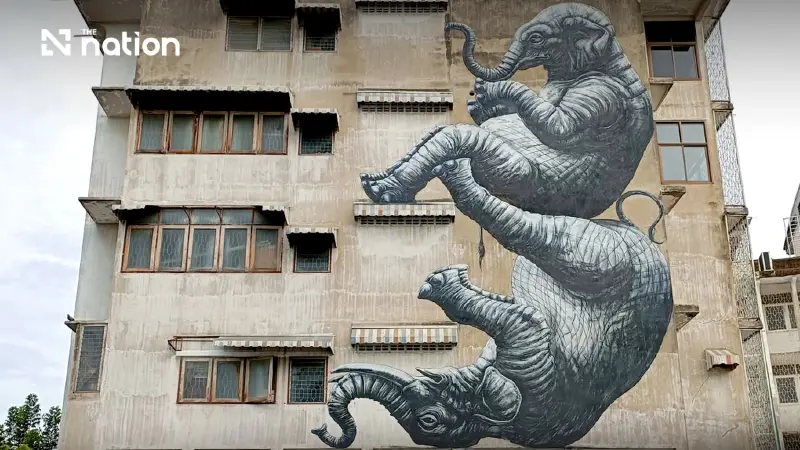


Bangkok's creative economy is worth 1.44 trillion baht. The city's most compelling galleries are proving that heritage buildings — not new construction — are its greatest asset
- Bangkok is revitalizing its urban areas by repurposing historic buildings, such as old warehouses and post offices, into creative hubs, galleries, and cafes instead of pursuing new construction.
- This strategy of "adaptive reuse" has transformed neighborhoods like Charoen Krung into official "Creative Districts," attracting tourism and investment while preserving architectural heritage.
- The city's creative-led regeneration is a major economic engine, with Thailand's creative industries contributing 1.44 trillion baht to the GDP and earning Bangkok a UNESCO City of Design designation.
- A primary challenge of this development model is managing the risk of gentrification and ensuring the revival of these districts does not displace the original local communities.
Bangkok's creative economy is worth 1.44 trillion baht. The city's most compelling galleries are proving that heritage buildings — not new construction — are its greatest asset.
When architect Duangrit Bunnag opened Warehouse 30 in a cluster of Second World War-era Japanese warehouses along Soi Charoen Krung 30 in 2017, the 4,000-square-metre complex of creative shops, galleries, a bookshop, and a café was greeted with sceptical curiosity. Few anticipated it would become a catalyst for one of Southeast Asia's most discussed urban regeneration narratives.
Nearly a decade later, the logic it embodied – preserve the bones, activate the soul – has become an article of faith in Bangkok's development conversation.
According to the Creative Economy Agency's CEA Forum 2026, Thailand's creative industries now generate 1.44 trillion baht annually, representing 8.01 per cent of national GDP.
Bangkok's UNESCO City of Design status, awarded in recognition of its use of design as a tool for urban development, reinforces the strategic framing: creativity is not a side act but a growth engine.
The Charoen Krung neighbourhood, once Bangkok's oldest commercial artery and a former hub for Chinese and Muslim traders, accelerated its transformation after the Thailand Creative & Design Centre (TCDC) relocated its headquarters to the historic Grand Postal Building on the road.

The Tourism Authority of Thailand now formally positions Charoen Krung as a "Creative District" where arts, culture, and property preservation coexist — a designation that has drawn galleries, boutique hotels, international designers, and hospitality brands into its 150-year-old streetscape.
A 2025 academic paper published in The Journal of City: Branding and Authenticity examined the case of Sarnies Bangkok, a 150-year-old former boat repair shop near the Chao Phraya River converted into a café and community hub.
Its findings articulated a broader pattern: adaptive reuse does not merely preserve architectural heritage but catalyses tourism, creates local employment, and strengthens community cultural identity.
The paper cited Warehouse 30 and the TCDC Grand Postal Building as parallel models of how private investment and public creative institutions can work in tandem to regenerate urban areas without wholesale demolition.

The Creative Economy Agency's 2026 thinking formalises this with the concept of "City as a Stage" – a framework positioning urban spaces as platforms where people, cultural assets, and creative businesses generate layered economic value.
The annual Bangkok Design Week, which in its 2026 edition ran across more than 140 venues from Charoen Krung to Pak Khlong Talat and Bang Lamphu, exemplifies the approach. It treats the festival itself as an instrument of city development rather than mere decoration.
The challenge facing ARTdaptive projects is gentrification — a tension Duangrit and the Creative District Foundation acknowledge explicitly.
Warehouse 30 continues to be a no-entry-fee venue, deliberately positioned against the paid-access cultural models of newer developments. The Foundation's stated mission is to revive Charoen Krung without displacing the communities that made it distinctive.
Whether Bangkok can hold that balance as international investors and luxury hospitality brands arrive in greater numbers will define the next chapter of the city's creative identity.
