
Museum Siam explores Thai identity through foreign eyes
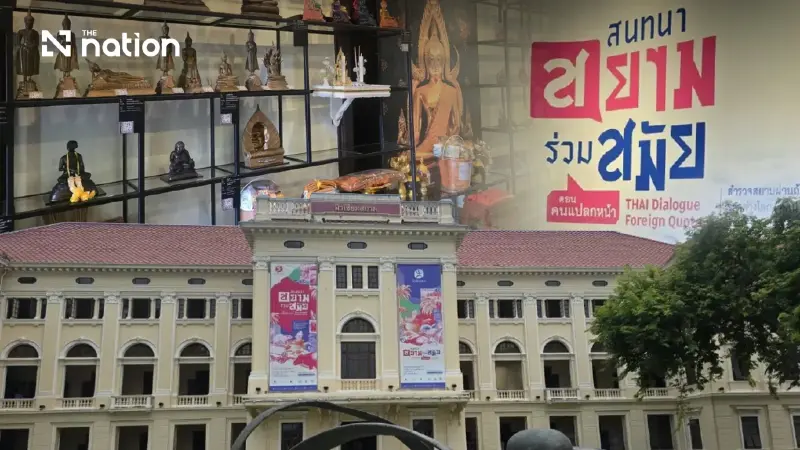


Museum Siam’s foreign-perspective show runs to October 4, alongside 14 interactive rooms, century-old architecture and exhibition-inspired laksa.
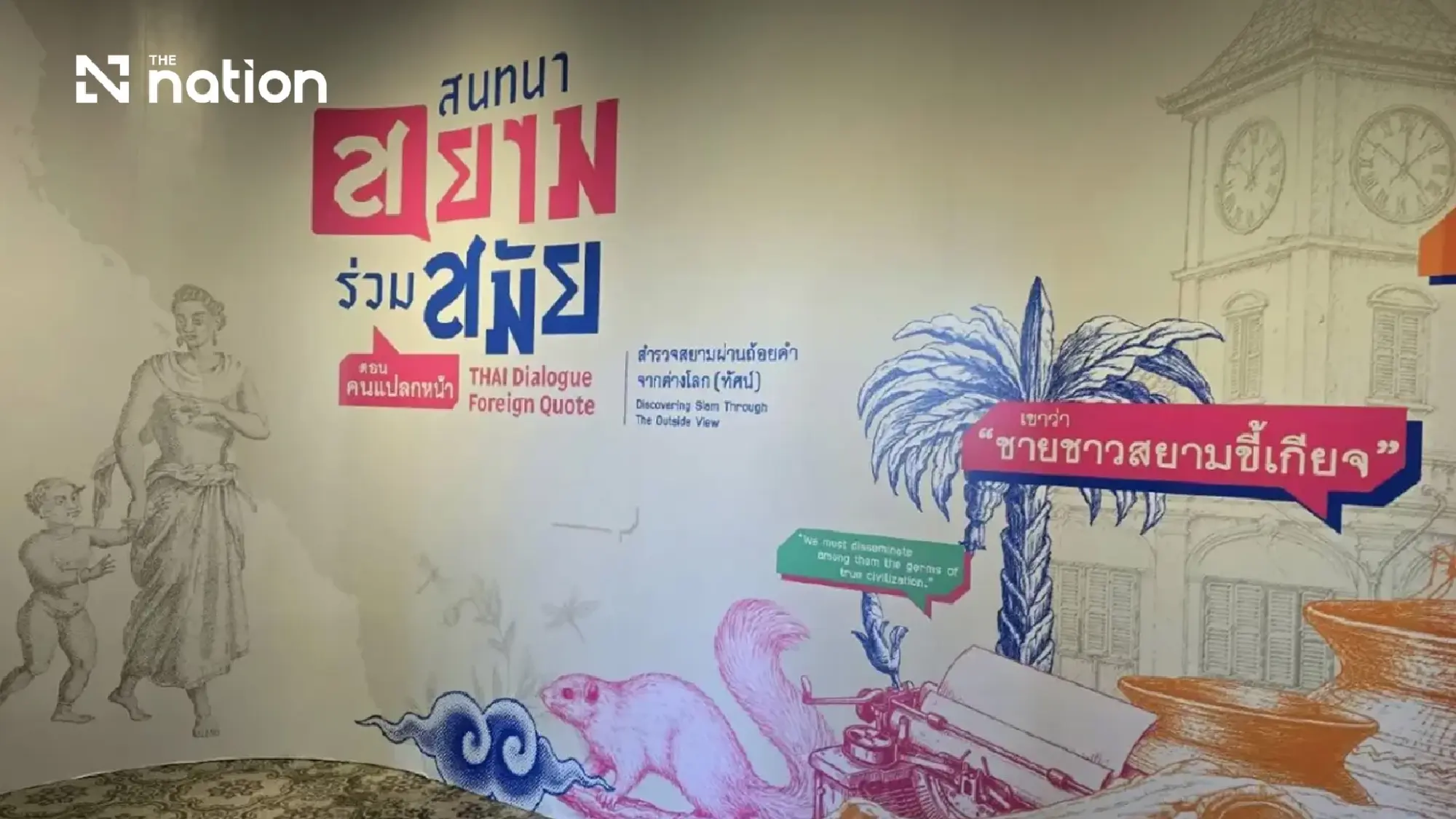
Borrowing an outsider’s gaze can reveal what familiarity hides. At Museum Siam, Thai Dialogue: Foreign Quote invites visitors to examine Siam through records left by overseas travellers, merchants, missionaries, diplomats and scholars.
Running on the first floor until October 4, 2026, the temporary exhibition turns those perspectives into a conversation about identity rather than offering a single, fixed account of the past. Its foreign observers may have arrived as strangers, but the cultural connections contained in their stories can feel unexpectedly familiar to present-day visitors.
The programme also includes talks with historians. A related collaboration with Phuket Museum, Phuket: A Port City That Did Not Wait for Bangkok, continues until the same date.
The exhibition is a fitting entry point to Museum Siam itself. Instead of presenting history as a procession of sealed objects, the museum uses models, images, moving mechanisms, sound, light, questions and games to explore how Thailand has understood itself, its neighbours and the wider world.
An office, not a palace

Museum Siam’s grand arches, classical columns and formal symmetry can easily suggest a former palace. The building was, however, constructed as an office for the Ministry of Commerce.
The plans were drawn up in 1921 and construction was completed in 1922. The Department of Public Works oversaw the project, with Italian architect Mario Tamagno serving as chief architect and Emilio Giovanni Gollo as chief engineer. Museum Siam’s archive identifies it as a building from the reign of King Rama VI.
Both men had already spent more than two decades working in Siam. Gollo, who came from Turin and entered government service in 1899, had also worked on the Ananta Samakhom Throne Hall, where engineering solutions were needed to support a monumental structure on Bangkok’s soft, flood-prone ground.
The Ministry of Commerce building posed its own architectural challenge. Strict classical design traditionally omitted projecting awnings, but strong sunlight and heavy tropical rain made that approach impractical in Bangkok. Concrete awnings at the rear allowed the building to respond to the local climate without abandoning its formal character.

Its arches and Greek-Roman columns remained defining features. Around 1994, the building’s classical surroundings were also used to receive overseas guests.
The ministry occupied the site for more than 82 years. As its workload and space requirements increased, it moved to larger premises in Nonthaburi in 2004, leaving the Sanam Chai building vacant and awaiting a new role.
From government offices to a learning museum

A Cabinet resolution in 2003 approved planning funds for the transformation of the former ministry building. Restoration work and improvements to the surrounding landscape followed before the site reopened under the Museum Siam name on April 2, 2008, as a model for Thailand’s first learning museum.
Its approach soon extended beyond conventional exhibition rooms.
In 2010, the museum created an actual rice field on its front lawn for Know How: Farmers, Researchers of the Fields. The five-month living exhibition allowed visitors to follow the different stages of rice cultivation through direct experience.
That year also brought the first Night at the Museum. Presented under the theme Himmapan, the event kept the museum open from 4pm to 10pm with light-and-sound presentations that offered Thai audiences a different way to encounter the building after dark.
The following year, Olá Siao: 500 Years of Thai-Portuguese Relations combined exhibition material with theatrical performance. Its story followed centuries of contact shaped by power, commerce and religious faith, marking the museum’s first use of theatre as a central storytelling medium.

In 2020, the learning experience moved below ground with the opening of the Underground Museum. Archaeological discoveries were used to trace the history of the area occupied by Sanam Chai MRT station. Museum Siam’s official timeline records the underground museum’s launch on November 27 that year.
The institution has also taken its exhibitions beyond the main building through Museum Siam Mini, temporary displays in shopping centres and partnerships with other museums. These projects have covered subjects ranging from history and science to nature.
Fourteen rooms, many versions of Thainess

Museum Siam’s permanent exhibition, Decoding Thainess, examines Thai identity through 14 rooms covering history, architecture, customs, clothing, food, belief and the ways ideas about being Thai have changed over time.
Visitors can follow the numbered sequence or move between the rooms in their own order.
One highlight is Thai Since Birth, which traces political and social developments through square modules raised and lowered by hydraulic mechanisms, accompanied by narration, lighting and sound.
The rooms’ Thai titles use wordplay and shifts between Thai and English. Loosely rendered in English, they cover Is It Thai?, Thai Inter, Thai Translates Thai, Thai Since Birth, Thai Institutions, Thai Extravaganza, How Thai?, Thai Only, Thaiology, Taste of Thai, Thai to the Max, Thai Beliefs, Thai Traditions and Thai Snapshot.

Together, the galleries use replica models, everyday objects, photographs, sculptures, symbols and digital technology. Visitors are invited to answer questions, play games and interact with the displays rather than simply pass from one showcase to another.
The result is a museum experience built around inquiry. Instead of dictating a final answer to what makes something Thai, the rooms reveal how identity can be debated, borrowed, adapted and viewed differently across generations.

Foreign perspectives meet familiar flavours
The conversation continues at Siam Origins, the Thai restaurant within the Museum Siam grounds.
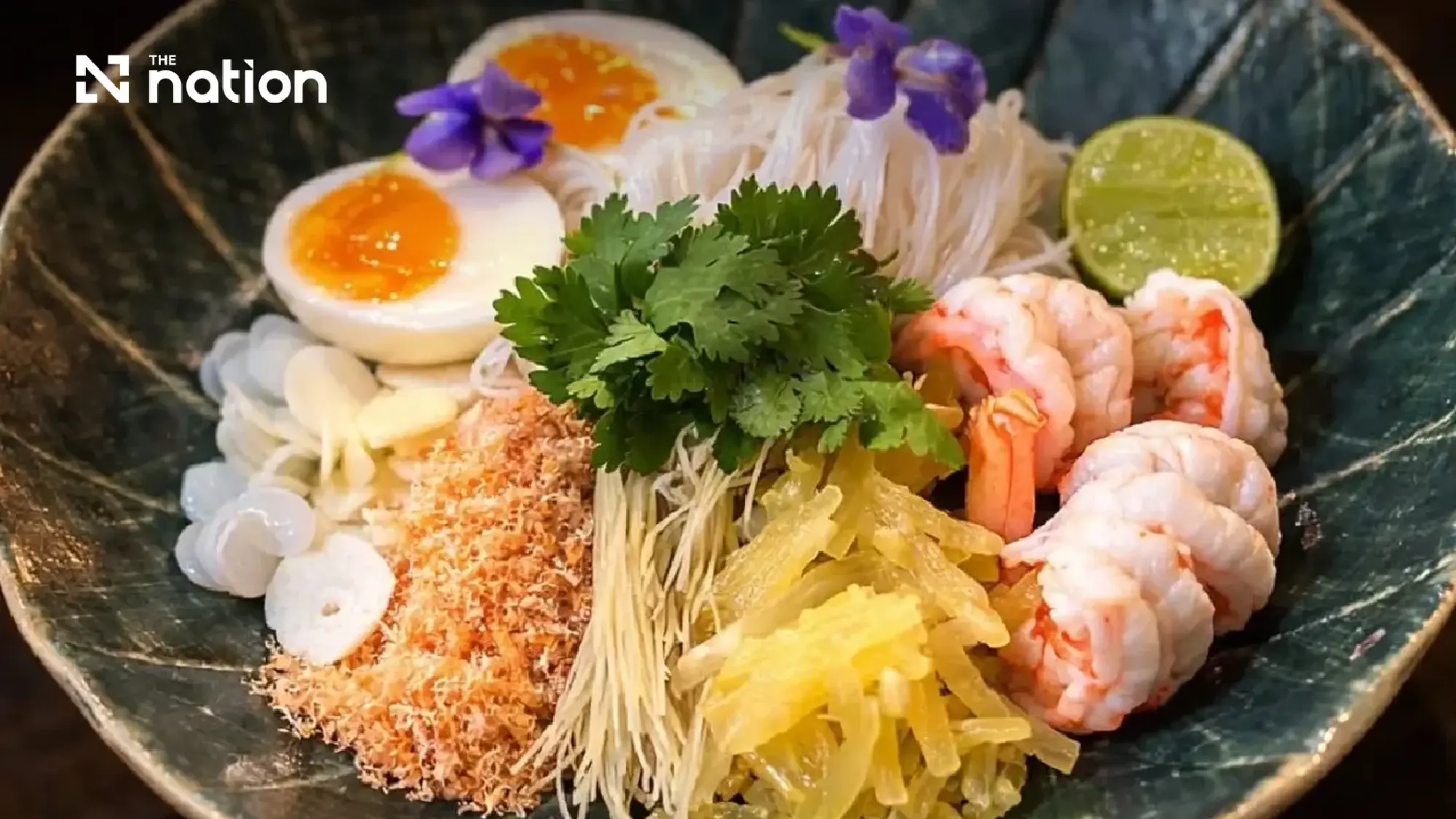
Inspired by Thai Dialogue: Foreign Quote, the restaurant has introduced laksa, or Malay-style curry noodles, as an edible exploration of the connections among Southeast Asian cultures.

Dr Piyanuch Rakpanich asked Chef Kai, Thananya Khaikaew, to develop a dish reflecting the region’s shared noodle traditions. Laksa, familiar in Thailand as kuay tiew kaeng, is associated with Peranakan food culture and fits the exhibition’s idea of strangers who are not entirely unfamiliar.

Chef Kai’s version combines rice noodles with a coconut-rich herbal curry, lightly fragrant spices, fried tofu, fish balls, fresh prawns, a soft-boiled egg and fresh vegetables. Sambal can be added for extra heat.
Another regular dish is khanom jeen sao nam, once reserved for the hot season but now served throughout the year.

An August Mother’s Day menu also featured Jasmine Tea Pudding, served in butterfly-pea flower water scented with jasmine and topped with small pieces of palm fruit.
Elsewhere on the menu, Dr Piyanuch’s focus on prebiotics and probiotics draws on dishes from Thailand’s four regions. Choices include khao ram fuen served fried, hot or cold; Isaan sausage; fermented soybean dip with fried salted threadfin; fermented-rice noodles with curry; chilli dips; beans and house-pickled vegetables; fermented tea-leaf salad with Burmese beans; southern khao yam; and assorted desserts and cakes.

Plan your visit
Museum Siam is on Sanam Chai Road and is open from Tuesday to Sunday, 10am to 6pm. General admission is 100 baht for adults and 50 baht for students. Sanam Chai MRT station’s Exit 1 leads directly to the museum area. The contact number is 02 225 2777.
Thai Dialogue: Foreign Quote runs until October 4, 2026, from 10am to 6pm, Tuesday to Sunday. The temporary exhibition is free.
Siam Origins is within the Museum Siam grounds. The supplied visitor information lists its hours as Tuesday to Sunday, 9am to 7pm, with reservations and enquiries available on 065 939 7336.
Source: Bangkokbiznews
