
Thai series link fan loyalty to merchandise and tourism
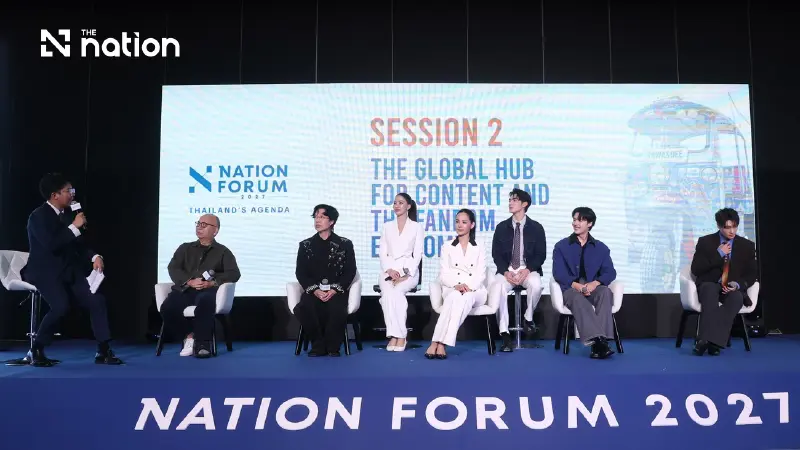


Thai series could drive merchandise sales and tourism, but Nation Forum speakers warn that funding and crew welfare need attention
- The popularity of on-screen pairings in Thai series drives significant commercial opportunities, including merchandise sales, overseas fan meetings, and tourism to filming locations.
- Industry leaders and actors emphasize that strong, long-term fan loyalty is the foundation for this economic growth, viewing it as more valuable than fleeting popularity.
- The accessibility of Thai actors, who connect with fans on a personal level, is a key factor in building the deep relationships that encourage audiences to support their projects commercially.
- Producers aim to leverage this fan-driven economy by showcasing local culture and destinations like Phuket and Chiang Mai to attract international tourists.
Actor and travel content creator Phiravich Attachitsataporn highlighted 16-hour working days for production crews at a Bangkok forum on Tuesday (October 20, 2026), as Thailand weighs how to turn the popularity of its boys’ love (BL) and girls’ love (GL) series into sustainable economic growth.
Phiravich, speaking at Nation Forum 2027: Thailand’s Agenda, also described severe financing constraints. Dozens of promising series still lacked adequate support, he noted, contrasting the industry’s economic ambitions with the pressures facing people behind the camera.

The discussion, “The Global Hub for Content and the Fandom Economy”, formed part of the forum’s “Sawasdee, Thai Rising” programme. Participants examined the strengths of Thai productions and the changes needed to sustain their appeal amid competition from Taiwan, Japan and South Korea.
The Nation Forum 2027 discussion highlighted the need for cooperation between government and business on production infrastructure, financing, crew welfare and international fandom marketing. Expanding the volume of productions alone would not resolve the industry’s structural weaknesses.
Thai fandom can drive merchandise sales and tourism
Yot Kornherun, founder of Star Hunter Entertainment, described the substantial commercial opportunities created by a popular on-screen pairing, including merchandise, overseas fan meetings and tourism inspired by a series. He identified commitment, intellectual property and strong partnerships as foundations for success.

Yot’s vision for Thailand as a global BL and GL centre depends on closer cooperation to showcase local culture and filming locations. Destinations highlighted in the discussion included Phuket, Chiang Mai and Khon Kaen, which could benefit from international fans travelling to places associated with Thai series.
Thai series need more complex stories to reach new audiences
Director and producer Yongyoot Thongkongtoon, formerly Netflix’s director of content for Thailand, argued that more complex storylines were necessary to broaden the audience for Thai series. Psychological depth, beliefs and supernatural themes could introduce fresh dimensions without sacrificing the productions’ identity.

Yongyoot identified the combination of local culture and social openness as a distinctive strength. The warmth and romance of Thai series, he explained, reflected the country’s acceptance of sexual diversity and helped distinguish them internationally.
Thatpong “Heng” Rojsangruang, an actor in Don’t Be Too Emotional, similarly viewed Thailand’s growing awareness and acceptance of sexual diversity as a competitive advantage. He believed this openness gave Thai productions qualities that other markets lacked and helped the country retain its leading position.

Thai actors link lasting careers to fan loyalty
Warangsiri “Puinoon” Tanajarusworaphat, who stars in the GL series Khom Khlang, emphasised acting skills and the importance of earning viewers’ trust. Short-lived popularity was less valuable to the industry’s future than fans who remained committed to supporting performers over time.
Sireethorn “Bint” Leearamwat, another actor in the GL series Khom Khlang, considered the industry’s prospects over the next five to 20 years. Productions needed to remain creative and connect meaningfully with audiences around the world, she argued.

For Sireethorn, fans’ loyalty offered the strongest protection for the industry. She believed an industry with deeply rooted support worldwide could withstand any challenge.
Boonyakait “Tee” Wongsajaem, an actor in Don’t Be Too Emotional, drew on the discipline of his football career when discussing professional standards. Maintaining the quality of his work, embracing new opportunities and sustaining relationships with fans were central to building a lasting acting career.

Phiravich identified the accessibility of Thai performers as another advantage. Fans connected with actors’ personalities and lifestyles as well as their productions, creating relationships that encouraged audiences to support successive projects.
