
The grape with star billing
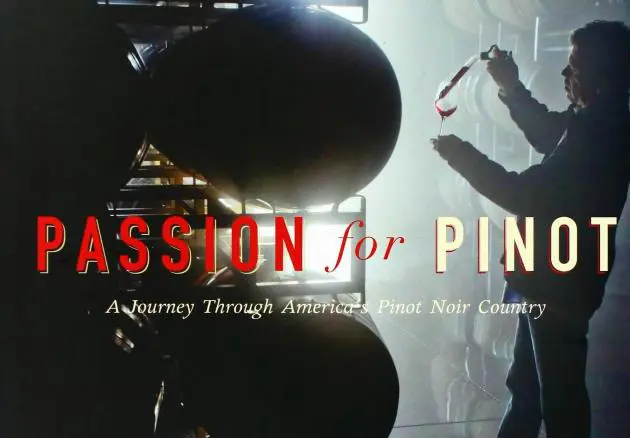


Made famous by the film ‘Sideways’, Pinot Noir also has an entire book dedicated to its charms
Joining a group of Californian Pinot Noir producers showcase at Water Library recently was Jordan Mackay, the author of “Passion of Pinot”. Mackay is the wine and spirits writer for San Francisco magazine and contributes bimonthly column to the online food magazine Chow.
He’s also written occasional articles for the New York Times, Los Angeles Times, San Francisco Chronicle, Decanter and Wine Enthusiast, among others. “Passion for Pinot” is his first book, published in 2009. His second, “Secrets of the Sommeliers”, which came out last October, won him a James Beard Foundation Award, America’s most coveted honour and considered as the Oscars of the food world.
Mackay’s book takes a friendly approach to pinot noir and the reader can pick it up at any chapter. “A Perfect Storm of Pinot” explains how the grape got started in Oregon and California and why.
“Pinot Noir is seeing its greatest ever popularity in the United States,” he writes. “According to Nielsen Company research, in the two years between May 2006 and May 2008, sales of Pinot jumped an astonishing 36 per cent.” He also credits its growing popularity to the Hollywood hit “Sideways”, which featured Pinot in a leading role.
The second chapter is “Terroir”, the French term given to the type of the soil and the environmental factors that might influence the quality of the finished wine, such as altitude, position relative to the sun, angle of incline, and water drainage.
Asked where he felt the pinot noir grapes would flourish in an ever-warming world and if the vineyards would spread from Oregon and California, Burgundy and New Zealand, Mackay said he could see pinot being made in British Columbia, Tasmania, Chile and Patagonia in the near future.
“As far as climate change is concerned, it’s very hard to predict. It could be that Oregon State will be as warm as Napa Valley in 20 years and if that happens, they will probably turn to growing more cabernet sauvignon. But consider the weather in California, which is cooled by the ocean on the left. Right now, pinot is planted on the coastline in places like Mendocino, Sonoma, Carneros and in Central Coast areas like as Santa Cruz and Santa Maria. Let’s say it’s getting warmer inland. When the air heats up, then it will draw cooler air from the ocean into the land. The coast line is always cooled by the wind from the ocean anyway, which is best for Pinot.”
“A Year in the Vineyard” explains the timetable for growing and harvesting, along with vineyard management and offers a useful introduction to starting a Pinot Noir business along with the pros and cons.
“From Grape to Wine” focuses on the process of winemaking and includes comments from winemakers.
The final chapter, “In the Glass” answers such interesting questions “How much to pay?, “Are single-vineyard Pinots better than regional wines?” and “Do vintages matter?”.
Consulted as to the best food to enjoy with pinot noir, Mackay said, “I love wine as food. To me wine is just like rice to Thai people. And Pinot goes great with all kinds of food because of its subtle, silky texture, fruit with acidity and also because it’s not that high in alcohol content.”
The book is filled with quotes from winemakers and beautiful pictures by Andrea Johnson and Robert Homes. For anyone who wants to find out more about Pinot, it’s a great buy.
