
Off to see the Wild Boar


Play
The Hong Kong Arts Festival is all set for its 40th anniversary with a stellar lineup of theatre, dance, operas and all kinds of music
The 40th Hong Kong Arts Festival runs from January 28 to March 8, but in fact it began with the Sam Mendes-Kevin Spacey production of “Richard III” in September and continues through to April with a revival of Tang Shu-Wing’s “Titus Andronicus”.
Is the festival gradually becoming year-round? No, that won’t happen simply because booking theatres in Hong Kong is so difficult, says executive director Tisa Ho, “but the festival office is working year-round!”
“It’s nice to be able to break out of the usual rigid scheduling confines,” she adds, “and the shows outside the main schedule make the festival itself a little less intense. People don’t have to choose between shows on the same night.
“People here usually see one show each weekday and maybe two on the weekends if they schedule carefully. There are about 160 performances over the five weeks this year, so it’s helpful to have some outside the main period.”
Ho points out that the festival’s “significant” following in mainland China can this year book online and pay in yuan on delivery to avoid the credit-card hassles that have cropped up there.
“I’m hoping we’ll also have more people from the region, from anywhere within the three-hour flight time.”
Unlike other festivals where imported shows generate the most excitement, Hong Kong’s local shows have been the first to sell out in recent years, Ho says. The big buzz this year surrounds “The Wild Boar”, “and that’s kind of wacky because it’s a new play – I think it’s the cast and crew that’s caused such high interest”.
Ho also credits the Hong Kong audience’s “maturity”. “There’s confidence in our own works.”
Although the festival is well established and known for great programmes of dance, music and theatre, it will continue experimenting, she says. The installation-art piece “Power Plant” last year drew viewers to both the festival and to Kowloon’s Walled Park for the first time.
“I think this is what the arts can do – get people out of their everyday routine. So we’ll continue pushing the envelope this year with ‘WOW’ – ‘World of Wearableart’. I hope we’ll continue to do these off-track, somewhat wacky shows. Life’s not fun if there isn’t anything wacky in it!”
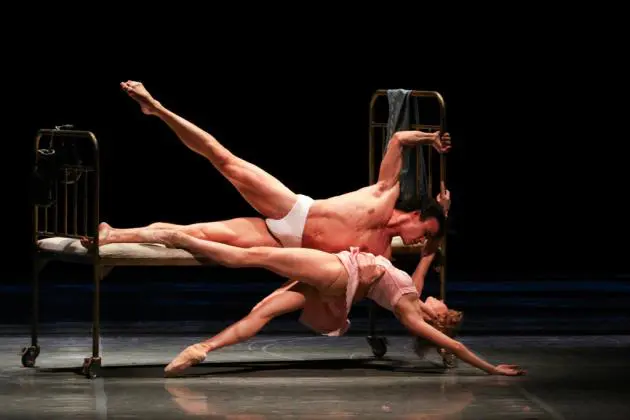
In marking its 40th anniversary, the festival is welcoming back “old friends” like the Hamburg Ballet, which will perform “Mahler’s Third Symphony”, and the Tennessee Williams classic “A Streetcar Named Desire”.
It’s also offering some Chinese-style “double happiness”, Ho says.
“Instead of one new local theatre production, we have two – ‘Show Flat’ and ‘The Wild Boar’. Instead of one opera, we have two – the Bavarian State Opera’s ‘Cosi fan tutte’ and Peter Brook’s ‘The Magic Flute’.
“And we have two major orchestras – the Royal Concertgebouw Orchestra and the Bavarian Radio Symphony Orchestra.”
Financially, the festival strikes a good balance among government support, corporate sponsorship and ticket sales. Most of the money still comes from public coffers – and last year the amount was raised, Ho notes, “but it needs to be said that this represents just 30 per cent of our budget, so actually it’s still quite tough for us to manage.
“It doesn’t take a rocket scientist to understand that the festival gives good value for the government’s money. For every dollar, I think we produce $3. I don’t know of any other kind of investment that gives you that kind of return.
“In audience terms, I think every ticket is worth twice as much. The most expensive ticket for something like ‘WOW’ is HK$350 and the next highest is $250, but it costs much more to see the show in New Zealand, where it originated. We’re able to do this because of our partners and sponsors, including long-time supporters like the Jockey Club.”
The festival has also had success commissioning and producing new works by Hong Kong artists. “Murder in San Jose” and “The Truth About Lying”, among others, enjoyed immense popular success and critical acclaim. “Like ‘The Wild Boar’ this year, these are very accessible for the general audience, maybe even a bit mainstream,” Ho says.
Enthusiasm is not so high for new works in contemporary dance, as presented in the Asia Pacific Dance Platform. “Contemporary dance is harder to deal with and the audience is smaller generally. Some works in the Platform are really challenging, but I’d like to see the Platform firmly established first, and then of course there’s a possibility for it to grow.”
The other risk the festival is willing to take is with lesser-known groups just starting out.
“We have four series geared toward the younger audience,” Ho says. Those fans know by now that the Emerging Artists series will have interesting foreign musicians. Then there’s the New Stage series of theatre, music theatre and multimedia and Music Nomad, “which is more indie”.
“This is how the festival stays young after 40 years!”
Better book now
_ The Hong Kong Arts Festival runs from January 28 to March 8.
_ Booking opened in October and more than half the tickets have been sold. Best grab some seats soon – none of these shows are coming to Bangkok in the foreseeable future.
_ Tickets cost HK$120 to $1,680 (Bt480 to Bt6,720) at www.Urbtix.hk. Students can usually attend for half-price.
_ For more, see www.HK.ArtsFestival.org.
