
THE LOGIC AND THE LOVE
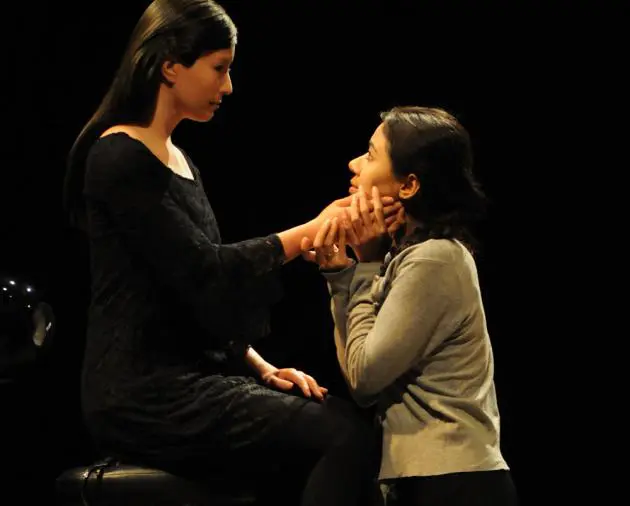


Emotions trump mechanics in the |robot-human play 'Sayonara'
Thanks to the Japan Foundation and Chulalongkorn University’s Department of Dramatic Arts, Thailand two weekends ago became one of the first countries to witness a geminoid – a human-like robot – perform in a play.
Staged as part of the “World Performance @ Drama Chula” series at the Sodsai Pantoomkomol Centre for Dramatic Arts, “Sayonara” (“Goodbye”) was a 20-minute piece that revolved around an android caretaker who recited Japanese, French and German poems about journeys and goodbyes to her dying owner.
The audience didn’t know at first which of the two women seated opposite each other was Geminoid F and which was human, but as they conversed the distinction became clear. Regardless of how impressive the likeness, the terminal patient had more motion, and that felt somewhat weird.
Throughout the play, the android reminded her owner many times that robots are incapable of feeling, that she couldn’t “like” anything or anyone. The sole function of androids, she said, was to be useful to humans, even if it meant being destroyed by their owners for “emotional release”.
At the same time, her careful choice of poems to read conveyed how much she understood the bedridden woman’s fragile physique and psyche. At one point the android was asked whether she would prefer happiness or not being lonely. “Wouldn’t not being lonely lead one to happiness anyway?” she replied.
This emotional tension between machine and living being helped the otherwise rather monotonous play keep a grip on the audience.
Performed by Thai actors and drama students, “Sayonara” had both Thai and Japanese versions, the latter with English surtitles. At every show the audience saw the same script enacted twice – in different languages and by different casts.
It seemed redundant, but at the same time it was intriguing to see the difference that language can make. I couldn’t understand the Japanese, but felt that the show worked better that way, with stillness one of its main features. The pace and minimal movements matched the short, soft Japanese syllables wonderfully. Nothing felt contrived.
Professor Oriza Hirata, who wrote the script, conducted playwriting workshops each weekday morning during the run for students, professors and professional artists, with help from interpreter Bhusdee Navavicit. senior drama student Rubkwan Thammaboosadee, who won last year’s Sodsai Award, was among the 20 participants.
“What impressed me most was Professor Hirata’s advice that passion and inspiration are more important than plot and theme at the beginning of playwriting process,” Rubkwan says.
“Playwrights are inspired first by people or places, and then they add complications and situations. This is totally different from the way I’ve been taught – to come up with theme and plot first.”
Professor Hiroshi Ishiguro, who created Geminoid F, spent two days in Bangkok despite a busy lecturing schedule around the world. He gave a talk in English in the Chula auditorium that drew more than 300 students, professors and members of the public.
“He’s truly a world-class pioneer in android development,” says Professor Witaya Wannasuphoprasit of the school’s Department of Mechanical Engineering. “He never limits his studies to only one field – he finds synergy in robotic technologies, human cognitive learning, sensation, psychology and behaviour in such a way that we can really feel and touch.
“Our lab team helped his team on the play backstage, so we learned how highly disciplined and systematic they are. That’s part of the reason Japan is ahead of us in this field. I was really impressed when he said he developed androids to have a better understanding of human beings.”
