
Snuggling up with an e-book
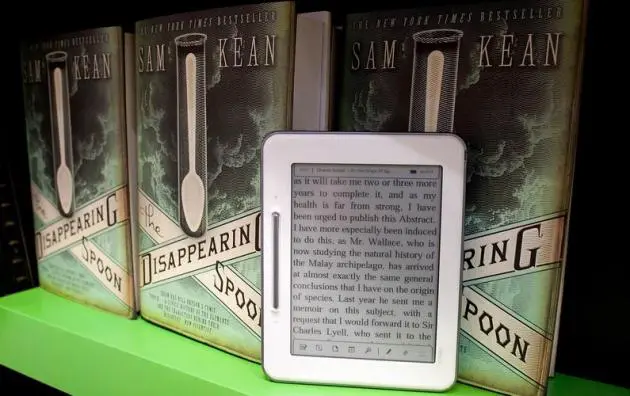


For HarperCollins, the future lies in digital publishing
Leslie Hulse, senior vice president of HarperCollins in New York, in town for the tenth Bangkok International Book Fair last week, believes two kinds of gadgets will define our publishing life in the long term: dedicated and multipurpose devices. These e-readers are here to say, she said at the seminar on “Digital Impact on Traditional Book Publishing and Printing”, which was held at the Queen Sirikit National Convention Centre.
Hulse, who’s in charge of HarperCollins’ digital development is convinced that digital publishing is the way to the future, as e-readers will become cheaper and drive demand for e-books.
She’s amazed at the growth in e-book fervour over the past few years. Oprah Winfrey’s “My Favourite Things” took off with the 2007 launch of Kindle by Amazon.com while in January 2009, Apple announced more than 500 million downloads from its iTunes app store. In May 2009, Amazon announced that e-books made up 35 per cent of sales when both the e-book and physical book were available. In July 2009, Barnes & Noble (BN) launched its e-book store. In December 2010, BN launched nook colour and began selling enhanced children’s picture books. Last autumn, Amazon launched e-book stores in France, Italy and Spain.
Now, HarperCollins wants to tap the e-book business even further. One of the largest English-language publishers in the world and a subsidiary of News Corporation (which owns Wall Street Journal, the Sun and The Sunday Times and Sky TV in UK), HarperCollins has operations in the US, UK, China, Canada, India, Australia and New Zealand. The company has annual revenues of US$1.5 billion, of which e-books currently make up 20 per cent.
“We find that e-books business is quite a healthy marketplace and we feel e-books will play a dominant role in the future, as they are much cheaper than a conventional book,” says Hulse. “Consumers have a bunch of devices and find the right device to read at the right time.”
Dedicated and multipurpose devices are shaping our reading habits, Hulse adds. She’s optimistic about the consumer’s willingness to purchase content on tablets, citing a US survey conducted by Nielsen in the last quarter of 2011. Findings show an upward trend in online purchases for media content on a tablet. Last year, Americans paid to download music (62 per cent), books (58 per cent), movies (51 per cent), magazines (41 per cent), TV shows (41 per cent), news (19 per cent) and sports (22 per cent).
The e-book trend is moving towards the open rather than the closed system. The closed system means you buy an e-book once and read it everywhere – on Kindle, PC, Mac, iPhone, iPad, BlackBerry and Android phones. The open system allows you to buy e-books anywhere and read everywhere except Kindle, Hulse says.
The challenge for publishers lies in new product development. She says publishers in the US are now creating new forms of books optimised for tablets: kids picture books with audio synced to text, cookbooks with video, extra pictures, step by step instructions, and textbooks with imbedded quizzes, multimedia charts and video.
“You need to create new products that consumers want, get wide distribution with appropriate merchandising support and set up an R&D group within traditional publishers.”
However, digital publishing is prone to piracy and copyright infringement, an international problem that affects all types of content.
“Book piracy is concentrated on a handful of large global sites, “ she says, adding: “Pirated content is usually scanned editions of printed books – not e-books. Risk is highest per capita in Southeast Asia and South America. What we need is a strengthening of the copyright law.”
