
Bangkok, has it been that long?
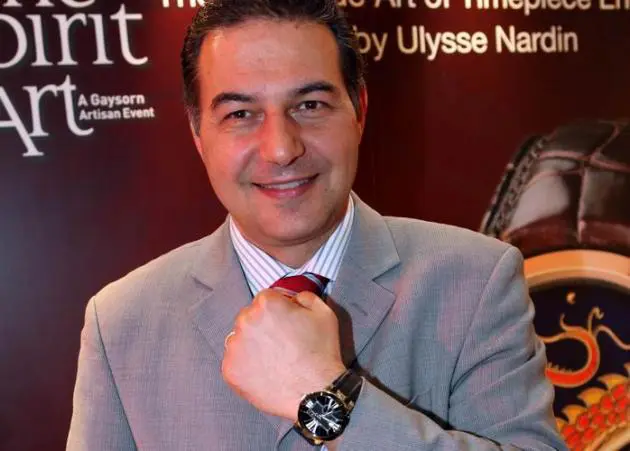


Check your Ulysse Nardin watch as it marks Rattanakosin's 230th anniversary
Thailand is a small but very important market for timepieces, says Ulysse Nardin Asia-Pacific manager Francois Picci. Knowing how much Thais love classic, handcrafted wristwatches, he recently unveiled the “Limited Edition to Celebrate the 230th Anniversary of the Kingdom of Rattanakosin”.
The watch – which comes in nine variations, an auspicious number alluding to His Majesty King Rama IX – costs Bt1.888 million. And Picci had sold five of them even before the public launch.
That was almost a month ago, though. By now, nearly all of them must have been scooped into private collections, underscoring the point that the local market is small but truly keen. Picci’s become a regular visitor with new editions.
“Thailand is smaller than Singapore in terms of sales, but here, every time we do events, people are receptive,” he tells The Nation. “That’s because Thais love art and craftsmanship. They like to learn and find out more.”
With the Rattanakosin limited edition, distributed in Thailand by PMT the Hour Glass, Ulysse Nardin celebrates Bangkok’s 230th anniversary. The nine versions share the same image on the dial of the royal barge Suphannahongse sailing past the Grand Palace, but can be had in either light daytime blue or dark evening blue.
These are the first Ulysse Nardin watches to utilise champleve, an enamelling technique that was in vogue in Europe during the Middle Ages, in which an image or motif is carved into precious metal, usually gold.
In this case, it’s the dial of the Rattanakosin watch. Ulysse Nardin engraver Pierre-Alain Lozeron carved or cast troughs or “cells” into the surface, and then filled them with vitreous enamel in different colours.
The dial was then heated to between 800 and 1,200 degrees Celsius to blend the powdered glass with the surface material. The technique is similar to the way Thais decorate nielloware.
“With this technique, we want to show what we’re capable of,” says Picci. “The resulting shiny dials exude a traditional style – through the use of modern technology. The dial design is handcrafted, but with the use of a machine. The machine prepares the dial before the actual engraving by hand starts.”
Ulysse Nardin cherishes innovation, Picci stresses. In 2001 it pioneered the use of silicium to make sensitive parts of complicated watches like the hairsprings.
Picci is also proud of the DiamonSil – silicium covered with diamond – used in the Calibre 118 movement introduced this year. DiamonSil is extremely light but hard, ideal for eliminating friction. There’s no need for lubrication in the escapement. “We always try to create something new,” Picci says.
Picci sees Russia as the firm’s biggest playing field, with more deep-pocketed customers than even China. “We’ve had a long relationship with the Russians. We made chronometers for the Soviet navy – they relied on Ulysse Nardin watches to navigate their ships!
“I believe innovation is what makes us stand apart from other brands.”
