
GRAPES THAT BAY AT THE MOON
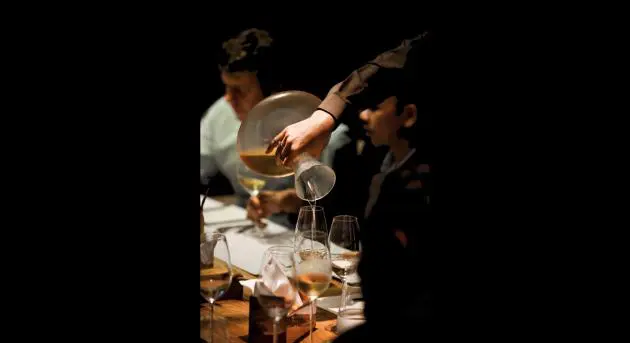


A South African biodynamic winemaker introduces his star white and blend of reds to Thai gourmets
The star of a recent biodynamic wine dinner organised by boutique wine importer FIN was South Africa’s leading biodynamic “wine hugger”, Johan Reyneke of Reyneke Wines from Stellenbosch.
Reyneke is honest about winemaking and respectful of the soil and nature. And, as you drink his wine, you develop a respect for that biodynamic viticulture and winemaking.
Biodynamic farmers are more serious than organic growers though they share the organic approach to a certain degree. In the biodynamic vineyard weeds have a purpose and a sense of place and are not completely removed.
Life in soil is key to the biodynamic approach, says Reyneke.
“Without chemicals, life in the soil comes back in a big way. It changes the pH value in the soil and affects the wine. The wine will have natural acidity. Chemicals and fertilisers acidify the soil.”
The moon has a definite effect on the vines just as it affects the tides. It makes sense that when the pull of the moon is strong (i e during the full moon), more moisture than average will be concentrated in the leaves.
Different positions of the moon as well as the constellations favour different farming activities. Planting at certain times produces larger plants, for example during the full moon, and at other times, stronger plants (moon – Saturn opposition).
“The moon casts different constellations in favour of different parts of the plant,” Reyneke explains, adding that in biodynamic wines, there are only two ingredients: grapes and time.
“That is it,” he says, “The wild yeast that grows on the grapes is all free because we don’t use chemicals. So you get a unique flavour. Our sauvignon blanc is different from other sauvignon blancs even from South Africa, a completely different expression of the cultivar.”
Two of Reyneke’s biodynamic wines were represented at the wine dinner hosted by Elements of the Okura Prestige Bangkok.
The pre-dinner aperitif was Cremant de Limoux AC, Bernard Delmas, Languedoc-Roussillon, France, which tuned our palates and had us ready for the food.
The first course, Salad of Maine Lobster “leger” Mango crisp, pistachio oil, fine greens and tamarind, was paired with 2010 Westhofener Riesling Trocken, Wittmann, Rheinhessen, Germany. The wine was described as having crunchy green apple and Asian pear flavours and fruitiness complemented the salad quite well.
The typical petrol-like aromas were more pronounced in the second Riesling wine, a 2010 Terrassen Riesling DAC, Fred Loimer, Kamptal, Austria. It worked with the Gravlax, slightly smoked tuna served like a salad, with orange and sweet-sour black radish. The wine was refreshing and complemented the fusion of tropical flavours of the dish quite well.
The third course was flan of marinated girolles shaved joselito, the perfect egg and parsley, which was married with Reyneke’s 2009 Sauvignon Blanc, Stellenbosch. The egg was amazing as it was slow-cooked. It was a lovely pairing, Reyneke commented. A typical sauvignon blanc from South Africa is expressive, acidic and aromatic in a reductive style. But Reyneke’s sauvignon blanc is different. It has notes of lemon with floral character and lots of minerality on the palate. “It’s a very linear wine with a nice structure more like the old-school sauvignon blanc. Plenty of fruitiness and freshness,” said Reyneke.
The fourth course was Fumet of artichokes aromatic prawns, cepes foam, which was matched with 2008 Clos de la Coulee de Serrant, Nicolas Joly, Loire, France. The wine had to be decanted one day before being served. The dish was slightly spicy in the Thai tom yum style. Nicholas Joly is regarded the father of the biodynamic white wine movement and this wine is iconic of Joly’s heritage and often touted as a work of art.
