
Perfect pairings, for sake's sake


Play
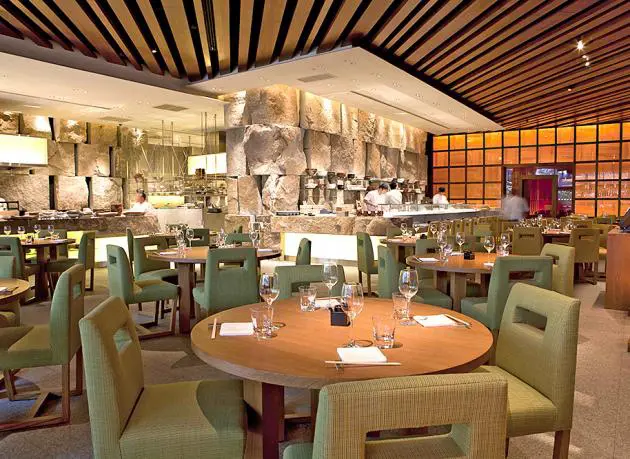
Zuma shows how the rice wine - actually rice beer - has its preferences among Japanese dishes
Though Japanese cuisine can go down well with most alcoholic beverages, the country’s national tipple, sake, remains the first choice for many. And thanks to the variety of sake, you have a wide range of taste, fragrance, pungency and price to choose from.
On Wednesday, Samuel Davies, Beverage Manager of Zuma Bangkok opened his sake cabinet and gave us some tips about this rice brew.
While many refer to sake as rice wine, unlike wine, in which alcohol is produced by fermenting sugar that is naturally present in grapes and other fruits, sake is produced by means of a brewing process more like that of beer. To make sake, the sugar needed to produce alcohol must first be converted from starch.
Rice and a water source are probably the most important ingredients in sake. Not just any rice can be used to make sake, but only the shuzo kotecki mai that has been genetically modified over the years meets the needs of good sake. The grains are large, with apparent cores, a minimum of protein and a high absorption level. Several types of rice with these qualities are used to make diverse forms of sake.
Sake is one of the few types of alcohol in the world that rely on water as one of the raw ingredients, and naturally the quality of sake depends on the quality of water. Most sake breweries either own a well or are located close to headwaters, mountains or the sea where they have access to good quality spring water. Water also roughly defines sake types too – hard water produces dry and masculine sake, while soft water yields a softer, feminine type of sake.
As they are made for each other, sake can be easily paired with most any Japanese dishes without strict rules or traditions. It really depends of your palate and how you like your sake. Anyway, Davies gave us some examples with his sake pairing set menu.
First we whet our appetite with sweet and refreshing Dewazakura Oka Ginjo with a flowery bouquet and a touch of pear. Ginjo is a type of sake that contains rice only with no ethyl alcohol added that gives delicate, natural flavours.
Then Shirataki Junmai Ginjo was served with savoury yellow tail with green chilli relish and cured fluke sashimi. This floral brew uses only the pure centre of the rice grain. It is brewed with great care and fermented longer at a lower temperature to enhance the beautiful elegant aroma with a rich and pleasant taste.
For a little spicy dish such as seared tuna with marinated onions and chilli ponzu, Davies suggested Tengumai Yamahai Junmai. It is beautiful sake with a light fragrance and a down-to-earth flavour that can be enjoyed at room temperature or gently heated. The colour of the sake will change to slightly yellow as it matures.
Kamotsuru Karakuchi Junmai was then served with grilled yellowtail cheek. The smokiness in the dish went down well with this rich and dry brew with a long, mineral finish.
The last dish, Australian tenderloin with sesame red chilli soy, was complimented by Shirataki Junmai Daiginjo, the premium sake with silky and dry flavours.
The last brew we tested was Dewatsuru Daiginjo, the super premium sake with scrumptious and refined flavours with lingering finish – a decent brew to be enjoyed anytime.
These varieties of sake are served as carafe (300ml) from Bt875 and as bottle from Bt2,875.
TIPPLE AWAY
Zuma is at the St Regis Bangkok next to Rajdamri BTS stop.
It is open daily for lunch from noon to 3 and dinner from 6 to 11pm.
Call (02) 252 4707 or see www.ZumaRestaurant.com.
