
Sports-related knee injuries


Play
Thailand's most updated English news website, newspaper english, breaking news : The Nation
Most people today lead very busy lives and for many, the hustle and bustle of city life causes a great deal of physical and emotional stress. Sports play an important role in restoring physical and emotional health, thus enabling us to return to our work feeling more invigorated and also enjoy a better quality of life.
In addition to helping us relax and boosting the spirit, playing sports boosts physical strength by stimulating the cardiovascular and circulatory systems. This enables the blood to carry oxygen and nutrients to the various cells, thereby stimulating the brain to release chemicals called Endorphins, also known as the “happy hormones”, which give off a feeling of well-being and contentment.
Golf, tennis, badminton and football are among the most popular sports and choosing the right one depends on each individual’s preference and most importantly, on the body’s physical condition and fitness.
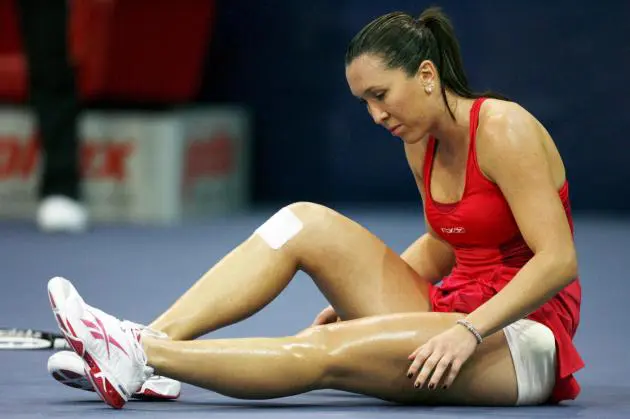
Tennis can be played by both men and women of all ages. It’s a relatively safe sport but because it involves running, changing directions quickly and stopping abruptly, players are prone to such injuries as abrasions, bruises, torn tendons and ligaments and even bone fractures.
Injury can be avoided through fitness training to strengthen the body, taking lessons to improve your skills and play the correct way, as well as doing stretching and warm up exercises before and after playing.
But injuries can and do happen and there are also some first aid measures that everyone needs to learn. For simplicity, these are know collectively as the “RICE” method
• Rest: Take complete rest or stop playing immediately to prevent further injuries.
l Ice: Apply a cold compress to constrict the blood vessels to reduce swelling and pain.
l Compression: Compressing or applying a bandage on the injury will reduce the swelling.
l Elevation: Elevating the injury site above the heart level will reduce the blood flow to the injured area and reduce swelling.
The organ most prone to injury, resulting in medical attention and frequent visits to a physician, is the knee. Injuries range from abrasions, bruises, torn muscle, torn knee ligaments, a disc herniation in the knee joint, torn cartilage, a tear in the synovial membrane, or a dislocation of the knee.
Treatment depends on the severity of the injury. If the injury is less severe, then apply first aid following the RICE principle.
If the injury does not heal within 2-3 days, then you must visit the physician for diagnosis and appropriate treatment.
The physician will take a detailed history of the injury and conduct a physical check-up. If necessary, an X-ray may also be taken to check for bone fractures or, in some cases, an MRI may be ordered to check for injuries to the tissues, muscles, ligaments, tendons, meniscus or cartilage.
If the injury is not severe, oral medication will be given, such as pain relieving or anti-inflammatory tablets. An ointment may be prescribed to apply to the painful area.
In cases where there is a torn ligament or tendons, or a bone fracture, a cast may be required. Surgery may be necessary in cases where the tendon is torn, where there is a disc herniation or a torn cartilage. The doctor will probably suggest minimally invasive surgery, which involves a small camera, small incision and less pain.
For a displaced fracture or an intra-articular fracture, surgery using a metal implant to hold the broken bones is required.
Thanks to advances in medical technology, the material and design of the implants is now much more innovative as is the surgical technique, known as “MIPO” or Minimally Invasive Plate Osteosynthesis. This allows surgery to be performed with small incisions, without exposing the tissue surrounding the fractured bones, thereby enabling the bones to heal faster than in conventional surgery.
Dr Wichian Jiraboonsri, is an orthopaedic surgeon attached to Samitivej Sukhumvit Hospital’s Sport and Orthopaedic Centre. |Call (02) 711 8494-6.
