
Totalitarianism today
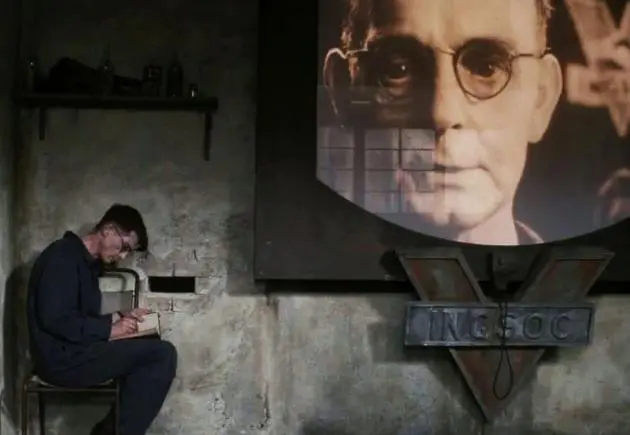


Bangkok expat writers form a 'brigade' of social critics updating Orwell's warning
An odd but intriguing collection of essays, “The Orwell Brigade” finds 12 writers of escapist fiction turning their pens to serious realities.
Christopher Moore, well known in Thailand for his Bangkok-based detective novels, is the editor. John Burdett and Colin Cotterill, also familiar names here, are among the contributors.
While the subject matter ranges widely, the essays are linked by echoes of George Orwell’s seminal political novels “Animal Farm” and “Nineteen Eighty-four”. As the writers demonstrate, precious little has changed since those literary warnings appeared half a century ago. In fact we need to me more vigilant than ever in the endlessly cross-linked 21st century.
Orwell, the British socialist, used fiction to better illuminate the reality of totalitarian government behind its lipstick and rouge, and his fiction was itself understood to be only a veneer.
It’s interesting, then, that some of Thailand’s most popular expatriate purveyors of fiction should be raising starkly realist alarms about the authoritarianism that seeps through government, bureaucracy and the news media in Southeast Asia, joined by writers of detective stories elsewhere in the world who have witnessed it firsthand.
“Today,” Moore writes in the foreword, “there is less consensus than there was in Orwell’s time about which regimes are free, just as we disagree more than ever about the meaning and scope of freedom. And in Orwell’s day the globa lised corporate world and big international media had yet to come into play.”
Mike Lawson, American author of award-winning political thrillers, takes on these latter developments directly in an essay called “Joe – 2012” that imagines FBI founder J Edgar Hoover armed with today’s cyber tools. Little imagination is needed, he points out – governments and private corporations now routinely override human rights online.
In their respective chapters, Irish writer Ruth Dudley Edwards and Englishman Matt Rees remove the media spin from the IRA’s supposed acceptance of peace and the belief that Palestinian refugees need fear only Israelis. Their revelations will be quite surprising to readers of a liberal persuasion, offering testimony that perceived reality is not always what it seems.
As expected from best-selling authors, the writing is solid throughout, but two contributors in particular gun the book’s engine.
John Lantigua’s “Boulevard of Dreams and Nightmares” is about a single, long street in South Florida that begins amid fabulous wealth at the ocean’s edge and ends deep inland amid debilitating poverty. Justice evaporates with income along the way, but the tale’s telling moves sleek as a convertible on that avenue, a multitude of disturbing facts billowing in the exhaust.
His fellow American Gary Phillips follows immediately with “Wading while Black”, about injustice and social disparity in South Central Los Angeles. Its muscular phrasing shoulders through the sidewalk crowd to slap you on the back. You get the wind knocked out of you, but it feels right.
Colin Cotterrill, who writes the Dr Siri crime mysteries, offers a charming critique of Thai bureaucracy in “Jai Yen”, maintaining his sense of humour despite having to jump through many hoops while simply trying to open a temple school for the children of Burmese migrant workers.
Ernesto Mallo’s “One on Any Given Night” is its sharp counterpoint in character, a dark account of police in Argentina turning ordinary citizens into suspects and victims. “One makes up a story,” he writes from the perspective of a man being interrogated, and then later:
“The Commandant stops, his face about an inch from One’s. He extends the identity card to One. When One is about to take it, the Commandant drops it and remains staring at him.” Even Orwell’s hair would be standing on end. Unfortunately, in terms of context, connections to his frightening dystopia become more tenuous in the final chapters of “The Orwell Brigade”.
Christopher Moore attends the opening of the Khmer Rouge trial in Phnom Penh but, in recounting the brutal insanity of the former rulers’ regime, doesn’t fully demonstrate how Brother No 1’s policies matched up with the paranoid schizophrenia of Orwell’s Big Brother.
Moore’s fellow Canadian George Featherling has an interesting article about the British-Canadian writer and activist George Woodcock, a long-time friend of Orwell, but it’s a profile of little consequence compared to the book’s other essays.
Briton Quentin Bates explains the economic convulsions that beset Iceland in recent years, but it’s hard to see much there that’s Orwellian. The same applies to London-based Barbara Nadel’s piece about the transgender community in Turkey.
There is official doublethink and indications of religion overwhelming politics, to be sure, but nothing as dreadful as Moore warns us in his foreword to be on guard against. It’s a warning much better justified in the other essays, reminding us that complacence is doom.
The Orwell Brigade
Edited by Christopher G Moore
Published by Heaven Lake Press, 2012
Available from Asia Document Bureau
Reviewed by Paul Dorsey
In the mail
Copies of the book are available from Asia Document Bureau Ltd, PO Box 1029, Nana Post Office, Bangkok 10112, or see www.HeavenLakePress.com.
