
When in Egypt, do not deface the Pharaohs


Play
China pleads with its citizens to behave abroad
The Chinese government has sent out an official plea to it citizens, calling on them to respect other cultures when travelling abroad.
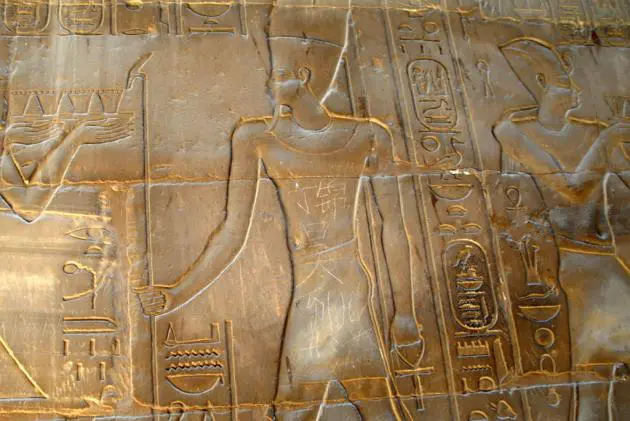
The set of detailed regulations was issued by the National Tourism Administration and posted on the central government’s website on Tuesday. The move follows a wave of outrage in China and abroad at graffiti carved by a Chinese tourist into a 3,500-year-old bas-relief statue in Egypt.
“Being a civilised tourist is the obligation of each resident,” states the new code, which singles out “protecting cultural relics” as an important norm by which tourists should abide.
The code warns against such behaviours as doodling on, or carving characters into, ancient relics, as well as climbing or touching them. Photos should only be taken of relics when permitted.
The code also promotes seven other norms to be followed by Chinese tourists – maintaining a clean environment, complying with public orders, protecting ecology, protecting public infrastructure and utilities, respecting other people’s rights, showing courtesy to others and seeking appropriate entertainment.
Graffiti recently left in the ancient Egyptian temple by a teenage Chinese tourist caused uproar among Chinese citizens, who have reflected on how to better regulate behaviour in order to build a good national image abroad.
The teen scratched “Ding Jinhao visited here” in Chinese on a temple relief in the ancient city Luxor, and the incident came to light when another Chinese tourist posted a photo of it on China’s version of Twitter, Sina Weibo.
The post received more than 270,000 comments within five days, with most netizens angrily criticising the behaviour.
Some angry netizens even tracked down Ding, a high-school student in Nanjing, Jiangsu province, and hacked the website of his former primary school, inserting the message “Ding Jinhao visited here”.
The boy’s parents last Sunday apologised to the public for their son’s behaviour, saying Ding had cried all night after the public outcry.
However, some netizens have argued that Ding must have been helped to vandalise the relief by his parents or other adults, as the graffiti is far too high up for the teenager to have reached. Ding and his parents refused to take any further interviews on Tuesday.
On Tuesday afternoon, the Egyptian ambassador to China said in a statement that the anger toward Ding’s behaviour shows that Chinese people attach great importance to the cultural heritage of mankind.
“People of both Egypt and China are witnesses of ancient civilisation and have made great contributions to the progress of mankind,” said the ambassador. “The impolite behaviour of the Chinese boy shows his ignorance toward the historic value of cultural heritage.”
Luxor, on the bank of the Nile, is home to a large temple complex, built by Amenhotep III, who lived in the 14th Century BC, and later by Rameses II.
Egypt’s ministry of antiquities says the damage to the temple wall was superficial and measures were being taken to restore it.
