
Landscape you can pocket


Play
The beauty of Guilin's hills and river is so famous it flows over the 20-yuan note
The hills are breathtakingly beautiful, rising almost upright from the banks of the Lijiang, the “flowing water” that cuts right through Guilin in Guangxi. And that’s just the scenery on the back of a Chinese 20-yuan note.
Visit Guilin in person and you realise how proud the locals are of this river.
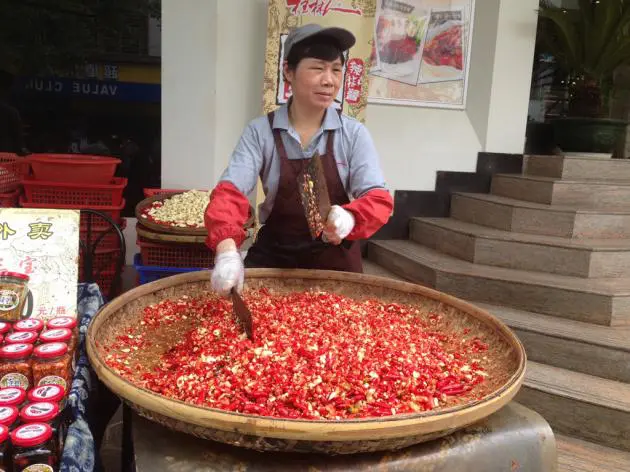
In fact, Guilin natives take pride in all they have – the wonderful moist climate women claim gives them their famous complexion, the snail noodle dish exported all over the country, the famous chilli bean paste, and of course, the unique Arhat fruit (luohan guo), the latest natural sweetener to fascinate the health-conscious community worldwide.
Guilin translates as “osmanthus woods” – the city is also famous for its incredibly aromatic osmanthus flowers, frequently used to infuse and scent the green tea which grows on the steep slopes of the hills.
In season, ancient osmanthus shrubs as tall as trees scent the air above the Lijiang River as it meanders through the Guilin city centre.
We are roused from our osmanthus tea-fuelled comfort by the offer of a trip up the Lijiang to the tourist town of Yangshuo, and its famous song-and-dance-and-light spectacle, “Impression Liu Sanjie”.
In case you are wondering, Liu Sanjie (Third Sister Liu) is a local legend about a peasant girl with the voice of an angel and the quick wit of a vixen who outwitted and out-sang the local tyrant, an evil landlord.
The river is beautiful, and all that’s missing on our long, leisurely cruise down to Yangshuo are earplugs.
Guilin and Yangshuo are the twin attractions on every visitor’s must-do travel list, and it seems that every Chinese tourist plus his uncle, aunt and second cousins twice removed are on our boat.
The excited cacophony becomes so overwhelming that we fork out an extra 600 yuan (Bt3,000) for a private cabin.
But the scenic purity is worth suffering the noise pollution for. The karst hills are awe-inspiring, fringed on the water’s edge by phoenix-tail bamboo, which veils little hamlets of smallholdings.
The cruise guide’s commentary also allows our imagination to take flight.
“Here is the five-horses mural which nature painted on the hillside ... This is the Goddess of Mercy, flanked by her two child attendants This is the hill that looks like a three-pronged pen-holder.”
His voice is suddenly drowned out by a burst of excited chatter as everyone whips out their 20-yuan banknotes and tries to identify the scenery that inspired the design.
It is long past lunchtime when we finally reach the Yangshuo jetty, where a fisherman and his cormorants were waiting.
Be careful, though.
Every time you snap a photograph of the birds, you have to pay their owner 5 yuan. Some enterprising tourists foil his mercenary attempts with surreptitious under-arm shots.
There is plenty of natural beauty to be seen in Yangshuo if you leave the well-beaten tourist paths in the company of a local friend.
Red-earthed country lanes lined by lush bamboo groves seduce the hiker or the cyclist. Climb high enough and you can enjoy a bird’s-eye view of the Lijiang River, which is the only way to truly understand why it is one of the most beautiful waterways in the whole of China.
Guilin has plenty to offer the stomach too, with braised river fish in beer sauce, stuffed snails (not unlike a very spicy escargot), and chillies – lots of chillies.
Wash it all down with Arhat fruit tea. It will leave a sweet aftertaste you will keep with you long after the Guilin hills are a fading picture in your memory.
