
60 years of peace
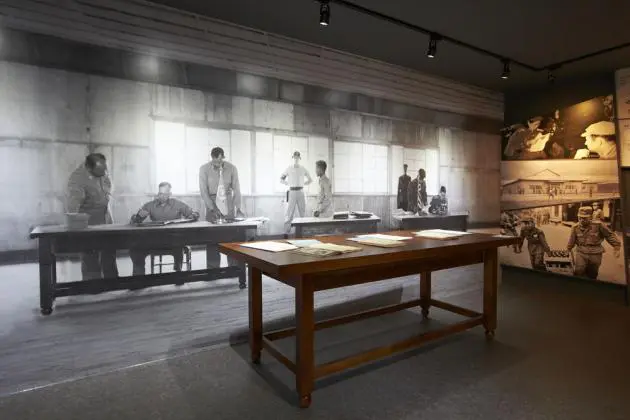


An exhibition views the Korean Peninsula unhampered by conflict, but memories of war are close
A BLACK-and-white picture of stone-faced soldiers, taken moments before battle. A poignant video clip showing American war veterans giving testimonies of the hardships they faced in Korea, thousands of kilometres away from home.
These are among the 120 photographs and 60 videos on display at the National Museum of Korean Contemporary History. The exhibition, titled “Sixty Years after the Armistice (1953-2013)”, commemorates six decades of peace on the peninsula.
This is the first “special” exhibition held at the museum since it opened last December. Originally headquarters of the Culture, Sports and Tourism Ministry, the museum lacks indoor space for exhibition halls, so most of the displays for the current exhibit are outdoors. Historical artefacts are inside.
There are five sections: “Memories of the War We Have Not Experienced”, “Conflict, Reconciliation, and Peace”, “The Korean War Seen by Participating Nations”, “60 Years Later, from Ruins to Prosperity” and “DMZ”.
Copies of the actual armistice agreement and other official documents are on display, allowing visitors to page through the historical records themselves.
“Seen by Participating Nations” is a series of videos on the main stairway of the museum that focus on foreign veterans who fought for South Korea during the war. “DMZ”, the only part inside the museum, comprises videos that focus on the ecosystem of no-man’s land.
The majority of the content covers well-known historical events, but the displays also include details that no textbooks would have, such as how the 40th Infantry of the US Army established a school in Gapyeong and maintained close relations with the school for 60 years.
“The people of this generation have not experienced war first-hand,” says senior curator Kim Ki-yong. “Through this special exhibition we would like to deliver the vivid details of the war to people.”
AND YOU ARE THERE
- “Sixty Years after the Armistice (1953-2013)” runs until September 1 at the National Museum of Korean Contemporary History.
- In addition to the photos, videos and artefacts, the exhibition also offers lectures, a concert of music of the ’50s and outdoor war-movie screenings.
- The museum is open daily except Monday from 9 to 6. It is located in Jongno-gu, Seoul, near Gwanghwamun Station.
