
Struck by the storm
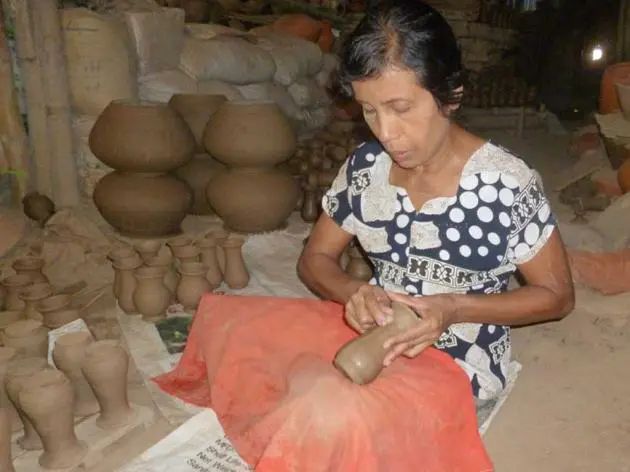


Myanmar's traditional pottery businesses are in danger of disappearing
Over the centuries, generations of young Myanmar women have spent hours patiently moulding clay with their fingers while manipulating the potters wheel with a foot.
It’s a traditional scene that’s in dire danger of disappearing as modern and aggressive business procedures eat into Myanmar’s traditional arts and crafts. The number of people doing such work is already on the decline. The young lady we are watching learned the craft from her mother, Daw Hnyar, when she was in seventh grade.
Today, Daw Hnyar is struggling to keep her small pottery business in Twantay Township just outside Yangon profitable.
“I’ve been in this business my entire life. I took it over from my own mother. I want to expand so the business continues to survive but for that I need more advanced equipment and that costs money I don’t have,” she says.
Right now she is running two kilns that can produce at least 700 large size water pots or more 3,000 vases. It takes a week to make a good pot that can stand the test of time, she says.
“Because of the inaccessibility of modern technology and the lack of financial support, only a few businesses are able to continue their traditional work,” she laments.
Twantay was once a boomtown for the pottery business boasting around 70 independent firms. Today, only 16 remain and most of them are small though Daw Hnyar insists that demand is still high.
Potters here don’t have the funds to make their ceramic ware in advance and have to wait for orders and a deposit payment upfront before they start work.
The big boys are also moving in, ordering pots in advance before finishing them and selling them at elevated prices. Many own kilns and grinding machines whereas small owners have to manually crush clay and mud.
One such middle-class operator is Daw Hla Yee who runs a wholesale and retail ceramic dealership. Her workers paint the finished products and she focuses on the marketing.
“We have been exporting ceramics across the country for generations. We’ve enjoyed some financial assistance and it’s helped us expand our business,” she says.
Despite the advent of large plastic bottles in the cities, the traditional pottery jars are still valued by many residents.
“People are still using earthen water pots, planters, vases and pots. This is part of our culture and our pots last forever,” says Daw Hnyar.
Already suffering from the recession, the pottery industry in Twantay took its biggest hit in 2008 when cyclone Nargis devastated many parts of the country.
Chairman of Myanmar Ceramics Society, Dr Myo Thant Tin, arranged a loan programme through the First Private Bank to help small and middle class pottery business owners get back on their feet but many are still struggling to survive.
