
Christ hunter and visionary


Play
The Bible's bloodthirsty child-killer, King Herod also transformed the landscape of Israel
The bible carved his bloody name as the ruler who ordered a massacre of babies after hearing prophesy that a newborn called Jesus would usurp him as King of the Jews.
He also murdered his wife and kids, cementing his reputation as one of history’s cruellest tyrants.
Yet at the same time as he was cutting children’s throats, Herod the Great was transforming Israel’s landscape with colossal architecture that earned him the title of “greatest builder in Jewish history”.
The many remnants of that vision are nowhere more impressive than at Caesarea, a Mediterranean port town in central Israel built two millenia ago at the command of Herod, the Rome-appointed king of Judea.
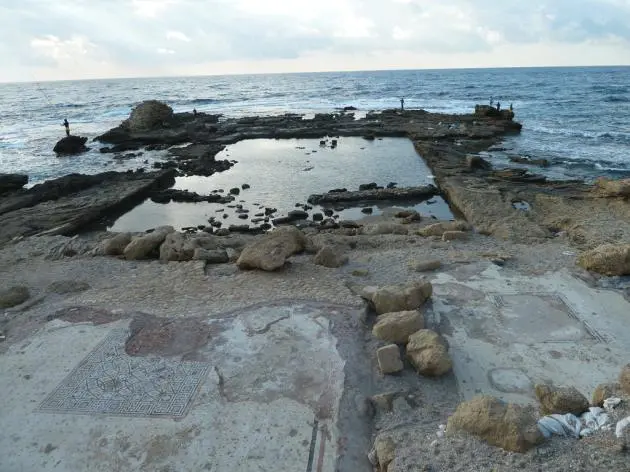
Ruins of its man-made harbour still stand today, and reveal the grand scale of the undertaking. Nearby, the town’s “history park” includes the ruins of a palace with beautiful mosaic floors, an amphitheatre and a stadium for chariot races, all offering a taste of the flourishing New Testament era when the city was built.
“It’s said there was once anchorage for 1,000 ships here,” says Oren Dov, a local tour guide.
Surrounding the harbour, the ruins of the city are a valuable reminder of the legacy of “Herod the Builder”.
Nowadays, though, Herod is universally portrayed as a cruel and jealous king.
“No Jew would name a child Herod, nor would that name ever be given to a street or building,” says Dov.
Yet, as an architectural visionary, Herod was glorious. The ruins of the projects he spearheaded are scattered across Israel and the West Bank and include the Temple in Jerusalem and the palace-fortress at Masada.
“Herod the Great changed the landscape of this area,” says Dr Silvia Rozenberg, 64, of the Israel Museum.
Today’s Israel was then under the control of the Roman Empire.
Herod distinguished himself as a provincial governor under the Hasmonean dynasty and was heavily indebted to Rome after it helped establish his own power base.
He was elected King of the Jews by the Roman Senate in 37BC.
Herod was backed by Octavius, who would become Augustus, the first Roman emperor, and managed to successfully balance the demands of being both king of the Jews and a Roman citizen.
The influence of Rome is visible – his architectural projects were all executed in the Roman style and the name Caesarea is derived from Augustus’s full name.
While Herod needed to maintain favour with Rome, popular backing at home was also important. “He probably tried to create employment through construction to win support as a king who served the needs of the people,” Rozenberg says.
During Herod’s rule of more than 30 years, Judea saw no major wars, and historians speculate he was trying to clean up his image as a brutal king through such an abundance of magnificent architecture.
Walking among the ruins of Caesarea – its harbour, residences, warehouses, recreational facilities and temples – one gets a sense of a complex city plan featuring structures designed for a variety of functions.
The port’s foundation, which was constructed under water using cement – a first at the time – stands out as a product of practicality and technological innovation. Herod appears to have been bold but flexible in his ideas.
It took 12 years to build Caesarea, and Herod is said to have paid countless visits to its construction sites.
One can picture him standing before the city as it neared completion, confident he had created a glorious symbol of his rule for all posterity.
Little did he know that history would paint him as the Messiah-hunter – a man who massacred children to gratify his unbounded ambition.
