
Interacting with our environment
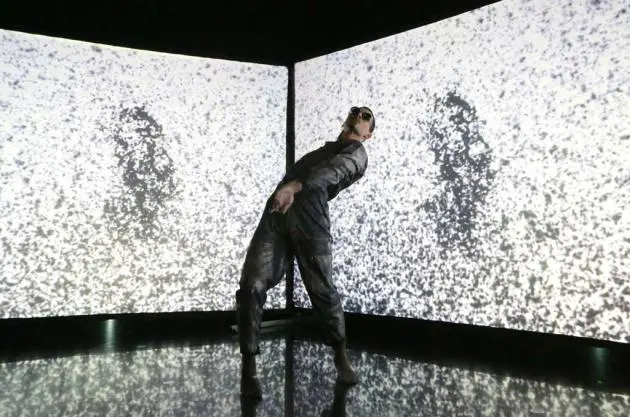


A recent Australian contemporary dance performance was neither immersive nor engaging
Last month's “Ersatz: Contemporary Dance and Multimedia Installation” sounded exciting, with the press release boldly promising that “the audience can move freely between a series of three distinct performance installations”.
Sadly, it was far more mundane. Audience members arriving at Siam Paragon’s Infinicity Hall last month were asked to find a seat, either on a stool or on the floor, in the middle of the “hall” where the three sections of “Ersatz” were taking place. The moment we were seated, it became obvious that only one section could be seen in full view, with the other two being sacrificed to partial viewing as turned to watch them.
That’s not exactly what I would call “move freely” or “multimedia installation” and it’s nothing like my recent experiences of overseas performances overseas where I could freely walk anywhere I wanted and watch the performance from the angle I chose.
Readers may not have not heard of this venue called Infinificity Hall, I hadn’t either before going to “Ersatz”. It’s actually a partly partitioned area in front of the entrance to the Imax Theatre, which meant we could hear clearly the announcements from the nearby Paragon Cineplex and the lighting could not be fully controlled.
It is of course a very convenient location in the centre of the city but then so is Royal Paragon Hall and the studios in the Bangkok Art and Culture Centre. Either would have rewarded us with a better experience.
The first section, a solo by James Batchelor, also the choreographer of the other two sections, was the most commendable as his movements effortlessly responded to the images projected on the screen.
The second section, a solo by Navinda Pachimsawat Vadtanakovint, was supposed to be “an interstellar live camera feed”, and we were all asked to turn off our mobile phones so as not to interrupt the transmission, in which she communicated with an alien through her movements. Instead, digital artist Pongpassakorn Kulthirathum simply manipulated the image of the ceiling captured with a camera. In the last section, a trio of dancers mimicked the movements of construction workers to a captivating soundscape by Morgan Hickinbotham.
Notwithstanding the different subject matters of each section, the movement vocabulary seemed rather limited and uninspiring – a sign perhaps that the choreographer is still young and hasn’t yet exposed his mind to various dance disciplines and around the world.
Despite the different nationalities of the artists involved, I could see neither the collaborative nor the intercultural nature of the work as boasted in the press release. With the same choreographer and director, the work would have come out similarly had he collaborated with artists from other countries. And apart from the post-performance Q&A, I didn’t see any effort to connect with the Thai audience. Little wonder then, that contemporary dance continues to remain so far away from us.
At the end of the 50-minute “Ersatz”, my thought drifted to Australia’s leading contemporary dance company Chunky Move whose works also make use of new media and installations and who performance I have enjoyed tremendously during two Melbourne International Arts Festivals.
After tours of Europe, the US and Japan, Chunky Move took part in the OZFest earlier this year in India. Perhaps the Australian Embassy might like to bring them here.
