
Captivated by ceramics
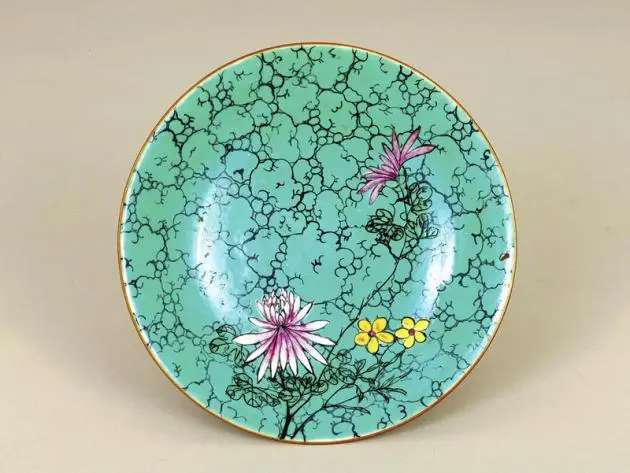


Beautiful Qing dynasty porcelains go on display
Chinese ceramic are highly acclaimed and have been dubbed the monarch of the finest ceramics. Among various types of ceramics, those created during the Qing dynasty (1636-1912) are probably the most outstanding thanks to their vibrant colours and have been treasured by many art lovers.
The exhibition, titled “Captivating Qing-dynasty Ceramics” and held at the Kyoto National Museum, displays about 200 works showcasing elaborate ceramics in various styles from China and Japan.
These works include those imported to Japan from China during the Qing dynasty that are still treasured and also inspired many Japanese potters.
The history dates back to the Edo period (1603-1867), when Japan had trading ties with only a limited number of countries as it had almost completely closed its doors to the world.
At the time, Chinese merchants managed to bring a number of Qing dynasty ceramics to Japan.
Two of the pieces on display at the exhibition are particularly remarkable.
They are “Funsai Egawari-zara (Jikkin-de)” (a porcelain dish in overglaze polychrome enamel that was designed as part of a series) and “Funsai Botan Karakusamon Kaku-zara” (a square porcelain dish with a peony scroll design in overglaze polychrome enamel), both owned by Nozaki’s Historical Museum in Okayama Prefecture.
Their patterns are impressively accentuated with the funsai technique, which features pink pigment and delicate gradations. It is surprising to see that their original vivid colours remain even after several hundred years.
Meanwhile, “Funsai Shorokuzu Hei” (a porcelain bottle with a pine tree and deer design in overglaze polychrome enamel) is one of the pieces of the highest quality, manufactured in a kiln used for firing items bound exclusively for emperors and their courtiers. This particular piece, owned by the Kyoto National Museum, was made during the reign of Emperor Qianlong, who ruled from 1735 to 1795. The piece also bears elaborate, gorgeous patterns.
Japanese potters didn’t just sit idly watching Qing dynasty ceramics pour into Japan and grow in popularity.
“Iroe Kachomon-sara” (a porcelain dish with a flower-and-bird design in overglaze polychrome enamel), owned by Imaemon Museum of Ceramic Antiques in Saga Prefecture, is among the pieces these potters created by incorporating techniques from China. As a result, they built their own new ceramic culture. The Arita ware, which is also called Imari, is said to have dominated the South Asian and European markets in a period when exporting ceramics from China was banned at the time for political reasons.
These made-in-Japan pieces were initially designed to look similar to Chinese ceramics. However, they gradually came into their own as Japanese potters invented new techniques and created original designs.
Yoshihiro Ono, curator of ceramics at the Kyoto National Museum, said: “Potters in the Qing dynasty also manufactured pieces modelled on Imari pieces. Although the amount of influence on each other differed, it is clear that potters in Japan and China influenced each other to create better pieces. I hope visitors will appreciate this at the exhibition.”
View it
“Captivating Qing-dynasty Ceramics” runs through December at Kyoto National Museum in Higashiyama Ward. For more information, visit www.Kyohaku.go.jp.
