
Boom or bust for Korean art in China
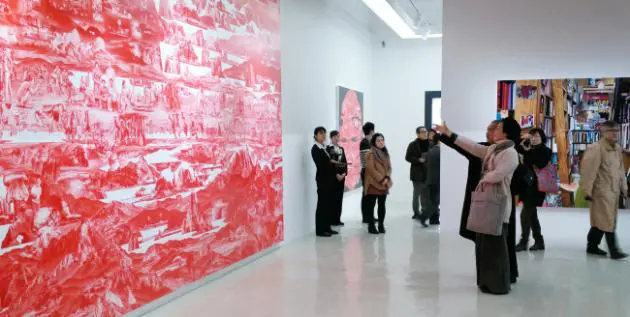


South Korean galleries might try once again to woo buyers in Beijing and Shanghai
South Korean galleries' ambitions for entering the Chinese art market peaked ahead of the 2008 Beijing Olympics with major Korean galleries flocking to China in search of big spenders and potential buyers in the booming art market.
The reality was different. Galleries struggled to make ends meet with skyrocketing rent, complex shipping processes and different art-market dynamics.
Today Pyo Gallery 798 remains the sole Korean gallery in Beijing, once such a hopeful place for top galleries like Gallery Hyundai, Arario Gallery and Artside Gallery.
“It’s been much harder than we expected to enter the Chinese art market. Launching a gallery requires a lot of preparation because it is about doing business in a different culture,” says Pyo’s Kim Yu-rim, which gets its name from its location in the 798 art district of Beijing. The gallery opened in 2008.
There were many challenges ahead of the Korean galleries. Getting through customs took so long that paintings were held for weeks. Taxes exceeded 30 per cent. Rent and prices skyrocketed.
“Many owners thought running a gallery in China would cost less. It turned out to be a difficult task. We struggled with running the first Pyo gallery space in Beijing for six years. Rent was usually the same or higher than in Seoul. Customs laws were so complicated and taxes were heavy,” Kim recalls. Pyo closed its first gallery space in Beijing in 2011.
Things were not much different for other foreign galleries.
“It’s very common to see galleries close a year after opening in the art district of 798. Many foreign galleries found themselves in the same position. Most of them expected to meet big spenders, but they are really hard to get,” Kim adds.
The 798 Art Zone is an industrial complex-turned-gallery neighbourhood with more than 300 contemporary art galleries.
“But the Chinese market is still regarded as a new opportunity because here we can meet new customers. In Korea, there are very few. Now we see novice collectors and new buyers rising in China,” said Kim.
China accounts for 33.7 per cent of global art sales as a leading market along with the US with an equal share, according to the 2012/2013 Contemporary Art Market Report by Artprice. It also represents 90 per cent of sales in the Asian art market.
In five years since its opening, Pyo Gallery 798 has included some young buyers in their mid-30s on its client list. The Korean artists it represents - Lee Seung-koo and Kim Joon-sik – are now expanding their presence on the Chinese art scene.
Shanghai is emerging as another strong market for contemporary art sales in China after Beijing, which has served as the epicentre of the Chinese art market, according to Artprice.
On December 20, Korean gallery Hakgojae made its foray into the thriving contemporary art district 50 Moganshan Road in Shanghai. The gallery opened its space in Samcheong-dong, Seoul, in 1988.
“The art market has a tendency to move to the centre of the global economy. Shanghai is the new economic centre, with burgeoning art markets and rich tradition and heritage,” says Woo Chan-gyu, director of the Seoul-based Hakgojae Gallery.
Shanghai hosts 488 galleries and art management companies that bring in 5.1 billion yuan (US$840 million) annually, according to a 2013 art market analysis on Shanghai. The city also offers tax breaks and incentives in its economic free zone.
Arario Gallery, another prominent Korean gallery, which closed its Beijing branch in 2012, also said it is looking for “good places” for its next gallery space opening.
“I believe Shanghai will have the most powerful art market and be the driving force of the art trend,” Woo of Hakgojae notes.
