
When the magic turns black


Play
Up the stairway to Heaven and straight back down again, Led Zeppelin owned the 1970s - then lost them to a bunch of punks
One typical night on Led Zeppelin’s 1975 North American tour, bassist John Paul Jones’ assistant was awakened from sleep in his hotel suite (everyone had suites). Keith Moon was at the door.
The drummer of the Who – the “wild man of rock” defined – desperately wanted to visit John Bonham, but Zeppelin’s equally untameable drum machine wasn’t answering Moon’s poundings at his room directly above. Moon the Loon needed a boost up from the balcony.
“Bear in mind that we’re on the eighth floor,” recalls Dave Northrover in this ultra-sensational Zeppelin biography. “So we go out on the balcony, with the balustrade for John’s room about seven or eight feet above us.”
Moon made it, of course – he never miscalculated feats of hotel derring-do, including explosions – but when he burst into the chamber above, Bonham assumed it was the cops and ran to the bathroom to flush all his drugs down the toilet. Northrover was duly awakened again to “go get further supplies”. He needn’t have bothered going back to bed at all. Soon the upright piano in Bonham’s room was being dragged out to the terrace and flung over the side.
This is the kind of yarn you expect from a book about Zeppelin – or any of the other many big-name rock bands that followed in the debris of their wake. What you don’t usually get in such books is the other side of the coin, the ghastly fees paid for calling the piper’s tune. Instead, as in the recently reviewed Aerosmith “autobiography”, you get apologies and rehab.
Bonham was sometimes so drunk he couldn’t stay on his drum stool, and guitar god Jimmy Page might be so far gone on heroin that he couldn’t be roused for a concert, or, if he could, be too stoned to play. Any given day Page, Bonham and singer Robert Plant (though evidently not Jones) could treat underlings and casual passers-by alike with vicious contempt.
Barney Hoskyns pulls every poisonous snake from beneath every anecdotal rock to explain what went so badly wrong with a band he still adores for its music. “Trampled Underfoot” is a remarkable compendium of interview clips amassed over many years, but problems arise with any such “oral history”.
In offering just an introductory commentary to each section and then letting everyone else do the talking in turn, Hoskyns not only leaves puzzling allusions unexplained, he also cuts short his own clever, wiry wit, and this exceedingly grim book could certainly use more of that. His absence as a guide also forces readers to make their own judgements as to which of these countless “sound bites” ring truest – and the speakers regularly contradict one another, each new argument cancelling out the last.
The testimony remains insufficient, for example, to decide whether Bonham was a loveable and generous (albeit “troubled”) musical genius and devoted husband – or a psychopathic street thug who liked to roughhouse with the ladies of the road. This ambiguity is even more glaring when it comes to Peter Grant, Led Zeppelin’s manager, who either was a fun-filled softie, great dad and groundbreaking entrepreneur or a conniving, leg-breaking mountain of scum from the London underworld.
Surely it’s the biographer’s job to at least prod us gently toward the correct assessment. Surely Hoskyns’ personal opinion matters, but – other than “No Stairway!”, his laudable list of the “20 best Zeppelin tracks” – he withholds all but the coyest hint.
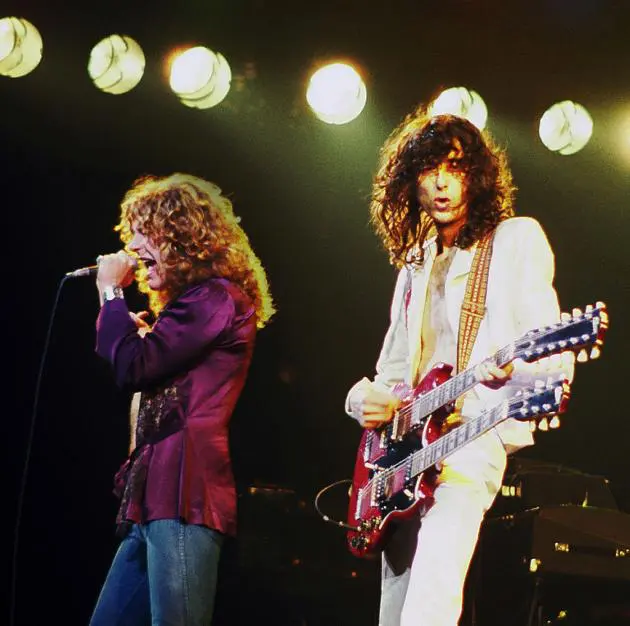
Interestingly enough, a much clearer picture emerges of Jimmy Page. Everyone readily agrees that he’s one of the best guitarists ever but, musical wizardry aside, he’s also a total prick – in this account, at least. Rarely does he come across as anything resembling a decent human being.
Hoskyns and many of the people interviewed downplay the tenacious black-magic rumours about Page as being just for show, part of the “mysterious” front that Zeppelin maintained, but enough of the speakers discuss Aleister Crowley and “the dark and the light” that you still wonder if there’s fact in the old gossip.
There seem to be enough corroborating views to establish that Page was once quite fond of underage girls. Of course, this only leaves you thinking this is perhaps why he was suddenly holidaying in Bangkok and Pattaya as recently as 2008. Again, who knows?
At any rate, “Trampled Underfoot” is not all about being trampled underfoot. Once the other famous beautiful people and the groupies and the lawyers are safely tucked into bed aboard the band’s 727 tour jet, there are all sorts of recollections about the songs, studio sessions and concerts to cheer up the true fans – those who only care about the genuinely magical music that Led Zeppelin made.
Ultimately this is surely not the best book about Zeppelin, but it’s thick and pensive and it covers all the bases, from the Black Country and the Yardbirds to the conquest of rock, the gluttony of stardom and the rise of the punk usurpers, the pair of premature deaths that portended Zeppelin’s own demise, and the hopes that have sputtered for one more look at the glory that was lost.
Local heroes meet God
Jimmy Page’s last appearance in the pages of The Nation stemmed from a visit to Bangkok. Check it out:
http://www.NationMultimedia.com/2008/02/18/entertainment/entertainment_30065651.php
Trampled Underfoot:
The Power and Excess of Led Zeppelin
By Barney Hoskyns
Published by Faber & Faber, 2013
Available at Asia Books, Bt650
Reviewed by Paul Dorsey
