
Function in the form


High-quality Japanese fashion flows abroad
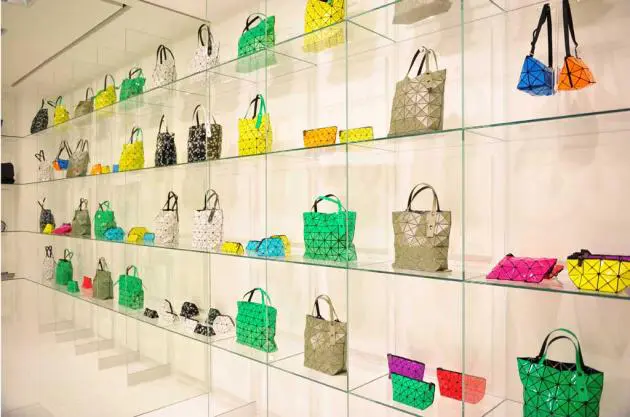
At the begining of every month, customers from all over Asia stand in a long line at department stores in Tokyo. They’re waiting to get their hands on Issey Miyake’s colourful geometric-pattern bag series “Bao Bao”. In a simple but clever marketing ploy, a new colour of the bag is released early every month to keep attracting fans.
“Beautiful colours. It’s just like art,” sighs Christy, a Hong Kong housewife who’s just bought a small green bag in Shibuya.
Thai princesses are also fans of Bao Bao and the product is well known in Thailand.
The bags are made of vinyl chloride and polyester, which are difficult to bond together. It was made possible by a badge manufacturing company from which Miyake orders.
Meanwhile, Japanese jeans are held in high regard in the United States – the home country of jeans.
“Only Japan can recreate jeans harkening back to the United States’ good old days in terms of textiles, sewing and colour-dulling,” says Andrew Chen, 33, of New York jeans store Self Edge. “The quality of American jeans has gone down due to mass production.”
One popular line of jeans at Self Edge is “Momotaro jeans,” which are sewn in Kurashiki, Okayama Prefecture. The pair sells in the 20,000 yen (Bt6,500) range in Japan, and in 30,000 yen range in the US.
“I was surprised one day five or six years ago when an American came to buy our jeans,” says Hiroki Kishimoto, 38, of Rampuya, the Momotaro brand manufacturer.
“The reputation of our brand seems to have spread via the Internet, and we now have customers from overseas.”
Baby and children’s wear brand Miki House Co. is the only Japanese brand with a store in New York luxury department store Bloomingdale’s.
“The designs are cute and look comfortable to wear,” says Francesca Sacco, 37, who is snapping up boots and gloves for her two children.
Several luxury brands in Europe and the US are releasing kids’ wear, but these are often merely smaller versions of adult clothing.
Miki House sticks to designs exclusively for children and pays attention to such details as making the shoe soles with high toes so children won’t trip.
Yoshikatsu Takeda, president of Miki House’s US subsidiary, explains that Japanese manufacturers’ conventional methods of detail work seem like new and extraordinary practices overseas.
In Asia’s mass consumption market, the popularity of South Korean fashion is rapidly growing due to K-pop and South Korean dramas.
Tittaya, a 24-year-old Bangkok resident, says she habitually uses The Face Shop’s cosmetics, produced by South Korea’s LG Household & Health Care, because the brand is “advertised by [Korean] idol Kim Hyun Joong on TV”.
It’s common among young women in China and Southeast Asia to copy Korean-style makeup and fashion.
Worajan, editor in chief of the Thai edition of Japanese fashion magazine “S Cawaii!” says, “Hanryu [Korean style] is so popular among Asian women these days.”
The volume of South Korean cosmetic exports is closing in on that of Japanese cosmetics.
Leading South Korean cosmetic company Amore Pacific Corp’s Park Su Kyung says the company’s rapid success owes a lot to the Hanryu.
Thanks to its delicate, detailed manufacturing, Japanese fashion already has enthusiastic fans, but the industry has to cooperate with other cultural exports in order to make a leap forward.
