
Natural fits for every need


Play
Denim jeans grow on palm trees for this month's ultra-clever 'Pop' showcase
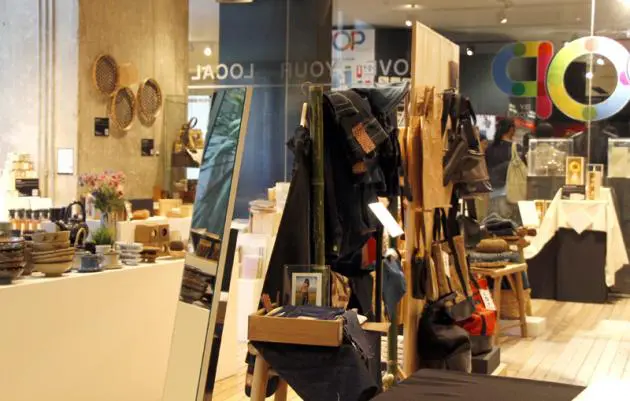
COTTON CLOTHING that’s dyed blue with actual indigo from the plant rather than chemicals, and bicycles that are perfect for bumpy, narrow soi are among the great items on sale at “Pop”, at the Thailand Creative and Design Centre until February 27.
The compact showcase-marketplace somehow makes room for more than 30 young, creative entrepreneurs who merge traditional wisdom with contemporary style.
Linked by the theme “Love Your Local”, the clothes, accessories, home decor and spa items are normally sold only online or at selected community fairs.
Praphaiphan Daengchai’s Mae Teeta indigo apparel from the Northeast is a must-see. Since 1992 she’s been shrugging off the synthetic colouring’s domination of the market and cultivates indigo plants, extracts the dye from the leaves and weaves and stains her clothes by hand. The colour lasts longer and repels the sun’s UV rays. The whole process takes place in a village called Baan Nadee in Sakon Nakhon’s Phanna Nikhom district.
The concept is a long way from the chemical dye that shades your blue jeans. It’s the true blue of kram, the indigo plant. Praphaiphan uses locally grown cotton and natural dye extracted straight from indigofera tinctoria using a vat-fermenting technique that keeps the dye cool throughout the process.
Mae Teeta’s shirts, bags and scarves have always earned praise for their simplicity, softness and long-lasting colour, but until recently they tended to appeal more to older people and foreigners. Now Praphaiphan’s daughter Sukajit, a recent graduate of the Chanapatana Design Institute, has set out to attract younger customers.
“Our patterns and designs didn’t fit younger people’s lifestyles or tastes,” Sukajit says. “I’ve expanded the line by offering handbags with zips and inner pockets, shoulder bags for iPads, blouses, skirts and jackets for office girls and wallets, hats and caps. The hats and caps are the top sellers because they really help you stand out in a crowd.”
Mae Teeta has also extended its colour range, using other plant extracts, she says.
“We get the green from mango leaves, brown from ebony and a light pink from fang [sappanwood]. The cold-dyeing process makes the colours last longer than when heat is used.”
Another item of apparel at “Pop” that will have you reconsidering those jeans is the big and baggy pants from Tepparit Nuntasakun in Chiang Mai. He’s promoting locally made denim with hilltribe-style trousers cut from a single piece of fabric.
Tepparit’s started his brand, 5749true@way, four years ago and sells his wares on the Sunday walking street in Chiang Mai. The denim is made from sugar-palm fibre and cotton, dyed with natural indigo and woven by hand on a loom with four heddles to guide the thread and create a denim-like texture.
The fibre is the outer layer of the palm fruit, which growers usually discard once the sweet jelly seed socket is harvested. Tepparit boils the coarse fibre to soften it and combines it with cotton at a ratio of 30/70. “The fabric is lightweight, yet strong, and it has a sheen like linen.”
Tepparit is one of the directors of the Land Foundation set up by artists in San Pa Tong district in 1998. Its aim is “social engagement based on sustainable living”. He has two other brands: The One offers cotton clothes “for spiritual people” and LoveIsComingSoon has T-shirt inscribed with Zen philosophy.
Inspired by the traditional Thai art
of flower arranging, Wirin Chaowana creates folded-paper garlands, tassels, khruang khwaen (floral pendants) and phan phum (lotus-shaped bouquets on trays). What began as a university thesis that won a Brand’s Gen 6 award (and is currently a finalist in the Art4D magazine awards) has evolved into the brand Pub Piab Riab Roy.
“I posted my thesis project on Facebook and a lot of people asked if they could buy some,” says the Silpakorn University decorative-arts graduate. “People like them because they’re unique and hand-made. The folding is complex and I make good use of Thai floral culture.”
Wirin never studied flower arranging. “I read a book about it and learned how to fold different shapes from a book on origami. It took about four months of experimenting with different shapes and textures.”
Thailand’s bicycling boom is propelling the Angl Bike’s success. Professional product-designer Phongsathorn La-iad-on and his team at FiF Design Studio spent two years developing the machine, a solution to Bangkok’s cluttered streets and uneven pavements.
“Bangkok street surfaces are a real challenge for cyclists,” he says. “You have to go slow where there are potholes, zigzag between the snaking lines of cars and through the obstacles on narrow lanes. I couldn’t find a bike that could fit that and still go fast where you have open roads.”
Agile yet stable, Angl has a small turning radius, accelerates easily and can reach high speeds. The prototype hit 50 kilometres an hour and still ensured a stable, comfortable ride.
“The key requirements are in the angles and proportions of the frame, with a compact rear triangle, narrow wheels and a firm wheel base,” says Phongsathorn.
The frame is lightweight but durable chromoly. The rear triangle of the frame provides quick acceleration and efficient transfer of power from pedal to rear wheel. The wheels are 26 inches in diameter, allowing for a wide selection in tyres, and, at 1.5 inches in width, they can tackle most road condi
tions, most notoriously the drain covers and potholes.
Also on view and for sale at “Pop” are neckties in a chequered pha khao ma pattern, paper stationery made from banana leaves, colourful lamps fashioned from wood scraps and water pipe, and low-sugar ice cream with a socially responsible business model.
IDEAS THAT “POP”
>>> “Pop” continues until February 27 at the Thailand Creative and Design Centre on the sixth floor of the Emporium mall.
>>> It’s open daily except Monday from 10.30am to 9pm and admission is free.
>>> Find out more at (02) 664 8448, extension 213-4, and www.TCDC.or.th.
>>> Phongsathorn La-iad-on of FiF Design Studio will be there to consider your product ideas on February 19 from 10.30 to 1.30. His colleague Narin Nopparatwong, a packaging specialist, will offer ideas on February 20. You should book a seat in advance for these sessions.
