
When the 'tiger' smiles


Play
How instant love can win over even the most serious of planners
SO, THIS man says he won’t keep a pet in his house, neither a cat nor a dog. He helps children in orphanages, supports schools with what they need, but animals are another matter.
He doesn’t hate animals. He grew up in a family who kept cats, dogs and fish. The animals, though, were just like furniture to him, things you owned until they died and you threw them away.
Besides, he’s much more people-oriented. “Why should I help a cat or dog when people are so much more in need?” he says.
No one has ever tried to change his mind. He is, after all, what he is, and if someone somewhere benefits from his kindness, then he really doesn’t need to have a pet, does he?
One day, he happens to be driving past a wat up-country and decides to stop, just to see what is there.
He sees that the buildings in the wat are a bit run-down, including the hall where the monks live. Off to one side is a school full of children, and one of the monks explains to him that the kids are orphans or from homes where the parents can’t afford school fees or even the costs of uniforms and books.
The kitchen where the children’s food is prepared is especially filthy. The dirt floor is difficult to clean. There's no running water inside but there is a tap outside, where the rice is washed, as well as all the dirty pots, pans and plates after a meal.
Wandering around the kids are lots of dogs of different ages. Some have skin diseases, and some are especially thin and weak.
The monk tells him that the wat is also home to lots of cats, who come out after dark, when the dogs are less likely to attack them. The cats don’t look any healthier than the dogs.
“Why don't you get rid of all these animals?” he asks in horror.
“Where would they go?” the monk replies, adding that the majority of animals have been abandoned by their owners.
He goes home, thinking carefully and logically about the problems this wat faces.
At this point, I wish I could tell you that his girlfriend, who happens to be a dog-lover, persuades him to adopt a few puppies. But although he loves his girlfriend dearly, she learned long ago that he’d rather figure things out for himself.
He’s a planner.
So he talks to children’s charities, to animal rescuers.
Along with all these organisations, he works out how to upgrade the kids’ kitchen so that it will be hygienic. The children’s organisations also make sure that a doctor and nurse visit the kids regularly to check for health problems. Costs are covered through donations.
He also sees how the rescue organisations work together to neuter and vaccinate the animal residents and arrange for the sick ones to be taken to Bangkok for treatment. Again, costs are covered through donations.
I’d like to say that now, the wat has turned into a clean, happy place full of happy monks, children and animals, but such developments take time, and sometimes projects, no matter how good they are, eventually slow down.
Yet without any planning on his part, his thinking changes.
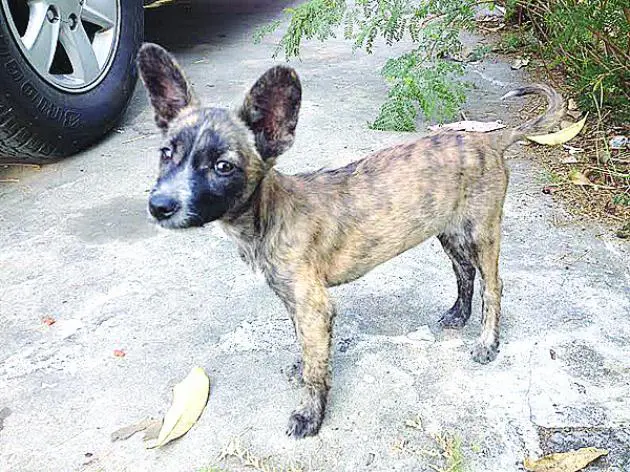
One day when he’s visiting the wat, a little pup comes up to him and smiles. The puppy is an ordinary Thai dog, a little “tiger” pup.
“I think you should take me home,” the pup says to him.
And you know what? Without any planning, without any hesitation, he does.
