
Back to the future
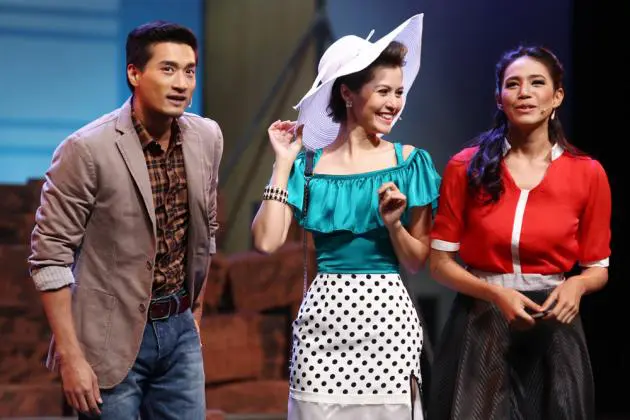


Nostalgia was hardly nurtured in 'Mani and Chuchai'
A SERIES OF Thai language textbooks used in primary school education from 1978 to 1994, “Mana Mani Piti Chuchai” was created by now-retired education specialist Rachanee Sripraiwan. Her stories and characters not only captivated a generation now in their mid 20s to early 40s, but also instilled a love for our mother tongue.
Nostalgia has been running high since the termination of this series – those who make the decisions said they were “out of date”. Rachanee has even been commissioned by a publisher to write a novel with these beloved characters as the protagonists.
In 1998, Chulalongkorn University architecture students brought their childhood characters back to life in a play titled “Mani and Chuchai”, and last month some of the original production team revived it at the Aksra Theatre, a mistake as the stage was too vast and empty for the play’s set design.
Despite the all-professional cast and crew, the play’s dramatic structure was like that of students, who have much more passion for than knowledge of playwriting. For example, each major character was introduced to the audience by a narration so old-fashioned that I can’t recall the last time I saw this technique used in a play. And although playwright and director Supakorn Riansuwan had his four beloved characters from childhood, now in their late 20s, travel back in time from 2014 to 1998, he apparently didn’t do much research on the late 1990s and the scenes in the past looked and sounded like the present day. There were also a number of irrelevant jokes by minor characters and musical sequences by chorus members that only managed to drag the play down. On campus such sequences boost the team spirit, as more students can strut their stuff onstage. In professional theatre, this means higher production costs for them and perhaps higher ticket prices for us.
“Mani and Chuchai” was then a mishmash of comedy, drama and musical, none of which reached its peak though it did offer the audience a pleasant evening until they remembered they had paid a few thousand baht for a ticket.
This is yet another example of a trend in contemporary Thai theatre that should be terminated soon. After makeovers like “Chai Klang” (2007) and “Lamsing Singer” (2012) – both of which flopped – perhaps they should look for new stories to tell, and new ways to tell them, instead of revisiting what they did when they were young and inexperienced. Either that or turn them into reunion productions for the attention of and the attendance by alumni only.
That said, what kept me entertained throughout the 160-minute running time was the performance by the four lead actors namely Siraphan Wattanajinda, Maneerat Kham-uan, Patcharapol Jantieng and Twerit Chullasapya as, respectively Mani, Chuchai, Piti and Phet. While I wished Siraphan had been given a more challenging, and less sterotypical, role like those in movies and I found myself wondering if I would ever see Patcharapol in a stage play without the hat and dance movements, this quartet reminded us of what good old friends are like.
A scene stealer was Phakhamon Chuengpaisal whose consummate portrayal of Phailin brought back memories of many teachers and whose angelic voice should land her more roles in musical plays. Comedic genius came in the form of the thugs performed by Konthon Techolan and Wattanachai Treedecha and the young talent Inthat Techakerdkamon. The latter’s sincerity far exceeded the other young and cute actors, most of whom performed like pre-programmed humanoids.
Recently, a Facebook page was created to convince the Ministry of Education to bring back these so-called “Tales of Good Kids”. If someone create a “Mana Mani Piti Chuchai” app that can be downloaded onto our young ones’ tablets and promise to pay for the electricity to charge them, the ministry may begin to listen to their pleas, though it should definitely not include this forgettable play.
