
Bottling up the cure for HIV/Aids


Play
The true tale of the first two people cured of the disease reads like a thriller, with Big Pharma as the villain
When HIV/Aids first came to public attention in the 1980s, several thousand people were diagnosed as infected with this “cancer”. It was perceived as a medical mystery and it was a disease that carried a social stigma. It was prevalent among gay men at the time when the community wasn’t accepted (as it is today). People were hesitant to talk about the disease, and funding research or finding a cure for it was low on the list of priorities for any pharmaceutical company or government.
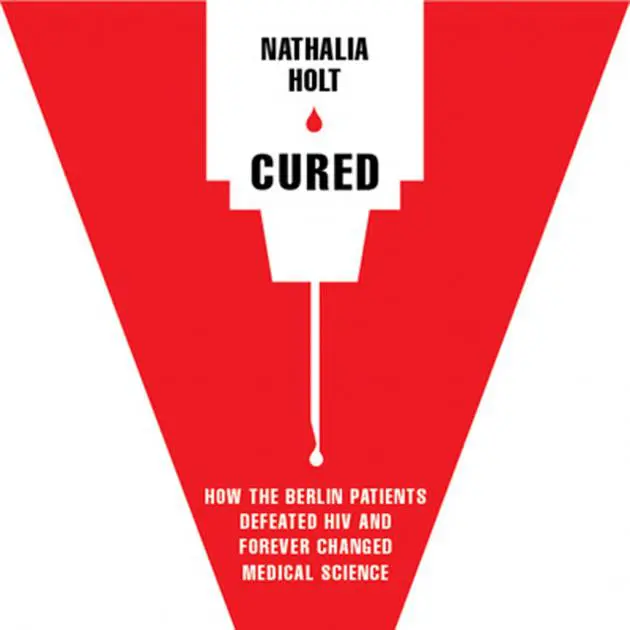
According to Nathalia Holt, that’s why a cure for HIV/Aids came from elsewhere in the medical community. “Cured” tells the story of the “Berlin Patients” – the first two people to have been functionally cured of HIV/Aids, one in 1996 and the other in 2008. She offers fascinating medical insights into how the virus operates and how it can be tackled. Her explanations are presented clearly, in terms and analogies relatively easily understood by the motivated layperson.
Sometimes the book reads like a thriller, with back-stabbing scientists and vials of blood being couriered around the world. We meet mice that have been genetically modified to have human immune systems so that they can be used in experiments. Equally gripping is the human-interest element of the book. It’s the story of a few men and women, and how their relationships changed the way HIV/Aids is treated today.
The most amazing and mystifying part of the story is that even though the Berlin Patients were cured of HIV/Aids, and meticulous records were kept of their treatment, there has never been an attempt to repeat their treatments on a larger scale. Both men were cured by different means, and while elements of their cure have been replicated, there are many aspects that seem to be being wilfully ignored, particularly what seems to be the proven effectiveness of early and aggressive treatment.
An understated but important element of “Cured” is the discussion of the relationship between big pharmaceutical companies and medical care. Though it only makes up a fraction of the book’s content, it is important in understanding the present status quo. The main impetus of Holt’s explanation can be summarised in one quote: “If no one can make money, even the best drug will fail.”
As things stand, there are treatments available that help people with HIV/Aids to live out their natural lifespan. However, in some places these treatments are extremely costly, often reaching sums in excess of US$75,000 (Bt2.43 million) a year. Wouldn’t it be better to use what was learned from the Berlin Patients to develop a cure? But better for whom?
The stark reality is that Big Pharma doesn’t exist for the benefit of mankind. Its raison d’etre is to produce profits for its shareholders, something that it succeeds at quite gloriously. If the needs of the general public and Big Pharma intersect, then well and good, but if they don’t... Well, business is business, the bottom line is the bottom line.
If it’s more profitable to keep people on expensive medication for the rest of their lives than offering them a cure, then there’s little incentive for Big Pharma to invest in finding one. Follow the money. Not only do the pharmaceutical giants have little financial incentive to find a cure, they effectively have a financial disincentive. The end result of this is that millions of people living with HIV/Aids who don’t have access to expensive drugs won’t get access to a cure either.
There is, however, hope on the horizon. Not everyone investing in HIV/Aids research is motivated by financial gain. There are benevolent donors like Bill and Melissa Gates, who have donated significant sums that through the tireless work of dedicated researchers are translating into hope for potential treatments, and moving closer to effective functional cures for HIV/Aids.
Thanks to these people there are many new clinical trials ongoing in the fields of stem-cell transplants and gene therapy. Both of these seem to be promising areas of research that are working to modify and create immune systems that the virus can’t attack.
“Cured” is a must read for any medical practitioner or medical student, anyone who has HIV/Aids, knows someone who has, or for any person who lives on a planet where millions are living with the disease.
Cured: How the Berlin Patients Defeated HIV and Forever Changed Medical Science
By Nathalia Holt
Published by Dutton
Available at major bookshops, Bt950
Reviewed by Marc De Faoite
