
Tomorrow's world today


Play
Primarily known as an economic zone, Incheon Metropolitan City also offers the visitor a wealth of art and culture plus lots of delicious food
ARRIVING IN Seoul some four years after my first trip to the South Korean capital, I am impressed by how much it seems to have developed since I was last her. The world’s third largest metropolitan area according to a 2010 census and one of the most densely populated areas on the globe, Seoul is full of massive high-rise residences and office buildings as well as several shopping malls that make Bangkok’s Mega Bangna look small.
Despite all this modern development, though, Seoul seems pale in comparison to my next destination. Incheon Metropolitan City was once part of Gyeonggi Province and today, thanks to its proximity to the capital, is the world’s fourth-largest suburb by population and also home to the new “Smart City” of Songdo.
A booming business hub that has drawn hundreds of global enterprises to its shores since being designated as the country’s first Free Economic Zone in 2003, Incheon is today being recognised by discerning travellers as a cultural destination in its own right.
I spend my first day wandering about the town eagerly snapping up images of the modern architecture and taking full advantage of the free Wi-Fi hotspots all over town to upload them to the social networks.
To find out just how much Incheon has changed in recent years, I visit the Compact Smart City, an exhibition centre that explores the past, present, and future of the metropolis.
Spread over three floors, the centre is divided into eight zones and my first stop is at the Ancient and Modern Times Hall on the first floor. Here, thanks to miniatures of the old light towers, a weather station and a model of the water supply system, I learn about Incheon’s beginnings as the town of Michuhol, as well as Jemulpo Port and the Suinseon railway. I also stop to admire the Incheon-Jemulpo Multinational Settlement Plan, which illustrates South Korea’s first western-style city designed in a rectangular shape on a straight transverse line along the sea shore, where such public agencies and facilities as customs office, port, park and cemetery have been built.
On the second floor, the Incheon Miniature Hall provides an introduction to the complete transportation system as well as the 2020 Basic Initiative for the City Planning of Incheon that will be launched to promote the city as an economic hub of Northeast Asia.
The third floor is devoted to the Incheon Free Economic Zone and to Songdo, the international “smart” city built on reclaimed land and which is said to embody the future of Incheon. A thriving economic hub, it will soon feature the Incheon Tower and many other state-of-the-art developments.
Neighbouring Yeongjong, an island off the west coast that’s home to Incheon International Airport and connected by a bridge to the city, is designed as a global logistics centre. It will also house the Las Vegas-style Midan City leisure complex and Sky City, businesses and liveable urban space, both of which are currently under construction.
Multi-resort areas are planned for Mueui and Silmi islands while Cheong-na International City, already the site of GM Korea’s Research and Development centre, an international school and a world-class golf course, will be promoted as a global tourism city offering a various leisure sports, high-tech floriculture and international finance.
Also in this area and part of the sprawling airport complex is the Korean Traditional Food and Experience Centre, which will have instant appeal for fans for the Korean drama series “Dae Jung Geum”. Supported by the government and open for five years, it’s run by food specialist Jin Young Whan who is happy to demonstrate how to prepare such traditional Korean dishes as bibimbab, topokki and kimchi. I join the bibimbab class and am soon happily peeling and slicing vegetables and preparing her special chilli pepper sauce.
“Korean food is healthy and bibimbab – rice mixed with sliced egg, carrot, guava, mushroom and pork – particularly so,” Jin says.
Less healthy but definitely as delicious are the offerings at Genesee Chocolate Earth, a chocolate school and museum where I try my hand at making chocolate balls from Belgium dark chocolate, ganache and fresh cream under the watchful eye of Lee Kang Jin.
The museum also offers a wide selection of home-made Belgium chocolates that make ideal gifts for the folk back home,
An addition to Incheon’s vast menu of places to visit is Wolmi-do Observatory and Traditional Park on Wolmi-do island. Once home to a military barracks, the park has been redeveloped as a community space and is a popular hangout with local residents as well as tourists
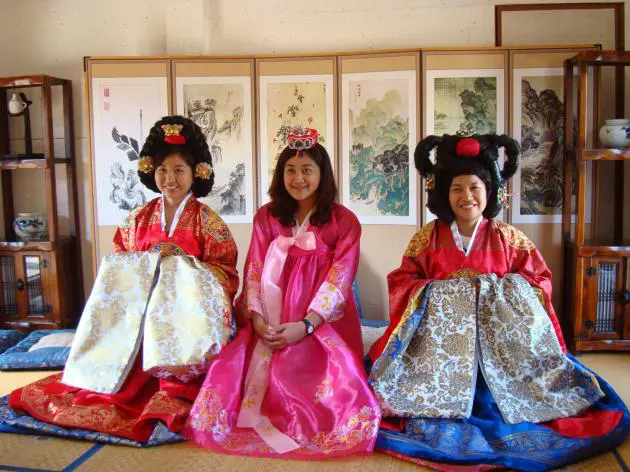
The space has been organised into several areas, among them the Traditional Garden Section, which is home to a variety of gardens patterned after those of the past, a replica of a traditional farm and an ancient miniature village, where visitors are invited to try on a beautiful Hanbok. The glass observatory on top of Mt Wolmi offers a spectacular view of the airport and the seaport.
Also on the island is the Wolmi-do Cultural Street, an area designed specifically for young people and which boasts seafood restaurants and lots of fancy cafes.
Back in Incheon proper, I find my way to the Jung-gu area and spend a happy couple of hours at the 200-year-old Sinpo International Market checking out the food, desserts and fresh fruits.
The market is best known for dak gangjeong (sweet and spicy fried chicken) and jolmyeon (chewy noodles in spicy sauce) and after tasting them, it’s easy to understand why they are so popular.
My journey ends at the Jajangmyeon Museum in Chinatown devoted to and named in honour of the much-loved thick noodles topped with a sauce made from salty black soybean paste. I sample a bowl as I wander down Samgukji Mural Street, admiring the 135-metre long wall that depicts 77 scenes from the Romance of the Three Kingdoms.
As I fly out the next day, I find myself wondering just how many changes I will witness on my next visit, which I hope won’t take another four years.
