
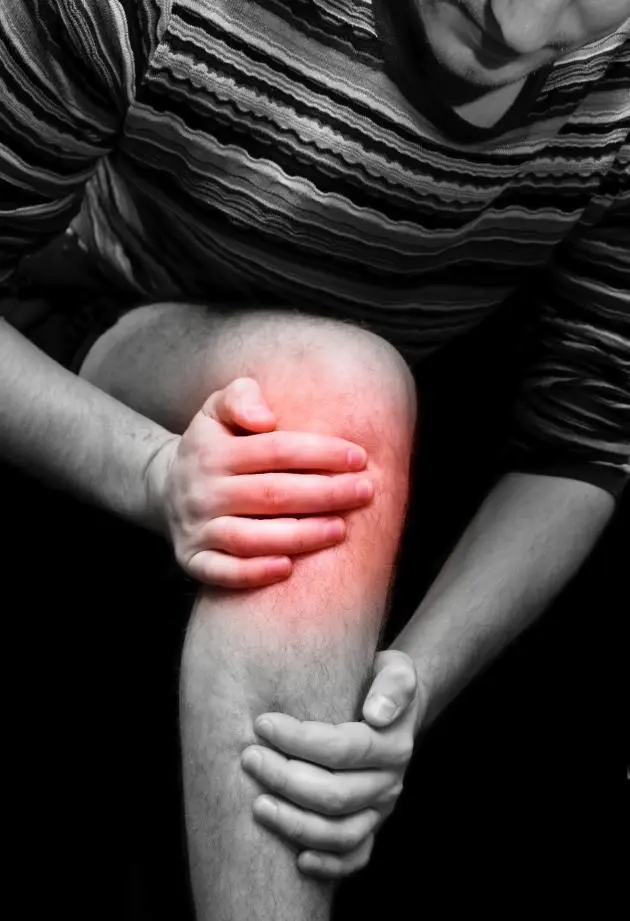
Crippled by pain: knee arthritis


Play
Thailand's most updated English news website, newspaper english, breaking news : The Nation
The knee is one of the most complex joints in the body. The knee joins the thigh bone – the longest bone in the body – to the shin bone. The knee helps support the body’s weight and plays a role in almost all of the body’s movements such as bending and straightening, rotating and twisting.
Knee osteoarthritis is an abnormal change in the shape of the knee joint at the articular cartilage and subchondral bone of the affected joints. Both the biochemical and biomechanical structure of the condition decreases the functionality of the articular cartilage by causing, for instance, abnormal force distribution on the cartilage, loss of smooth interface for the moving joint and joint noise. There can be also a change in the bone near the affected joint, such as spurs growing out from the edge of the bone. Subsequent symptoms include joint pain, stiffness, limited motion, loose joint, bending of the joint and deformity.
Surprisingly, quite a few knee osteoarthritis sufferers do not consult a doctor to seek treatment believing, wrongly, that the condition is a natural occurrence brought about by ageing. This misconception can be harmful for people with knee osteoarthritis because they lose the chance of having the condition treated and slowing down the osteoarthritis. This is compounded for those unable to move around by themselves if their relatives or carers also write off the pain to old age, with the individual ending up suffering needlessly from knee pain.
Currently, patients with knee osteoarthritis are recommended to use their joints appropriately in their daily activities so as to ease the existing symptoms and prolong the life span of their knee joints. Misuse of the joints increases the risk of developing knee osteoarthritis. The following are some useful coping tips for knee osteoarthritis patients.
Patients should plan their daily activities in accordance with their condition. For example, reduce the amount of walking up and down stairs by moving the bedroom to the ground floor if possible. Do not carry heavy objects but instead use trolleys or a wheelbarrow. Depending on the condition of the knee, aids or supports may be used such as walking sticks and knee braces. Western toilets are better than squat style toilets, and armrests or safety frames can be installed to assist with sitting down or standing up.
In its early stages, knee osteoarthritis is treated by:
- Proper use of joints
- Weight loss
- Painkillers or non-steroidal anti-inflammatory drugs
However, if patients still suffer from pain and cannot use their joint after taking the above measures, then surgery should be considered. Knee replacement surgery is not recommended for patients between 40 and 50 years of age because they tend to be more active or work hard, which may shorten the life expectancy of the artificial knee and the knee joint may become loose resulting in joint pain. In such cases, the artificial joint may have to be replaced again incurring more difficulty in surgery and higher costs.
Proper use of the joints and appropriate treatment can prolong the life span of the knee joints and delay the need for knee replacement.
Nowadays patients are provided with information about their rights regarding surgery, anaesthetics and procedures. The patients or family members will be asked to read a consent form, encouraged to ask questions, and then required to sign the form. In addition, the doctor will explain the potential complications of knee replacement. For example, an infection after the operation may necessitate additional joint fusion surgery.
Patients must always remember that knee replacement is a major surgical procedure. Patients will need to have a good attitude and be prepared to go through a period of pain and discomfort for the treatment to be successful.
It is important that patients with knee osteoarthritis cooperate with their doctors and remember that medicine might help relieve pain but it is not a cure.
Dr Wichian Jiraboonsri is an Orthopaedic Surgeon at Samitivej Sukhumvit Hospital. For an appointment or further information, call (02) 711 8494-6.
