
Two more for Southeast Asia


Play
Unesco decisions raise conservation hopes in the Philippines and Vietnam
Unesco’s World Heritage Committee has recognised a wildlife sanctuary in the Philippines and Vietnam’s Trang An Tourism Complex.
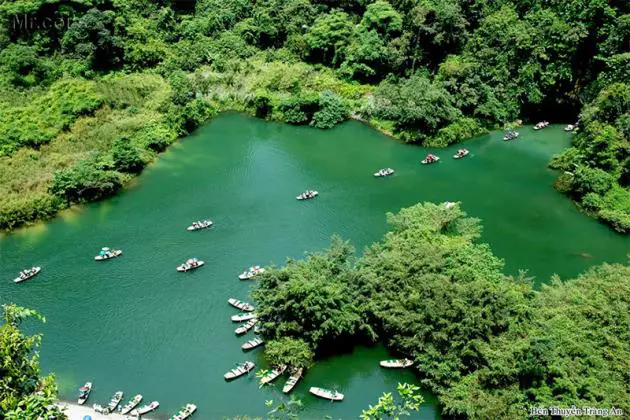
Trang An met the agency’s criteria of cultural, aesthetic and geographical value and becomes the country’s first World Heritage site that combines both natural and cultural aspects.
Primeval forest covers most of its 4,000 hectares, buffered by green rice paddies, and its mountains hold many caves and pagodas. Meanwhile scientists recently found evidence of interaction there between humans and the environment that lasted at least 30,000 years.
Three short-lived dynasties – Dinh, early Le and early Ly – ruled the ancient capital Hoa Lu from 968 to 1009. Nearby were the stunning limestone peaks and caves of Trang An, Tam Coc and Bich Dong.
Vietnam now has eight World Heritage sites, the others including Ha Long Bay and “Hoi An Ancient Town”.
Recognition for the Mount Hamiguitan Range Wildlife Sanctuary in Davao Oriental in the south gives the Philippines is sixth UN-protected area, following the Cordillera Rice Terraces, the Puerto Princesa Underground River, the Tubbataha Reef, Vigan and its baroque churches.
The Hamiguitan mountains are home to the Philippine eagles, the national bird and the world’s second-largest eagle. The range is better known for its unique “pygmy forest” – 225 hectares of 100-year-old bonsai trees. But the 6,834-hectare sanctuary is also the habitat for Golden Crown flying foxes and Philippine tarsiers, warty pigs, brown deer and the Mossy-pygmy fruit bat. Its 53 bird species include the dark-eared brown dove and the Tarictic hornbill.
Largely because of the Mount Hamiguitan sanctuary, the Philippines ranks seventh among the world’s 17 “biologically rich countries”, Davao Oriental officials noted in their application to Unesco. “The site represents the fast-disappearing habitat of globally important species of plants and animals.
“The diversity of habitats is attributed to the geologic setting. That is, Mount Hamiguitan is an ultramafic terrain, giving rise to an ultramafic forest and associated diverse habitats and flora and fauna. At the national level, this sanctuary is a conservation interest. At a global scale, it is known to be a habitat of globally important species of plants and animals.”
Governor Corazon Malanyaon has said the province would “expect an influx of experts, scientists and researchers” if it were listed. “That would be great for the province, Mindanao and the whole country,” she said. “It would be the first Unesco Heritage site for Mindanao.”
Having won the nod, Malanyaon expressed her “deepest gratitude to the World Heritage Committee for the inscription”.
“The conservation of this property is the Filipino people’s gift to the rest of humanity,” she said said. “The inscription is a celebration of the global partnership in our shared vision and desire to conserve these natural gifts for future generations. It is also a step forward toward the continuation of monitoring and preserving the fragile ecosystems in the mountain amid changing climate and typhoon patterns.”
“The Department of Tourism celebrates Philippine biodiversity through this feat,” says Tourism assistant secretary Art Boncato, who was in Qatar when the decision was made. “This is the first for Mindanao and the first mountain range in the Philippines [on the World Heritage List]. This will create more champions for conservation.”
